
One of the two who heard John speak and followed him was Andrew, Simon Peter’s brother. He first found his brother Simon and said to him, “We have found the Messiah.” He brought Simon to Jesus.
—John 1:40-42
Philip found Nathanael and said to him, “We have found him about whom Moses in the law and also the prophets wrote, Jesus son of Joseph from Nazareth.” Nathanael said to him, “Can anything good come out of Nazareth?” Philip said to him, “Come and see.”
—John 1:45-46
Jesus said to him, “I am the way, and the truth, and the life. No one comes to the Father except through me.”
—John 14:6
Go therefore and make disciples of all nations, baptizing them in the name of the Father and of the Son and of the Holy Spirit, and teaching them to obey everything that I have commanded you.
—Matt 28: 19-20
To convert or not to convert, that is the question.
In recent days, Algerian Cardinal Jean-Paul Vesco held a brief interview with journalist Christophe Herinckx from CathoBel, the French-language Catholic multimedia network in Belgium. Ostensibly, the warm exchange was about the state of Catholicism in Algeria, Pope Leo XIV’s visit, and the virtues of synodality. But it was the conversation about inter-religious relations that stirred up criticism surrounding Cardinal Vesco’s opinion on the evangelizing mission of the Catholic Church. “We are the Church of the people,” the Cardinal noted, “Not a proselytizing Church, not a Church that is there to convert, but a Church that aspires to be one of the constituent parts of this people.”
Bishop Robert Barron called Cardinal Vesco’s assertion “puzzling.” Reasonably perplexed that a Prince of the Church might be confused regarding the raison d’être of Christ’s institution on earth, Bishop reminded,
The entire thrust of the Second Vatican Council was toward bringing the Light of Christ to the peoples of the world (Lumen Gentium). And this missionary élan has given rise in the last few decades to the idea of a “new evangelization,” which is to say, a fresh declaration of the Lordship of Christ. Quite obviously, no one thinks that this work of evangelization should be done in a brow-beating, overbearing, or disrespectful manner (proselytization), but for God’s sake, let’s not throw the baby out with the bathwater. If I really thought that the Church does not exist to bring people to Christ, then I would resign and get an honest job.
Cardinal Vesco had further described proselytism as “a poison because it implies considering the other person’s religion to be false.” Lest this be a simple misunderstanding, Cardinal Vesco doubled down,
Yes, I believe that the believers of the three monotheistic religions have better things to do than to seek to convert one another. Rather, they should accept that there is a measure of what they cannot know about the faith of the other, and respect one another in their respective faiths. Our world needs believers who are deeply rooted in their own faith and who recognize one another as brothers and sisters in our one sacred humanity.
“If I really thought that the Church does not exist to bring people to Christ, then I would resign and get an honest job.”
Curiously, there seems to be a violent allergy, including among Catholics, to the word “convert.” To convert, in the eyes of the trembling many, means “to proselytize.” And to proselytize conjures up images of seething crusaders, hand-rubbing inquisitors, and sandwich-board sporting the-end-is-nearists.
But this is ridiculous.
Show me the aggressive, brow-beating Catholic proselytizer. Please. Because no such thing exists in the wild anymore. As a former Lutheran who was once looking for reasons not to like Catholics, I never met one. The fearsome proselytizer is a tired trope. It is a bogeyman of bygone Christendom trotted out whenever the season demands in order to spook away any honest attempt to win someone over to the Catholic faith.
Many Catholics these days are so fearful of being deemed overcompensating proselytizers that they dreadfully undercompensate to the point where they remain, like Peter in the garden, mute about their faith. For fear of stepping on another’s toes, we trade in enlightened relativism, speak the milquetoast language of “humanity,” and worship at the altar of inoffensiveness. C. S. Lewis would castigate this spineless middle ground, saying, “Christianity, if false, is of no importance, and if true, of infinite importance. The only thing it cannot be is moderately important.” And in his captivating book, The Tyranny of Guilt, French essayist Pascal Bruckner warns of the wreckage that remains from such waywardness of principle born out of self-doubt and self-flagellation,
The critical spirit rises up against itself and consumes its form. But instead of coming out of this process greater and purified, it devours itself in a kind of self-cannibalism and takes a morose pleasure in annihilating itself. Hyper-criticism eventuates in self-hatred, leaving behind it only ruins.
A Catholic faith void of its evangelizing mission is desperately in crisis. It holds a truth, but is too shy to share it. It believes in heaven, but only one that meets your satisfaction. It subscribes to rules but not the kind that will hurt your feelings. Before long, such a faith is a rudderless ship tossed about by the waves of modern whims and buttoned-down ideologies. Such a faith is a club bled white of dogma, a clique unbothered by tradition, a movement freed from the Gospel, a church without Christ. Desacralized. Disincarnate. And we become, as Georges Bernanos might describe, “horrible undeveloped monsters, the stumps of men.” If we hold a sacred truth—but not so sacred and not so true that we are galvanized to share it—then it is little more than a heart-warming story and quaint cultural symbol. But if it is only a symbol, then, to borrow from Flannery O’Connor, “to hell with it.”
That’s not my Catholic Church.
A Catholic faith void of its evangelizing mission is desperately in crisis.
Now let me set the record straight. To convert—to effectively evangelize—is not to coerce or cudgel, browbeat or badger someone into belief. That is impossible. It is a contradiction in terms. There is no such thing as compelled belief. To subscribe to a faith is to have freely assented to it.
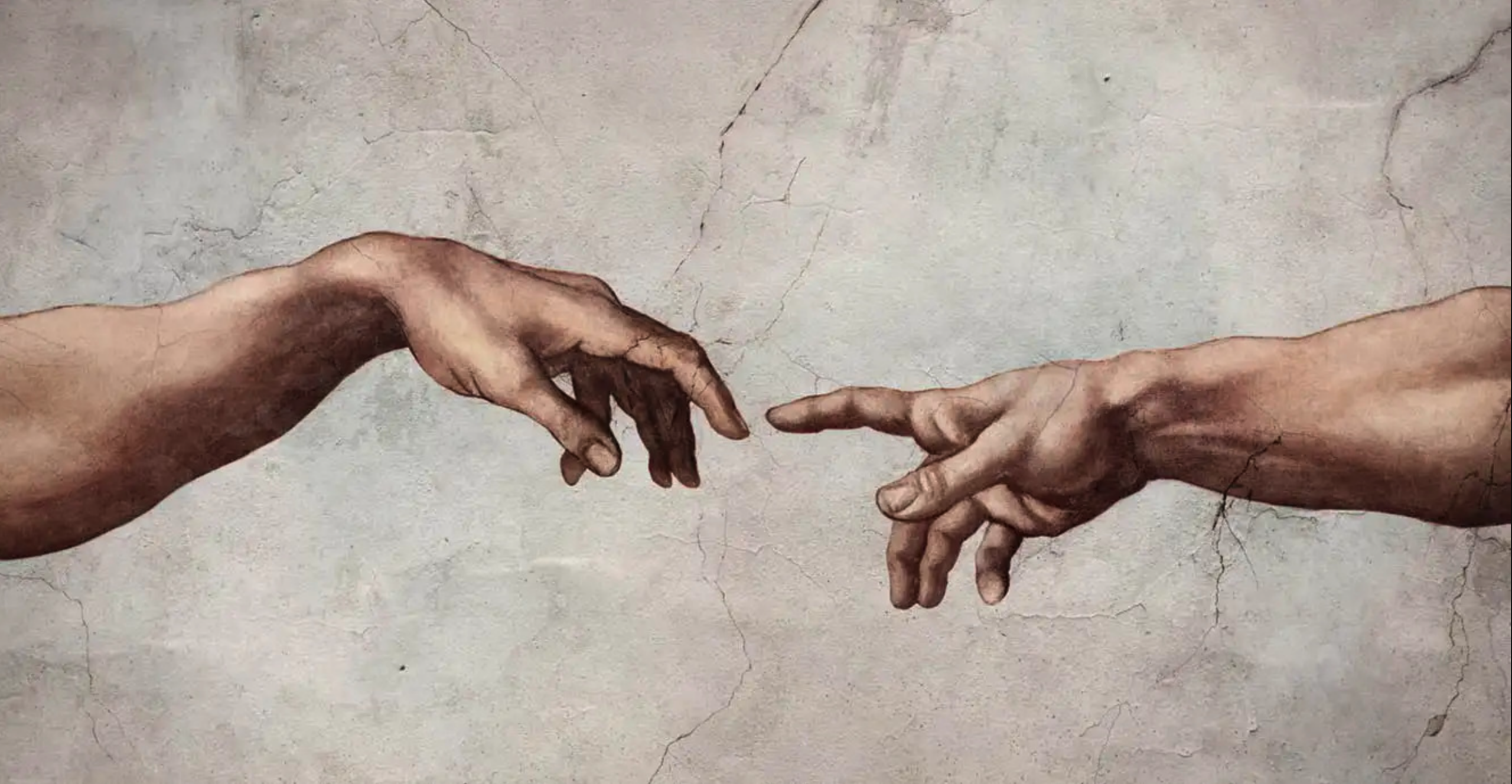
Furthermore, evangelizing is not loud or condescending, caustic or judgmental. It is born of prudence. To convert someone means that you see them as a dignified child of God worthy of love and respect. It means that you acknowledge that they have free will and, as such, have the option to simply walk away. And finally, it means that the truth is, in fact, the truth and it matters enough and you love someone enough to put yourself in the uncomfortable position of telling them about it. Perhaps this is best illustrated in a quote attributed (though likely apocryphal) to St. Thomas Aquinas, “To convert somebody, go and take them by the hand and guide them.” To evangelize and convert is an act of deep love and earnest intentionality.
When Andrew brought Simon Peter to Jesus, Peter changed. When Phillip told Bartholomew (Nathaniel) to “Come and see,” Bartholomew was transformed. When Ananias accompanied the archenemy Paul deep into his faith, Paul was remade. When Monica prayed (and modeled Christian charity) for seventeen years on behalf of her wayward son, Augustine was converted. When Fr. John O’Connor and Hilaire Belloc befriended G. K. Chesterton, he was revolutionized.
“I believe,” Cardinal Vesco insisted, “that the believers of the three monotheistic religions have better things to do than to seek to convert one another.” Perhaps if we were to follow the cardinal’s philosophy, everything would work out.
Perhaps.

But then, perhaps, we wouldn’t have the rock of the Church, two incomparable missionary evangelists (who also made a living converting people), a Doctor of the Church, and one of the greatest Catholic apologists of the age. All were converted because someone decided that, out of love and intentionality, they wanted to take them by the hand and guide them.
Finally, I am a convert. And if it wasn’t for the love of my wife, investment of my best friend, indulgence of countless priests, insight of numberless novelists and apologists, and the sublime grace of God—all wanting me to become Catholic yet loving me in my freedom—I never would have made the greatest decision of my life.
Recognize the dignity of others. Respect their free will. And love the truth and the call to share it.
Yes, Cardinal Vesco, out of love, out of hope, out of supreme interest in willing the good of the other, we are called to convert the world.
Let’s take others by the hand and guide them.