
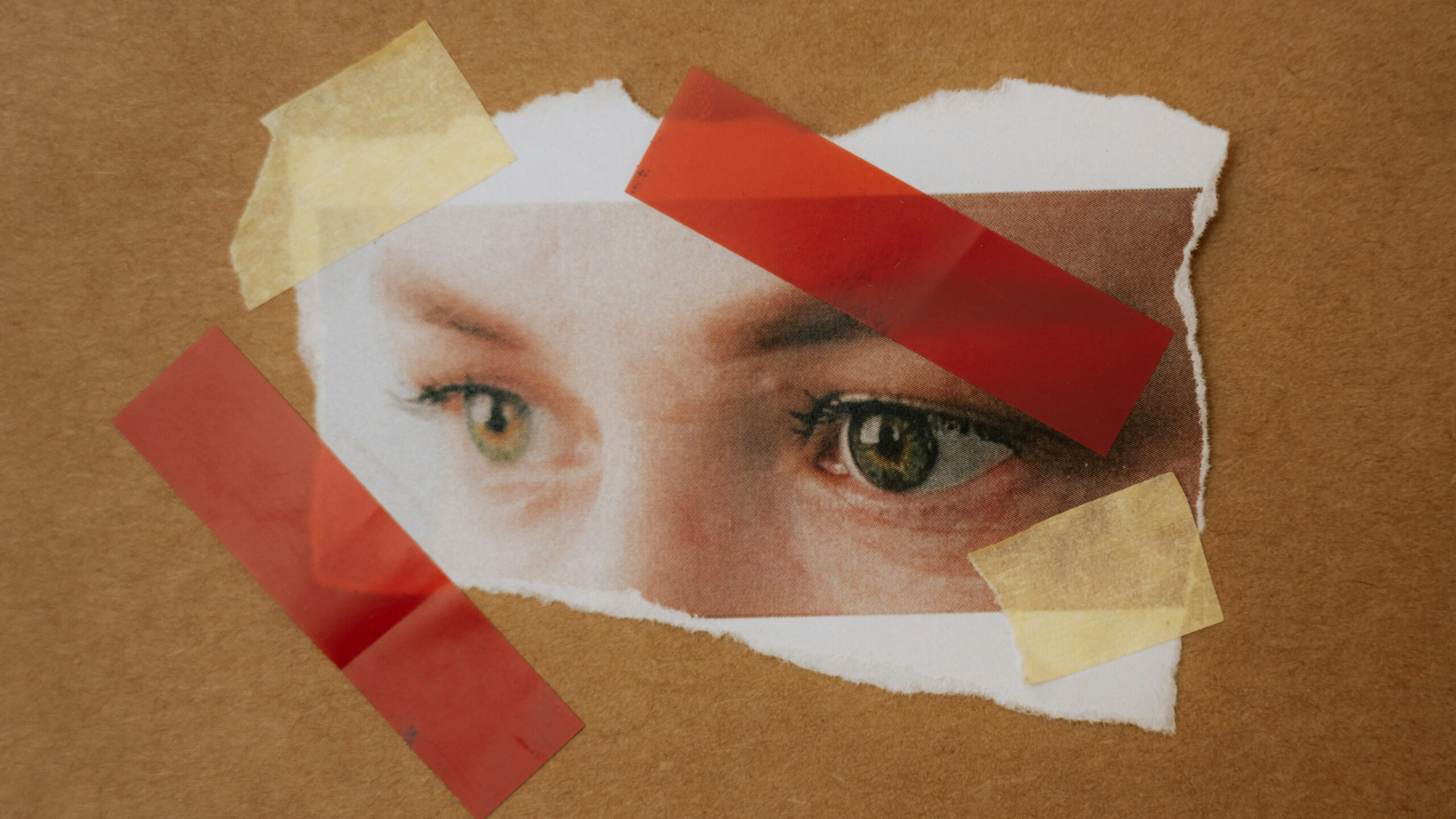
I’m sure you know the old saying, “You can’t judge a book by its cover.” It’s a handy way of alluding to what we know intuitively but often choose to ignore: The assumptions we make based on what we see are unreliable. We are surrounded by sayings that acknowledge the unreliability of our sight: “All that glitters is not gold,” “Things are not always as they seem,” and so many others. We repeat these expressions as if we’re trying to convince ourselves to avoid snap judgments, and yet we often default to our primitive, pre-rational instincts and make those snap judgments anyway.
Why do we have so many metaphors that warn us about trusting our eyes? Maybe it’s because we intuitively know that seeing and perceiving aren’t the same thing.
How about this one: “Beauty is only skin deep.” Isn’t it strange that we never acknowledge the opposite. If beauty is skin deep, then isn’t ugliness as well? If ugliness is also only skin deep, why do we recoil so quickly from disability, deformity, strangeness, or even age? How many relationships have failed because initial physical attractions fade when we discover the inner truth of the other? How many relationships have been lost because we are put off by what we see?
Reason directs us to know that what is below the surface—what the eye can’t see—is really the true essence of a person. If “the eyes are the window of the soul,” the wise person would look deeper into that window to discover the hidden truth that lies obscured from visual perception. Of course, that saying can be reversed too. How true is the vision of the one who looks? To paraphrase Jesus, if the eye of the looker is bad, that person’s whole body will be full of darkness (Matt 6:23) and their judgments of others corrupt, self-serving, lustful, or malicious.
Human sight has been problematic from the very beginning. Before the fall, Adam and Eve saw each other naked and were unashamed. But do you remember what happened after they sinned? Once their eyes were opened, they paradoxically saw less truly than they had before. They gathered fig leaves to cover their nakedness and hide their shame. Their sin had corrupted their eyes and the eyes of all of us who have followed after them. Of the three concupiscences named by St. John (1 John 2:16), the lust of the eyes has caused many to become victims of our sight.
Reason directs us to know that what is below the surface—what the eye can’t see—is really the true essence of a person.
What about you and me? How do we see ourselves? We are often no better judges of ourselves than we are of others. The corruption caused by that first sin has caused vanity and pride to convince some that they are more beautiful than others. Meanwhile, comparison, competition, and insecurity fueled by social media has convinced many more that they aren’t attractive or loveable. The plague of social media is encouraging far too many to curate images of themselves and live virtually rich and fulfilling lives while hiding their true anxiety-ridden selves.
Rarely do we look honestly into a mirror and see both truths at once: We are sinners in need of grace and deeply loved by a creator who fashioned us in his own image. St. Paul has assured us that only in eternity will we know as we are known (1 Cor 13.). But while we wait for eternity, grace gives us the opportunity to grow closer to the truth of ourselves as well as the truth of others—truth that cuts through caricatures, opinions, and judgments that are based on our imperfect sight. So we pray with the blind man, Lord, help us to see (see Lk 18:41)!
All of the sayings mentioned earlier have developed in our culture as ways of articulating what followers of Jesus understand are imperfections of our sight—yes, we can often even call them sins. Sighted people believe that the eye is indispensable, but if they are wise, they know it is also unreliable. “There are none so blind as those who cannot see.” The eye is fantastic at recognizing shapes, colors, textures, persons, and things; but it cannot recognize worth. A well-developed spiritual sense is the source of that sight.
It’s strange how you and I might look at the same thing but see something entirely different. For example, I have a son with Down syndrome, and when I see him and others with Down syndrome, my reaction is joy. Others see Down syndrome with sympathy or even as a problem to be eliminated. Neither reaction reaches the deepest truth. What we should all be seeing is another child of God—a human person who has been created in his image. We “see” the same image of a person, but the way we perceive that image is drawn from our formation. Prejudice is malformed vision.
Jesus came to heal our corrupted sight by reordering our perception of human differences. This is where the metaphor of judging books by their covers comes into the conversation. Those who see disability as a problem to solve can’t see past the facade of the person. You must open the book and read the story or at least glance at the table of contents to begin to gain understanding. Jesus healed many different maladies, but blindness occupies a uniquely prominent place in his healings because it is both a physical condition and a spiritual metaphor. When Jesus heals the blind man recorded in John 9, the blind man sees clearly, but the Pharisees who have very good physical sight remain spiritually blind.
The problem with the Pharisees is they couldn’t see the forest for the trees. They were so firm in their opinions of what the messiah would be that they were unable to recognize him when he appeared to them—even with his many miracles. They were offered God’s response to the problem of spiritual perception, and he worked miracles right in front of them. But as Isaiah said, he had no form or comeliness, no beauty that caused them to desire him (Is 53:2), so they rejected him. He came to his own people, and his own rejected him (John 1:11). On Calvary, his appearance of weakness, failure, and profound vulnerability concealed the deepest reality of the one crucified. They had killed their messiah because they didn’t like what they saw.
Jesus was often found in the greatest of company—among outcasts, the poor, the sick, and the vulnerable. What is our response to vulnerability, poverty, infirmity, homelessness, addiction, and so many other conditions of humanity that fill our cities and streets and occasionally appear in our churches? All those who Jesus loves confront us with the same question: What do you see?
We know who Jesus saw as he wandered the earth working miracles, and we know that he came in dependence and vulnerability by choice, as evidence of his humanity and as a witness to what he expects of us—to look past what our eyes see. Love is not blind, it is the restoration of sight. He made his expectations clear to us: We are to welcome all persons as brothers and sisters of the crucified one and thereby love our brothers and sisters through the crucified one.