
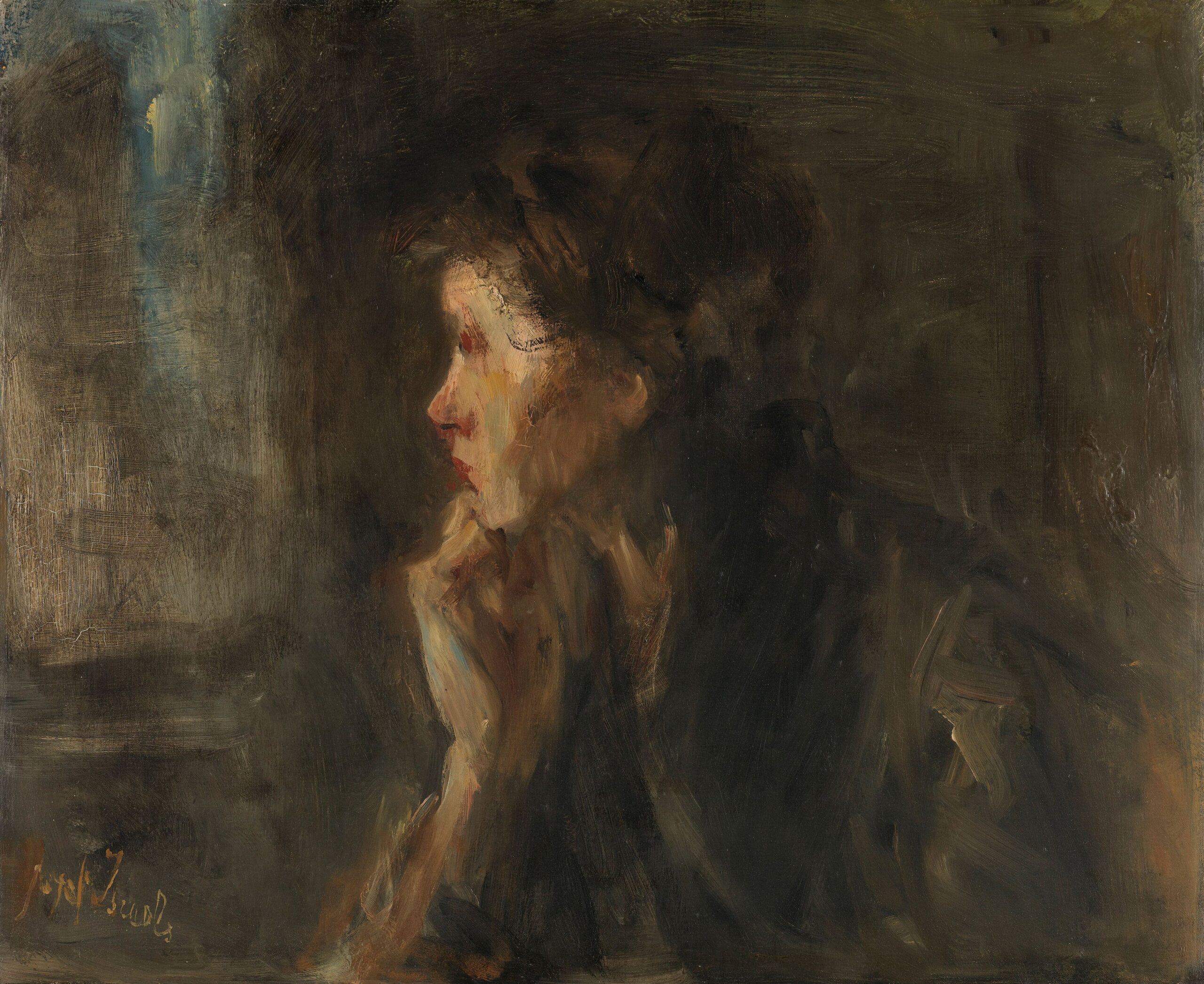
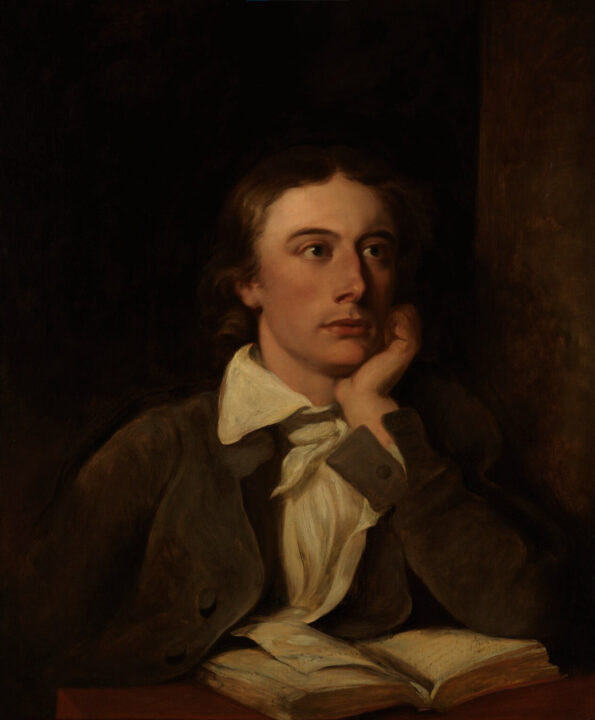
John Keats famously described the world as a “vale of soul-making.” Somewhat surprisingly, this artful turn of phrase is not found in any of his poems but rather in a letter that Keats wrote to his brother George and sister-in-law Georgiana:
Call the world if you please “The vale of Soul-making.” Then you will find out the use of the world. . . . Do you not see how necessary a World of Pains and troubles is to school an Intelligence and make it a soul? A Place where the heart must feel and suffer in a thousand diverse ways.
In his letter, Keats was expressing an important insight about life in this world. Human suffering need not be an entirely negative phenomenon; suffering, when undergone and interpreted in the right way, can help to form and shape the human soul. Keats was touching upon one of the core truths of Christianity, but the Christian faith teaches that suffering can have a far more profound, and far more extensive, impact than that described by Keats. Suffering can serve a redemptive, salvific purpose not only for the sufferer but for other people as well (Col 1:24), when the person undergoing the suffering “offers the suffering up” to God in love on behalf of other people.
Unfortunately, Keats stripped this truth of much of its meaning and power by explicitly rejecting its Christian context, replacing the Christian teaching about the nature of the human soul and human suffering with an idiosyncratic and logically incoherent form of paganism. In the same letter to his brother and sister-in-law, Keats describes human beings as “sparks of the divine” who are already identical with God:
I say “Soul-making”—Soul as distinguished from an Intelligence. There may be intelligences or sparks of the divinity in millions [of people]—but they are not Souls till they acquire identities, till each one is personally itself. Intelligences are atoms of perception—they know and they see and they are pure, in short they are God—how then are Souls to be made? How then are these sparks which are God to have identity given them—so as ever to possess a bliss peculiar to each one’s individual existence? How, but by the medium of a world like this? This point I sincerely wish to consider because I think it a grander system of salvation than the Christian religion—or rather it is a system of Spirit-creation . . . a system of Salvation which does not affront our reason and humanity.
If human beings are already divine, what need is there for the ongoing formation of our souls through such experiences as suffering in this world?
We are not, in fact, identical with God, no matter how much we might wish we were, or even delude ourselves to be, in our moments of overweening pride.
In the formulation of his own personal “system of salvation,” Keats has fallen victim to two perennial temptations to which we human beings are subject. The first of these temptations is to conceive of God as an impersonal force rather than the personal God of Christian revelation. C. S. Lewis provided an unsurpassable description of our fallen human tendency in this regard:
An “impersonal God”—well and good. A subjective God of beauty, truth and goodness, inside our own heads—better still. A formless life-force surging through us, a vast power which we can tap—best of all. But God Himself, alive, pulling at the other end of the cord, perhaps approaching at an infinite speed, the hunter, king, husband—that is quite another matter.
The other temptation to which Keats succumbed (and it’s one toward which we human beings have been inclined since the very beginning of the human race—see Gen 3:1–24) is self-deification: the temptation to declare ourselves to be equal to God or to believe that we can make ourselves divine entirely via our own efforts. We are not, in fact, identical with God, no matter how much we might wish we were, or even delude ourselves to be, in our moments of overweening pride. And we cannot turn ourselves into gods via our own efforts, regardless of the fever dreams of some transhumanists.
The phrase “vale of soul-making” became popular both because of, and in spite of, these errors by Keats. But it also became popular because it was a pagan version of some genuine, and deeply profound, Christian truths:
- Human suffering can have both value and meaning, and human suffering can even be redemptive.
- This world is, in fact, a “vale of soul-making,” at least in a loose sense of that phrase. But it should be noted here that Keats’s use of the term “making” is somewhat problematic because it implies that our souls are created over the course of our earthly lives, a connotation that Keats makes explicit in calling his “system of salvation” a “system of Spirit-creation.” Our souls are not created during our earthly lives; rather, our souls are created by God at the moment of our conception (Catechism of the Catholic Church, 366 and 703). A more accurate, though admittedly less mellifluous, phrase than the “vale of soul-making” would be to call the world a vale of soul-formation, in which we are invited by God to cooperate with his grace in allowing him to form and shape our souls to be more Christlike over the course of our earthly lives (Eph 4:13).
- We human beings were created by God to share in his divinity, but we are not equal to God, nor can we make ourselves divine by our own efforts. Incredibly, God, in Jesus Christ, offers us a share in the divine life as a sheer gift (2 Pet 1:3–4).
It’s up to each of us to decide whether to accept God’s gift of a share in the divine life, love, and bliss. That’s what life in this “vale of soul-making” is actually all about.