
The College Beat: Article XV
. . .
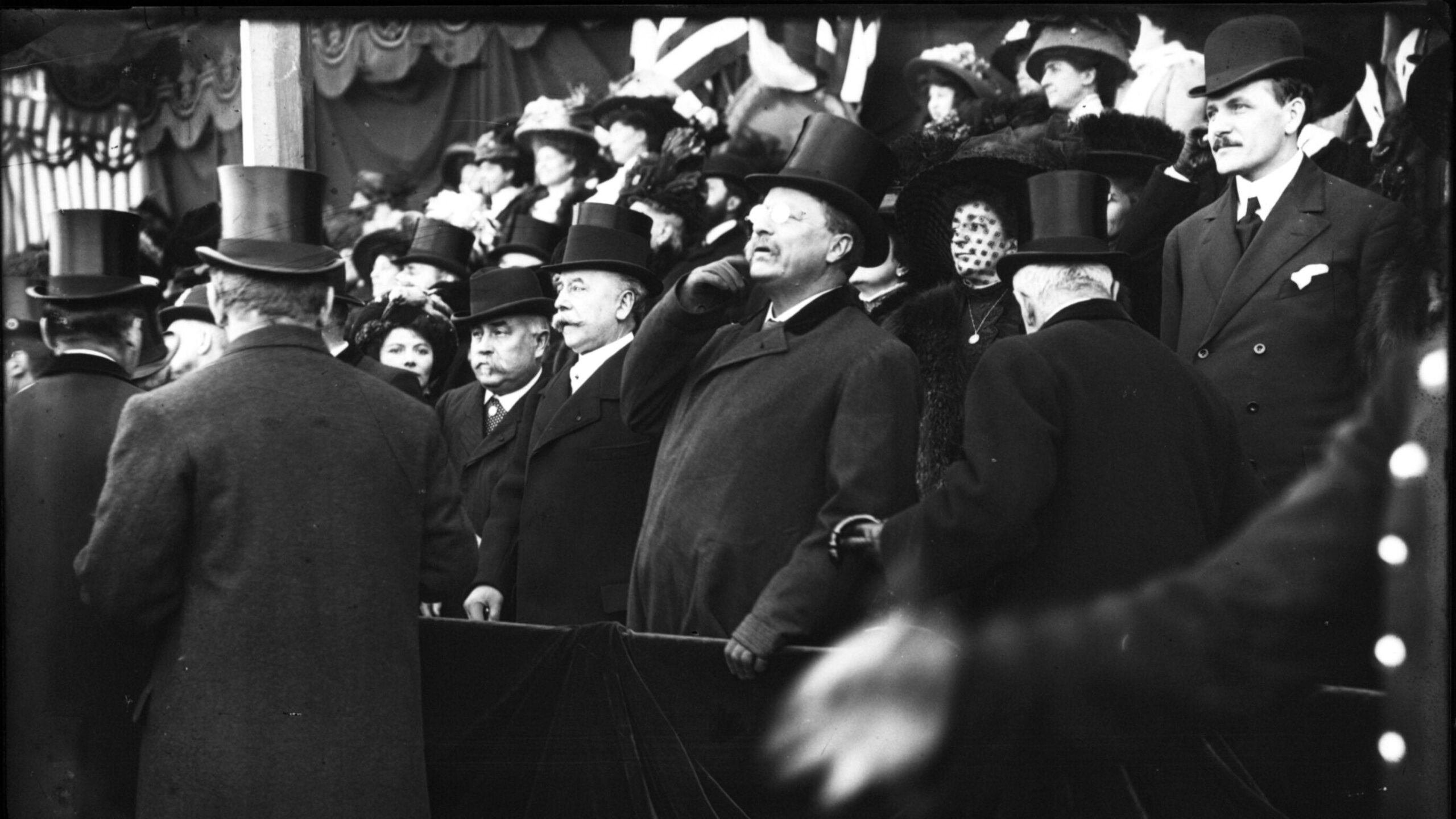
It is not the critic who counts; not the man who points out how the strong man stumbles, or where the doer of deeds could have done them better. The credit belongs to the man who is actually in the arena, whose face is marred by dust and sweat and blood; who strives valiantly; who errs, who comes short again and again, because there is no effort without error and shortcoming; but who does actually strive to do the deeds; who knows the great enthusiasms, the great devotions; who spends himself in a worthy cause; who at the best knows in the end the triumph of high achievement, and who at the worst, if he fails, at least fails while daring greatly, so that his place shall never be with those cold and timid souls who neither know victory nor defeat.
—President Theodore Roosevelt, “Citizenship in a Republic,” 1910
Every one of us has something—beyond an insistent alarm clock—that wakes us up in the morning. What truly awakens us is a driving force, a calling, a passion which serves as a prod, an engine, and an unrelenting motive force. What will we do with it? Of course, we bring our unique abilities and limitations to whatever we pursue, but passion fosters incredible creativity. As Friedrich Nietzsche states, “He who has a why to live can bear almost any how.” What truly matters is that we chase our passion and act upon it.
Teddy Roosevelt’s 1910 speech, “Citizenship in a Republic,” best known for its “man in the arena” excerpt, depicts an essential principle of humanity: effort. He states that success is better shown in the heroic act of trying, rather than in the ultimate act of achievement. In any vocation, God gives us a task. In Roosevelt’s speech, achievement alone does not measure success. Rather, our passion-fueled effort decides whether we end up dwelling alongside “those cold and timid souls who neither know victory nor defeat.”
In our modern self-actualizing age, canned phrases such as “give it a shot,” “try your best,” and “never give up” circulate so prominently that they tend to lose the meaning of their vital message. Before the cyclops, sirens, and suitors, Odysseus was, at best, a supporting actor in the Trojan War. It seems demeaning to say he merely “gave it his best.” And yet, without Odysseus’ tireless effort to find his way home, Homer would only be known for one story and not its brilliant sequel.
Unlike Odysseus, of course, we aren’t escaping Calypso or surviving Cerberus, nor, to Roosevelt’s illustration, are we physically in an arena. But the point remains: If properly pursuing our passions, we will find ourselves exhausted and homesick on our journey, and our faces will be “marred with dust and sweat and blood.”
Our trials mold us in myriad ways, whether we are Odysseus on the high seas, a gladiator in the Colosseum, or even Huckleberry Finn on a river raft. No two people are the same. Likewise, no two hardships are the same. Adversity doesn’t stalk and ambush us in the same way it does our neighbors. For one, clambering out of bed serves as the largest obstacle to overcome in a day, while, for another, the death of a loved one carries with it enough grief to last a lifetime. These moments, while ultimately difficult and potentially life-altering, are essential for the human condition. They transform us. They test our passion. The only way one can “lose” in these trials is by not facing them. They allow us to confront the opponent, and, perhaps, come out victorious. Odysseus’s hunger for his family and his home empowered him to return to it. Although our lives are nothing like Odysseus’s, they are still epics. Without our passions and the effort they fuel, becoming “men in the arena” would never be a possibility, and all knowledge, wisdom, and strength found in the journey of hardship would be lost.
Our passion for our faith and the effort we exert in our everyday lives is crucial to finding our way in Christ and following him into any arena we face.
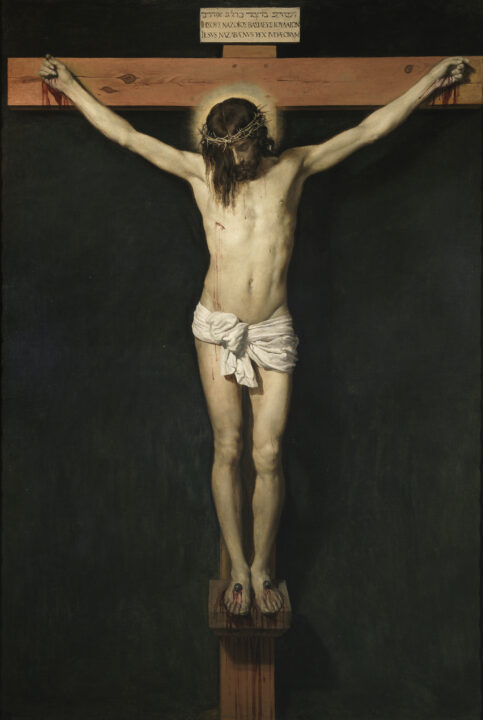
Who is the prime example of the man in the arena? Who has been singularly informed by passion and unmitigated effort? Jesus Christ. Dying for the whole of our sins, Christ completed a mission in a way that is unfathomable to us. It is no coincidence that the act of Jesus atoning for our sins was called the Passion of Christ. His passion, that is, his hunger for righteousness and love for mankind, empowered his journey and mission on earth and allowed him to overcome one of the most gruesome and painful deaths of all time. How can we repay this favor? How can we avoid becoming “those cold and timid souls who neither know victory nor defeat”? We follow God dutifully with the gifts we’ve been given and the calling we are offered and attempt to reciprocate Christ’s love for us. We must aim ourselves toward God, and, as Revelation 3:6 counsels, listen to what the Spirit speaks to us.
C. S. Lewis once asserted, “Christianity, if false, is of no importance, and if true, of infinite importance. The only thing it cannot be is moderately important.” The middle ground alluded to by Lewis falls under the title of lukewarm Christianity. This is a spirit antithetical to “the man in the arena.” Through a lack of zeal for God, anyone can fall into the trap of lukewarm Christianity.
In many ways, “the man in the arena” is a perfect metaphor for the Christian life. The arena is rarely one strict setting but rather is always changing. Some arenas demand that we step in to defend our faith, others ask us to spread God’s word, and still others ask that we simply choose the virtuous life. Regardless of the arena, our effort is informed by our love for Christ, as love is of our own choosing. Without attempting to love Christ in full, we fall into lukewarm Christianity. Following Christ’s example as “the man in the arena” makes sense, but it is rarely easy. Our passion for our faith and the effort we exert in our everyday lives is crucial to finding our way in Christ and following him into any arena we face.
The passion and effort that dwell within us unify to create an invigorated force stronger than anything we can physically muster. Roosevelt’s speech illuminates an essential task for each human being: try. Whatever stands before us, the road to conquer it starts with the first step. Any adversity that seeks to derail us, whether it has the potential of ruining a life or just a mere moment, can be overcome but only after the journey is started. At the very minimum, when you may think you have failed, you will realize that you haven’t. You have still learned lessons rich in wisdom and virtue which, without the risks you took, might never have become apparent. The means to become “the man in the arena” are not mysterious; we always have an immediate role model in Jesus to accompany us and guide our everyday lives. Today and every day, transform into “the man in the arena.” In doing so, through passion and effort, we will indulge in riches paramount to what we, or Odysseus, could ever imagine.