
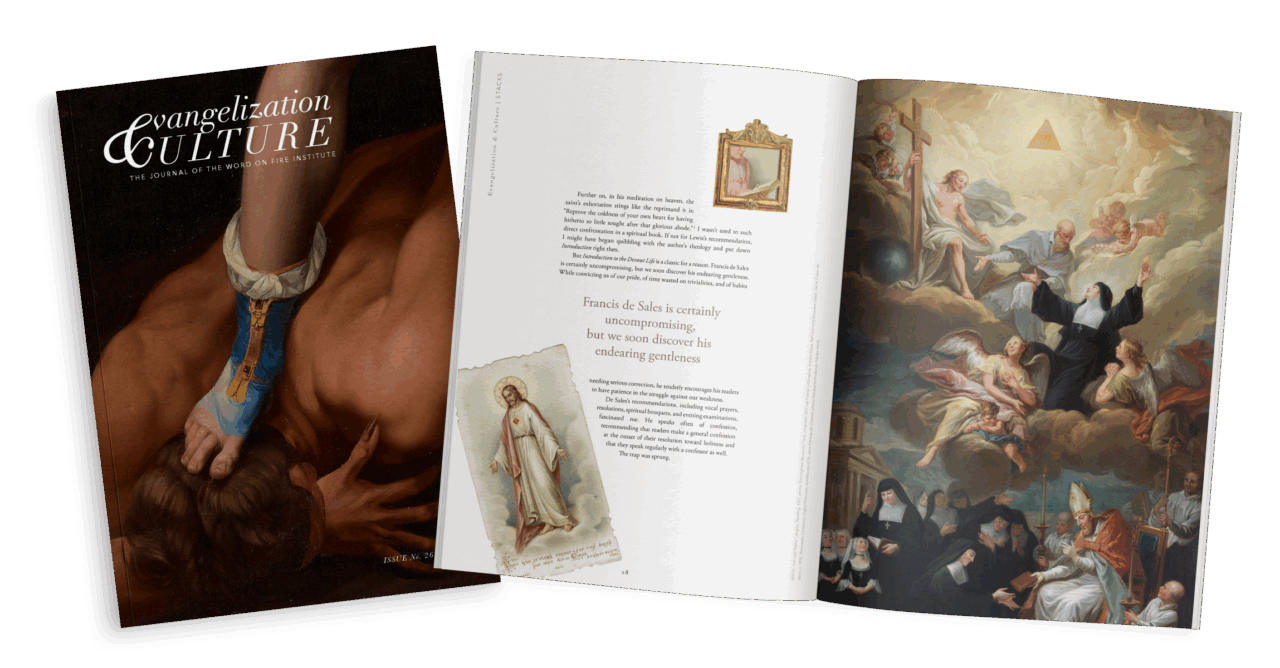
The following features the “Stacks” column published in the Word on Fire Institute’s Evangelization & Culture journal, Issue 26: Saints.
In his spiritual autobiography, Surprised by Joy, C. S. Lewis famously mused, “A young man who wishes to remain a sound Atheist cannot be too careful of his reading. There are traps everywhere.” Lewis was speaking of how books, especially those by George MacDonald and G. K. Chesterton, slowly challenged his atheism and eroded his resistance to Christianity.
Many Lewis quotes have amused me over the years, but this one held a twist that, in midlife, surprised me. When I came of age and left the warmth of my pastor father’s home, I expected to remain an Evangelical Christian all my life. But apparently, a woman who wishes to remain a sound Evangelical cannot be too careful of her reading. There are traps everywhere, even in the work of the “mere Christian” himself.
The “trap” in my case lay hidden in a collection of Lewis’s letters I’d purchased at a used bookstore when I was in my twenties. A couple of decades passed before I pulled it off the shelf, after I’d already read much of his other work. Lewis’s generous response to strangers seeking his advice moved me, and it wasn’t long before I noticed that he often recommended a book titled Introduction to the Devout Life. Curious about what I’d find there, I bought a copy.
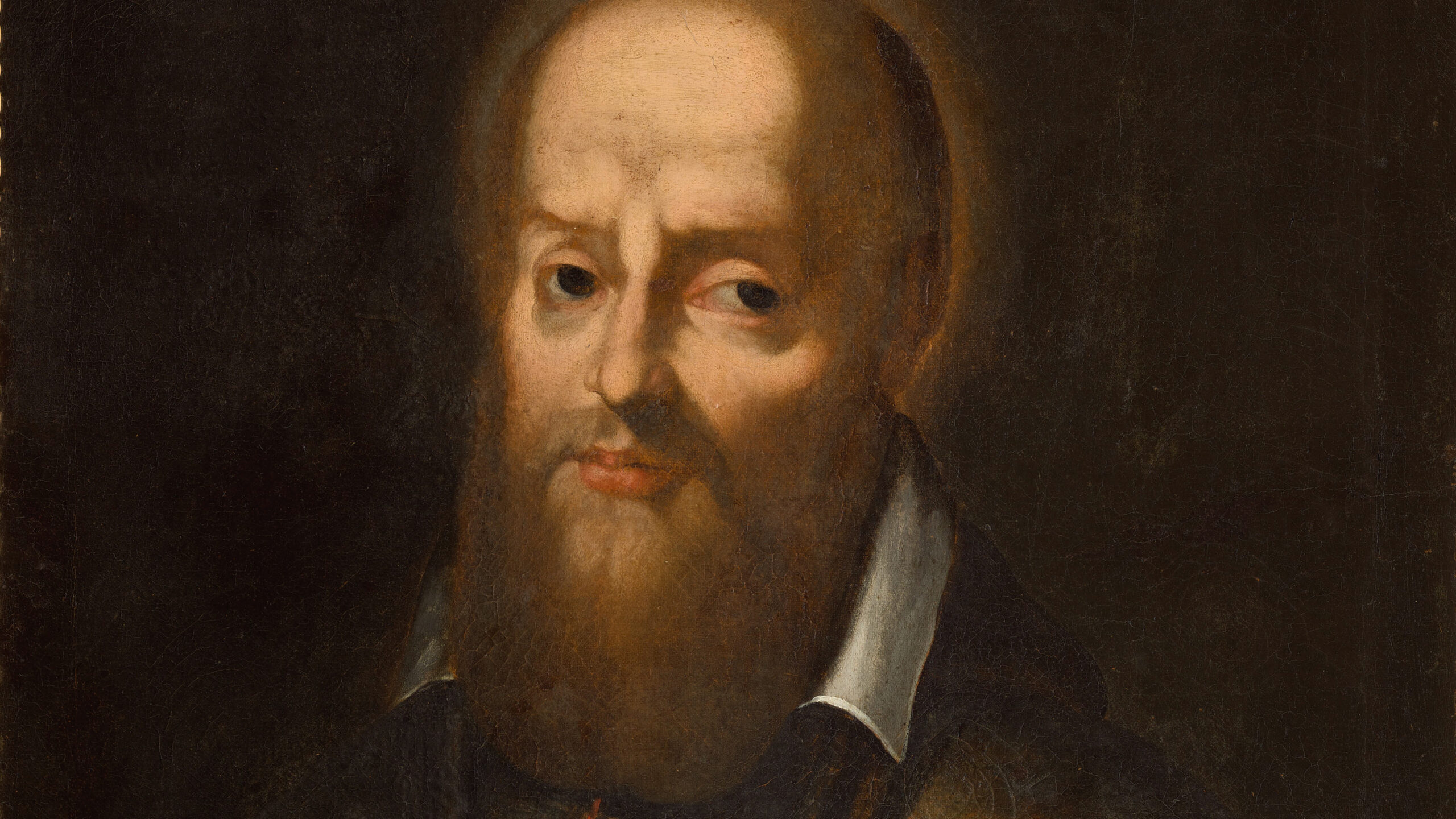
What I discovered was a treasury of spiritual direction that seemed written just for me. And, in a way, it was. St. Francis de Sales, the post-Reformation bishop of Geneva whose preaching and writing won thousands of souls back to the Catholic Church, addresses his book to Philothea, or “one who loves God,” and, in that description, he includes soldiers, mechanics, princes, and married women.
The holy bishop seemed to hover around my heart, drawing from it a thousand spiritual questions.
He wants one thing for all his readers: that we, whoever we happen to be, will desire the “one thing necessary”—to live in singular devotion to Christ. Understanding that a haphazard spiritual life will miss the mark, he offers readers a compendium of wisdom gained over years of providing spiritual guidance.
As the name suggests, Introduction is quite accessible. De Sales has a charming way of illustrating spiritual principles by comparing them to wonders in the created world. He writes vividly of birds and elephants, lambs and rocks, flowers and trees and bees—he has a particular affection for bees.
But those honey-dipped metaphors are aimed at more serious matters than they initially seem. As I read his Introduction, the holy bishop seemed to hover around my heart, drawing from it a thousand spiritual questions. What did he mean by “meditation”? What was the difference between mortal sin, venial sin, and imperfections? As a Protestant reader, I had to wonder whether I even understood his meaning when he spoke of saints. He clearly didn’t think “faith alone” was all it took to become one.
Francis de Sales begins by urging the reader to ponder the state of her soul. The mind-blowing consideration that the world was already old when I was born into it, and was moving along quite well without me, had never before entered my thoughts.
Further on, in his meditation on heaven, the saint’s exhortation stings like the reprimand it is: “Reprove the coldness of your own heart for having hitherto so little sought after that glorious abode.” I wasn’t used to such direct confrontation in a spiritual book. If not for Lewis’s recommendation, I might have begun quibbling with the author’s theology and put down Introduction right then.
But Introduction to the Devout Life is a classic for a reason. Francis de Sales is certainly uncompromising, but we soon discover his endearing gentleness. While convicting us of our pride, of time wasted on trivialities, and of habits needing serious correction, he tenderly encourages his readers to have patience in the struggle against our weakness.
De Sales’s recommendations, including vocal prayers, resolutions, spiritual bouquets, and evening examinations, fascinated me. He speaks often of confession, recommending that readers make a general confession at the outset of their resolution toward holiness and that they speak regularly with a confessor as well.
The trap was sprung.
I had no access to confession as an Evangelical Christian. I began to long for it and for a full sacramental life in the one, holy, catholic, and apostolic Church. I came into full communion only two years after reading St. Frances de Sales, and I took him as my confirmation patron.
I reread Introduction to the Devout Life twice during my first years as a Catholic, humbled to discover, confession by confession, how slow the path to holiness really is.
Although C. S. Lewis resisted his friend J. R. R. Tolkien’s hope that he would one day enter the Church of Rome, the twist for me is that reading Lewis led me to a book by a saint who would play a significant role in my conversion from Evangelical Christianity to the Catholic Church. It was a further delight to later learn that de Sales is a Doctor of the Church whom Pope Paul VI praised for anticipating Vatican II’s universal call to holiness with “keen and progressive insight.”
Today, after years of receiving Christ in the Eucharist and absolution in the sacrament of reconciliation, I continue to thank God for the most surprising event of my life: the conversion that began when C. S. Lewis introduced me to St. Francis de Sales.