
In the early 2010s, many of pop culture’s female heroines were known for a type of cool aloofness. Usually associated with an “alt” or “indie girl” aesthetic (think black eyeliner, flannel shirts, combat boots, tattoos, and piercings), the affectless “cool girl” was wry and detached. She also conspicuously did not define herself through romance. Instead, as if subconsciously overcorrecting for the critiques implied by the Bechdel Test, she was cooly indifferent to men—oftentimes paradoxically attracting them precisely because of this Tumblr-era indifference.
As the decade unfolded, a subtle backlash against the cool girl began to emerge. Gone Girl’s Amy Dunne was a harbinger. Her famous “Cool Girl” monologue critiqued performative effortlessness, criticizing the female ideal of asking for nothing, remaining perpetually carefree and unbothered, and suppressing neediness, jealousy, or vulnerability.
That backlash eventually crystallized in the figure of the “certified lover girl,” an archetype appearing on social media in the early 2020s. In contrast to combat boots and black eyeliner, the certified lover girl embraces a feminine coquette aesthetic (think bows and lace). She celebrates romantic obsession and yearning with a sort of innocent shamelessness. Instead of performing indifference towards men, she openly adores, replacing irony, detachment, and nonchalance with earnestness, longing, and desperation. Lana Del Rey is perhaps the clearest avatar. Oftentimes projecting a 1950s housewife aesthetic, her music is so unabashedly lovesick and submissive that it almost seems to openly troll or taunt the cool-girl ethos. Her rejection of performative aloofness in favor of devotion is unapologetic—but also oddly refreshing in its honesty, especially to anyone identifying with Amy’s rant. (Think “Video Games”—a song about unwavering loyalty to an apathetic “bad boy” who plays video games and drinks too much—or “Happy Birthday Mr. President,” which romanticizes Marilyn Monroe’s theatrical devotion to John F. Kennedy.)
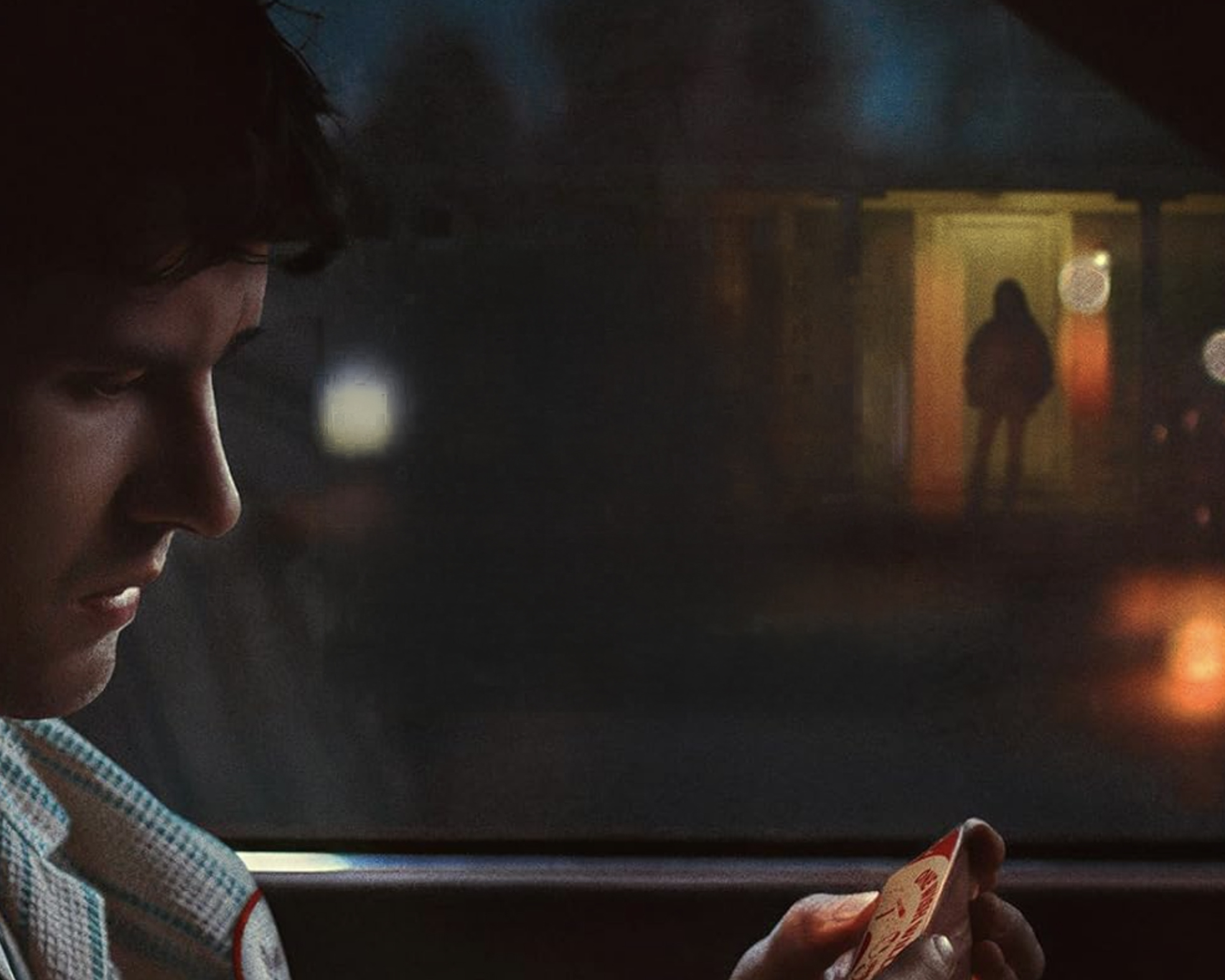
Whether intentionally or not, the recent film Obsession—which surpassed an astounding $334 million this week on a budget of $750,000—dramatizes this cultural transition. Directed by Curry Barker, Obsession tells the story of Bear, a shy music-store employee who uses a supernatural wish to make his co-worker Nikki fall in love with him—with catastrophic consequences. At the beginning of the film, Nikki epitomizes the affectless cool girl of the early 2010s. The daughter of a single mom, she dresses in an effortlessly alternative style, surrounds herself with tattooed and pierced friends, frequents trivia night, and prides herself on emotional self-sufficiency. Even her name—informal and contemporary—signals a type of anti-traditionalism. Fittingly, at one point, she boasts that if she ever developed a crush on someone, nobody would know—a statement capturing the cool-girl suspicion of female desire, sentiment, and vulnerability. Like a sort of late-stage “manic pixie dream girl” (insofar as she is self-possessed, magnetic, and immune to romantic neediness), her appeal lies precisely in this apparent unattainability.
Love cannot be manufactured. Freedom cannot be bypassed. Human beings cannot be possessed without being consumed.
Yet over the course of the film—because of Bear’s wish—Nikki undergoes a dramatic transformation, becoming romantically obsessed. In this sense, the film charts a movement from the cool girl to the certified lover girl—but pushes the latter to a pathological extreme. What begins as an indifference to emotional dependence ends as reckless embrace of it, even if unchosen. The film therefore dramatizes the cultural pendulum swing from ironic distance to unapologetic yearning, while also warning that romantic devotion, when untethered from self-possession, can become its own form of captivity.
Of course, the key stipulation here is that Nikki does not choose the state into which she devolves, one in which longing is taken to such an extreme that it becomes debasing. Her transformation is not her choice. A woman who once prided herself on emotional independence is reduced to humiliating desperation, surrendering her dignity for a dynamic she never wanted. Using a wish from a magic store, Bear literally wishes her into loving him. In that sense, Obsession is “not a romance” (a line Nikki uses to describe a novel she is writing) but a “love story”—and love, as we know, can become distorted.
Fittingly, the movie has much to say about the theme of consent. Over the last decade, consent has been a fraught topic, thanks to the #MeToo movement, which oftentimes reductively collapsed the mysteries of love and desire into questions of permission and boundaries. Obsession approaches that same issue, but from a fresh, unpreachy angle. Rather than asking whether a particular encounter is consensual, it asks whether love itself can exist without freedom.
The answer the film offers (contrary to that of a help-desk employee Bear desperately contacts) is an emphatic no. Bear gets exactly what he thinks he wants: a woman who loves him unconditionally and obsessively. Yet the fulfillment of his wish quickly spirals. Nikki’s affection ceases to be satisfying because it is no longer chosen. The more devoted she becomes, the less human she appears. By transforming a romantic fantasy into a horror premise, the film exposes a truth that is easy to miss: consent is not merely a legal prerequisite for intimacy but one of the conditions that makes love valuable in the first place. Love that is not chosen is not really love at all.
For a Christian audience, this insight points beyond romance, prompting a logical sequence which, if followed to its conclusion, answers one of theology’s most enduring questions: “Why do bad things happen to good people?” Part of the Christian answer to this question is that bad things can happen to good people because human beings are fallen and can thus let evil into the world. This premise begs the next question: “Why are people fallen?” Why didn’t God just make us all perfect? People are fallen because God gave us free will. So then why did God give us free will? God gave us free will because he didn’t want us to have to love him without our consent. God desires not mere obedience but love, and love requires freedom. A world in which human beings are incapable of rejecting God would also be a world in which we are incapable of genuinely choosing him.

Obsession takes this premise and flips it on its head: What would love look like if it wasn’t chosen? In this context, Bear creates the sort of relationship that many imagine they want: one without risk, uncertainty, or rejection. Nikki cannot leave. She cannot say no. She cannot choose anyone else. Yet the result is not nirvana but nightmare. Thus, the film perhaps inadvertently illustrates a profound theological principle: Freedom is not the enemy of love but one of its necessary conditions.
Thus, insofar as Bear’s wish precludes freedom, it also proves to be fundamentally selfish. In a 2025 essay, Catholic apologist Matt Fradd drew on Aquinas to articulate that the challenge facing men today is not excessive (so-called “toxic”) masculinity but insufficient masculinity, i.e. effeminacy: an unwillingness to endure hardship for the sake of a greater good because of a selfish attachment to comfort and pleasure. While many viewers have been quick to label Bear a resentful “incel,” the Thomistic category of effeminacy—which Bear embodies to a tragic degree—may prove more precise. Terrified of rejection, he’s unwilling to endure the vulnerability that genuine love requires (namely, asking Nikki out and allowing her the freedom to choose), seeking instead a shortcut that promises romance without risk.
On a broader level, Bear’s wish reflects a fundamental misunderstanding of the purpose of love itself. The end of courtship is not self-gratifying euphoria, but discernment of marriage; and marriage, as St. John Paul II repeatedly taught, is gift of self. To become preoccupied with one’s own feelings and desires in the process is to risk idolizing romance for selfish gains rather than learning to love and give. Bear fails to grasp this concept. He does not wish for Nikki’s happiness, flourishing, or freedom; he wishes for her feelings. The tragic consequence is both characters becoming trapped inside an all-consuming system of misplaced adoration—with both losing autonomy and dignity along the way.
The film suggests that the desire for control, whether exercised through magic, manipulation, or consumerism, ultimately destroys the very thing it seeks to possess.
There is another layer to Obsession that feels particularly relevant for Christian audiences. The film’s world is saturated with the casual spirituality of contemporary secular culture. In that sense, Nikki is a recognizable type: the essentially fatherless daughter of a single mother who fills her room with crystals and searches for meaning in alternative spiritualities. Thus, the characters treat the occult with the same breezy unseriousness they would a Reddit rabbit hole (or “Treddit,” as it’s called in the film). In a society that has largely abandoned traditional religion and the patriarchy—where trivia night, tattoos, fandoms, and other rituals of self-construction often take on quasi-religious significance—people remain intensely spiritual; they simply redirect that impulse into horoscopes, manifestation rituals, tarot cards, crystals, and other forms of New Age mysticism. The film’s magic shop, where Bear purchases the wish, feels less like an anomaly than a natural extension of a culture in which identity is filtered through “Reddit Brain”: Carefully curated, niche interests (like the occult) are approached as one more hobby to explore.
This is what makes the magic shop at the center of the film more than a quirky detail. The entire catastrophe begins when Bear attempts to bypass the ordinary risks of love through supernatural means. Rather than confess his feelings and accept Nikki’s freedom to reject him, he seeks a shortcut. The wish functions as a consumerist solution to a spiritual problem. In a culture obsessed with life hacks, manifestations, and optimization, the temptation is always the same: to control what should instead be received as gift. The film suggests that the desire for control, whether exercised through magic, manipulation, or consumerism, ultimately destroys the very thing it seeks to possess.
What’s more, the magic shop is not troubling simply because it enables Bear’s effeminacy in short-circuiting love, but also because the actual spiritual forces involved are not neutral. Bishop Barron recently tweeted: “What becomes clear in the course of Obsession is the owners of the occult shop where Bear bought the fateful wish-willow are in fact involved with very dark spiritual powers.” New Age spirituality and the occult, in other words, are not merely quirky or ironic; they can be dangerous. Entertaining them, even if frivolously, can mean opening doors to dark powers that one may not fully understand. “In my conversations with exorcists,” Barron explains, “I hear over and over again that those who get ensnared by the devil commence by dabbling in the occult.”
Bishop Barron’s comment gets to the heart of another truth. In an era of endless sequels, reboots, and recycled “cinematic universes,” horror feels very alive, as if it’s one of the few remaining genres where genuinely original ideas can still break through—but it is also, crucially, one of the few remaining genres willing to actually take evil seriously. Contemporary storytelling often either dithers in relativism or, when it does acknowledge evil, quickly resorts to therapeutic explanations of it. Villains are misunderstood (a la Wicked). Every wrongdoing has a backstory. Every moral conflict dissolves into competing perspectives. Like the “Willow Wish” surprising Bear with its actual powers for evil, horror, at its best, reminds us that there are some things that should be feared, some desires that should not be indulged, and some doors that should not be opened. Like the recent horror film Weapons, Obsession retains a moral imagination that much of contemporary culture has lost—one that resonates, even in a supposedly secular age, with the human soul.
That is ultimately what makes Obsession more than a gory horror film. Beneath its jarring plot twists and dark humor lie surprisingly traditional insights. Love cannot be manufactured. Freedom cannot be bypassed. Human beings cannot be possessed without being consumed. In a culture oscillating between emotional detachment and romantic obsession, between secular disenchantment and occult curiosity, Obsession arrives at a conclusion that is almost old-fashioned: the good cannot be obtained through control. It can only be received as gift.
A saying commonly attributed to St. Teresa of Avila observes, “More tears are shed over answered prayers than unanswered ones.” And those are prayers offered to a God who is Love itself. How much more terrifying, then, to imagine the consequences of an occult spell? Obsession is the eerie, tightly wound story of a man who gets exactly what he wishes for—and discovers that his wish is instead a curse.