
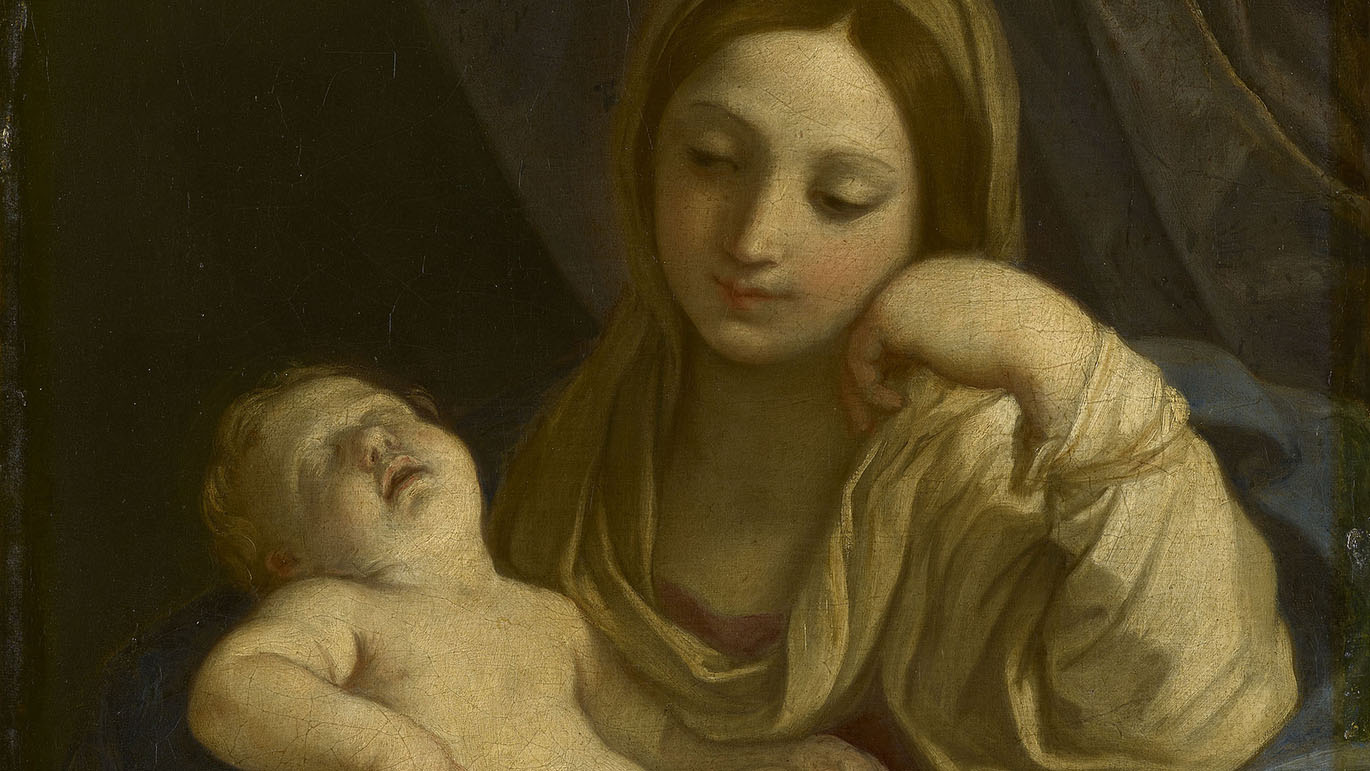
We are in the final stretch of Advent, which are among the holiest days in our Catholic tradition. And in this time where the darkest night of the year meets the brightest light of the world, as we stare down the packages yet to be wrapped, the Christmas meal grocery list, and the loneliness in our hearts for family gone before us, the invitation to sit with our Blessed Mother is clear. She beckons us to learn something new this Advent, a lesson on receiving rather than doing, a lesson on being what the world would view as “useless.” “To be still and know” that God is God (Psalm 46:10).
I have sat pregnant on the eve-eve of Christmas five times over with our children. And while Our Lady was free from original sin’s curse of suffering in labor, common sense tells us that traveling on a donkey while pregnant to wait for the census in a town other than your own was both uncomfortable and exhausting. But it is here at the feet of our Blessed Virgin Mother that we are invited to witness this deepest of all spiritual lessons: the surrender of our “doing” before the throne of God.
If we can glean anything from our dear friend Saint Bruno and the Carthusian Order he founded, it is that to give ourselves up as a living sacrifice to God can look like doing very little in the eyes of the world. I came across this quote that the Carthusian novice master in Vermont shares with each novice upon entrance: “Are you prepared to be useless?” It struck me that this posture of uselessness, of giving up everything you are capable of and praised for and accomplished in, speaks to the recommendations of the spiritual masters throughout the centuries. And yet to be useless appears to run afoul of even the Christian call to be salt and light, to give a brighter witness, to use even our suffering as a vehicle for God‘s grace as we offer it in union with Christ’s own suffering, to be laborers in the field when the harvest is ready. Perhaps inside all of that activity could be a disposition of the heart to submit our very doing to God the Father.
God doesn’t want our usefulness for Christmas; God wants us.
What is the posture of your heart this Advent? Again, we turned to the Blessed Mother and her great act of receptivity to the Holy Spirit in her fiat. Assuredly, Mary was the (busy) mother of the early Church just as she is the (very busy) mother of the universal Church today. We can imagine that Mary baked the best bread and gave the best advice to other mothers. Truly, we know she was the most beautiful of all creation outside of our Lord himself. The Church does not primarily direct our focus to Mary as the best wife, mother, homemaker, friend, or village neighbor. Instead we are invited to emulate her lowly status, her humble heart, and her desire for union and intimacy with God and his will. (Think about the Magnificat! Such a gift to pray it daily in the Divine Office.) Her most important attributes are these quiet, invisible, interior movements of her will toward God’s, moment-by-moment, as she was actively consumed by his love. (Adrienne von Speyr writes so tenderly about it all in The Handmaid of the Lord. It’s worth the Christmas season read.)
I’m not saying to abandon ship on gift wrapping and pie baking in order to rest in bed, although that may be the recipe for a deeper rest. Outer stillness can certainly assist with inner quietude. But I am saying God doesn’t want our usefulness for Christmas; God wants us. The confusion around our worth and value being found in what we can do and produce for him trickles down into believing his love for us is completely contingent upon how holy we appear, how many prayers we have prayed, or how acutely we have corrected our neighbor’s sin. God alone confers meaning and pours out grace; he holds us in existence by his unconditional love.
This productiveness mentality can creep into all the relationships in our lives. We esteem ourselves when we excel at task completion. We praise capacity and outcome in our children. We eschew the company of those who seem uncomfortably unproductive, whether that be family members with an intellectual or developmental disability or those whose mindset is not intent on leveling up, leaning in, or launching something new. Certainly, Our Lord instructed his disciples to come away and rest (Mark 6:31), but not as a strategy for increased productivity and output. It was for the restoration of the heart that can only happen when we allow God to tend to us as a good father will. In fact, Jesus specifically taught all of us to ask God for “our daily bread” (Matt 6:9-13). He did not ask God to teach how to make more bread, tastier bread, or quicker-baking bread. He asked for sustenance for each moment, for each day, because to be God‘s child is to rely on him for everything.
And what do helpless, “useless,” little babies teach us, even aside from reliance on God? The babe in the manger comes as a fully divine and also fully human child, desirous of attention, care, and love. Dependent on all three to grow well and develop as God has designed each of us to. The faces of our parents are our first reflection of our eternal source of love. Love is the animation of our existence and our being. How babies teach us to love!
As this Advent season comes to a close, maybe we carry this lesson of uselessness into the Christmas season, returning to Our Lady’s witness of reliance on God. The New Year can be a time of letting go of self-reliance and allowing grace to penetrate every aspect of our existence. Be content to be useless. Be content to be fully in God’s hands. Adore God as his child, marvel at God the Son’s coming as a babe, and be lost in wonder and gratitude, as was Mary before the manger. Allow him to transform your unique soul into the person he created you to be by stripping away the defensiveness of activity, the barriers of usefulness around your heart.