
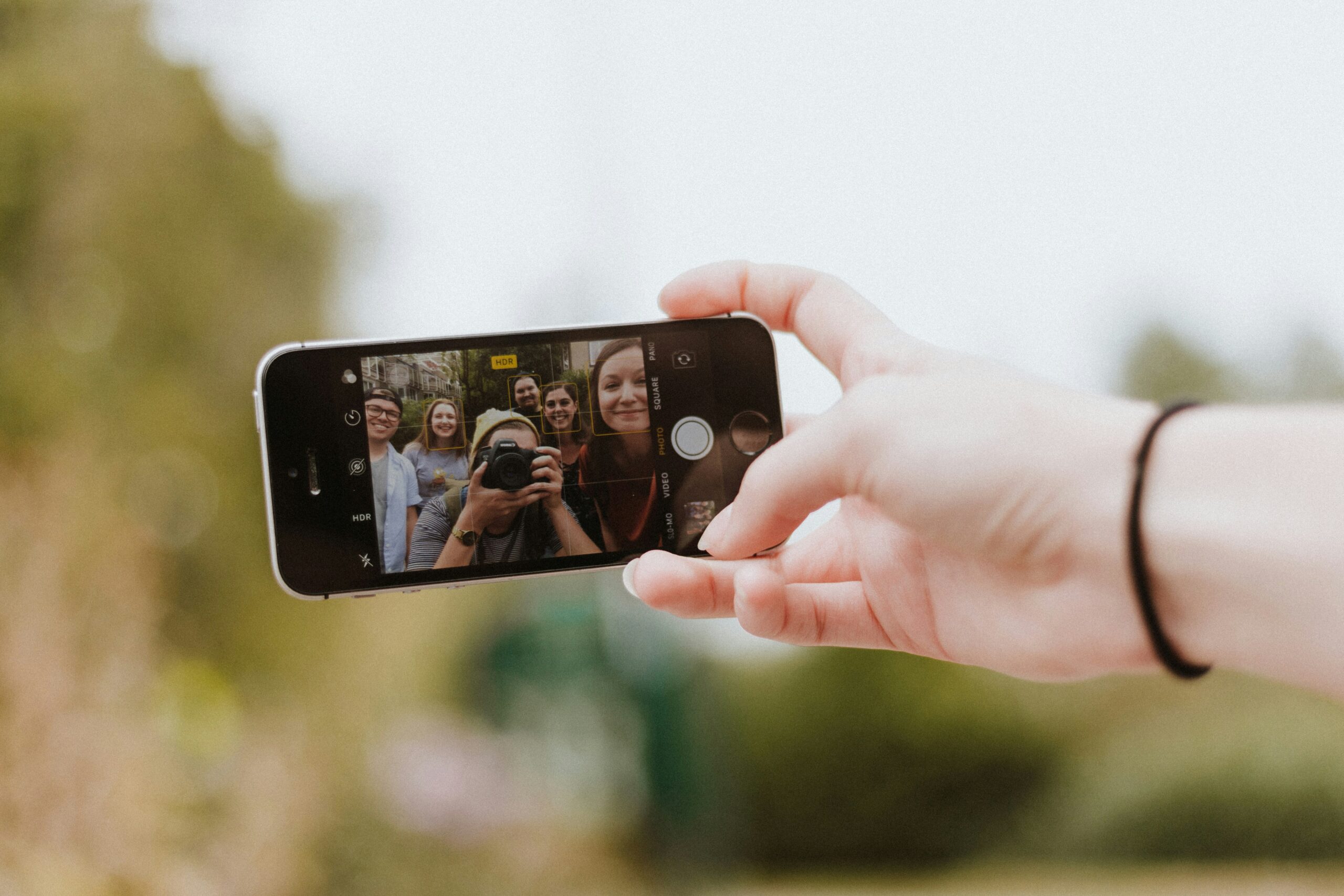
Recently while reading a Washington Post article about “five destinations for a cheaper spring break,” my attention was curiously drawn not to the various warm locations chosen but to the ubiquity of one thing: the selfie. From Miami Beach to Fort Lauderdale, from Guadalajara, Mexico, to Cartagena, Spain—photos advertising these locations as the premier affordable spring break destination featured revelers and tourists taking selfies.
Granted, we’ve been analyzing the meaning and cultural significance of smartphone selfies as emblematic of our naval-gazing culture practically since they became a global phenomenon more than a decade ago. And, of course, a recurring theme across the advertising industry is to persuade us into thinking that buying a product is somehow a repudiation of conformity, an act of self-expression. Nevertheless, the ubiquity of selfies in promotional photographs for vacation destinations says just as much, I think, about how we construe happiness and meaning as it does the twenty-first century’s embarrassing egocentricity.
Everything, even the most enjoyable and exciting parts of life, are now routinely mediated through self-referential technology. To be having fun is to be taking photos of yourself in places that are different from where you are currently taking photos of yourself. We are a people whose very happiness is now seemingly indelibly tied up with the need to communicate to others, to the world, that we are enjoying what we are doing. Or perhaps the action of sharing our experience with others is now an integral component of that sense of personal fulfillment. To digitally share an experience with someone else is to give it meaning, and even eternalize it. If we don’t, did it even happen?
Since the inauguration of the digital age, its evangelists have championed their wares as symbols of human creativity, freedom, and happiness. Computers are touted as expediting mindless work so we can do more higher-order tasks. Smartphones, the ultimate digital Swiss Army knife, are a tool to free us up to do other things we really want to do. And yet the iPhone weekly reminds us we are spending literally hours per day on the device, often indulging in frantic consumption of anxiety-inducing media or mindless distraction.
Far from celebrating and extending ourselves through a digital medium, we must transcend ourselves through personal self-gift and self-surrender, both toward other humans and ultimately to the divine.
Many perceive the paradox: Books, seminars, and retreats encourage “digital fasts” because a rising number of Americans, particularly the youth, are addicted to these devices. Speakers and writers are creating thoughtful and helpful strategies to curtail the power the digital age has over our spiritual life, mental health, and personal relationships.
I would submit that the issue seems to be one of free will. Digital age advocates tell us that these devices and their programs will engender human flourishing and increase human agency. But they are often doing precisely the opposite, creating or intensifying fears, anxieties, and feelings of isolation and loss of control. Even the most intentional of us find ourselves in a constant battle trying to limit their influence over daily existence.
These provoke not just questions about our spirituality—given how they distract from prayer and authentic fellowship—but what it means to be human. At every public event, whether professional, recreational, or political, we’ve not only got our phones out but are constantly taking photos and videos of ourselves and those around us. Both in the privacy of our home and in the public square, the device has become an extension of ourselves and how we mediate who we are to the world.
Dystopian literature—which so often offers a window not only into a possible future but our present—generally presents two responses to technological developments that engender feelings of social disconnection, anxiety, and loss of agency. One is to diminish pain by further stifling freedom, usually through a cocktail of medication and distraction. You might call this the “soma model” of Aldous Huxley’s Brave New World or Philip Dick’s Do Androids Dream of Electric Sheep? The other extreme is to subversively or violently resist, as does the character Winston in George Orwell’s 1984 or Captain Richard in Ernst Jünger’s The Glass Bees.
Anthony Burgess’s A Clockwork Orange, in turn, presents (and critiques) both models, while ultimately offering a third that best protects and restores our humanity. Burgess’s near-future dystopian England is one in which citizens are dulled into passivity through narcotics and mind-numbing television programming. It is also one in which gangs of frustrated, disaffected youths wander the streets at night pursuing what they call “ultraviolence.” Their “horrorshow” antics, as they call them, do not make for pleasant reading.
The protagonist of the story, a sociopath named Alex, is eventually arrested and imprisoned for his crimes; state-sponsored scientists then perform trial experiments on him in order to overcome his violent tendencies. When he is tempted toward physical or sexual violence, his mind and body are reprogrammed to experience excruciating revulsion. Yet upon his release, this only makes the “fixed” criminal dangerously susceptible to the manipulation and violence of others, including his former gang members. Almost killed, his plight exposes the nefarious character of the psychological and pharmacological experiment performed on him.

Though the original last chapter of the book (upon which the disturbing Stanley Kubrick film is based) was removed from the US edition of A Clockwork Orange, it is there that the Catholic-raised Burgess offers a glimpse of a better means of countering our technologically induced distemper. Deprogrammed, a listless and confused Alex spies a young man and woman at a cafe who seem totally absorbed in each other and their conversation. It turns out the man is in fact a member of Alex’s former gang, now employed by an insurance company, and is on a date with his lovely wife, who is a typist. The friendly couple leaves shortly thereafter for a “harmless” party with other friends featuring wine and “word-games.”
Stunned, Alex begins to imagine himself married and a father. He considers a future in which he tries to help his son understand the world so that the boy might avoid the many mistakes he had made, though Alex worries that such a son might very well turn out just as violent as him. But first of all, Alex realizes, he must find a woman willing to love him and be a mother to his son. “That was something like new to do. That was something I would have to get started on, a new like chapter beginning.” Here, in that hope, is the adventure; here is the real humanity.
Thus does Burgess offer us the best way to address the feelings of isolation and discouragement we all experience in our atomized modernity: authentic human relationship. The best way to resist anxiety and the feeling of lost agency is not medicinal or therapeutic, nor an angry, violent “breaking out” from under the tyrannical thumb we feel pressed upon us. It is to stare into the eyes of another, to experience his or her humanity, to love and suffer for that person. Far from celebrating and extending ourselves through a digital medium, we must transcend ourselves through personal self-gift and self-surrender, both toward other humans and ultimately to the divine. Counterintuitively, that is where true freedom is discovered.
In 2026, we are witnessing both poles of literature’s dystopian imaginings: people going further and further into themselves through drugs and devices, and, alternatively, violent acting out against perceived threats to freedom and self-expression. Neither will satisfy the longings in our hearts, which are made for the eternal, as St. Augustine memorably taught. Wherever we are, we should be resisting the temptation to constantly narrow our gaze to electronic visual displays on handheld devices and instead look up at the more interesting world and people around us, who, like us, are desperate to know and be known. Certainly, doing so makes for being happier and more fully human. It also makes for better vacations too.