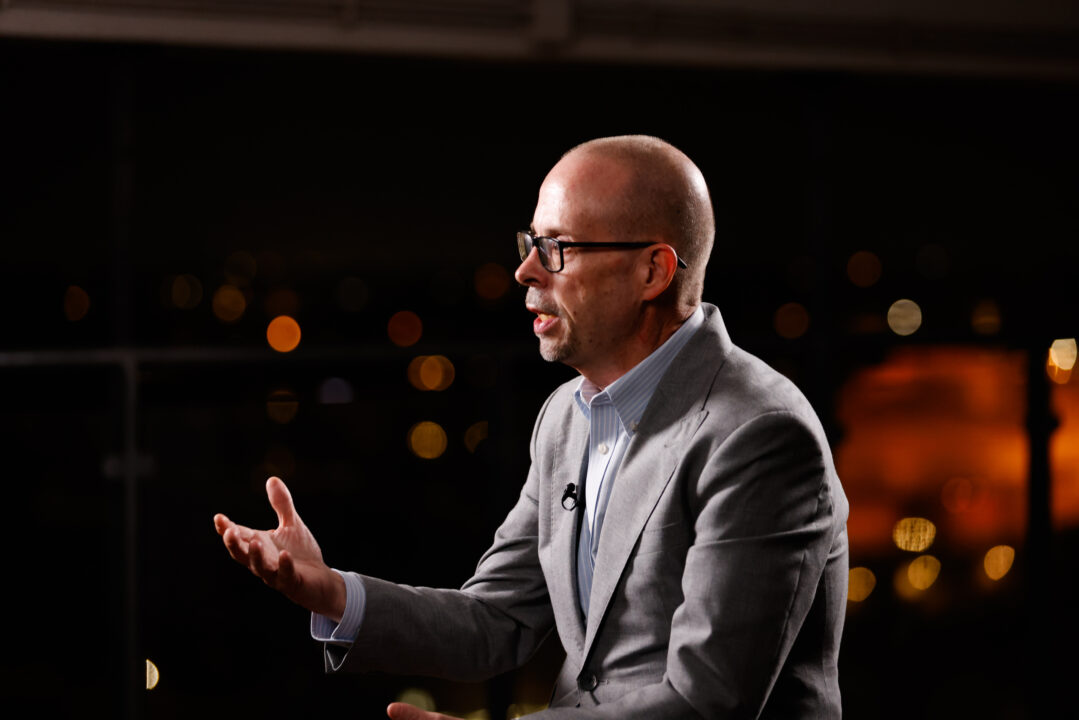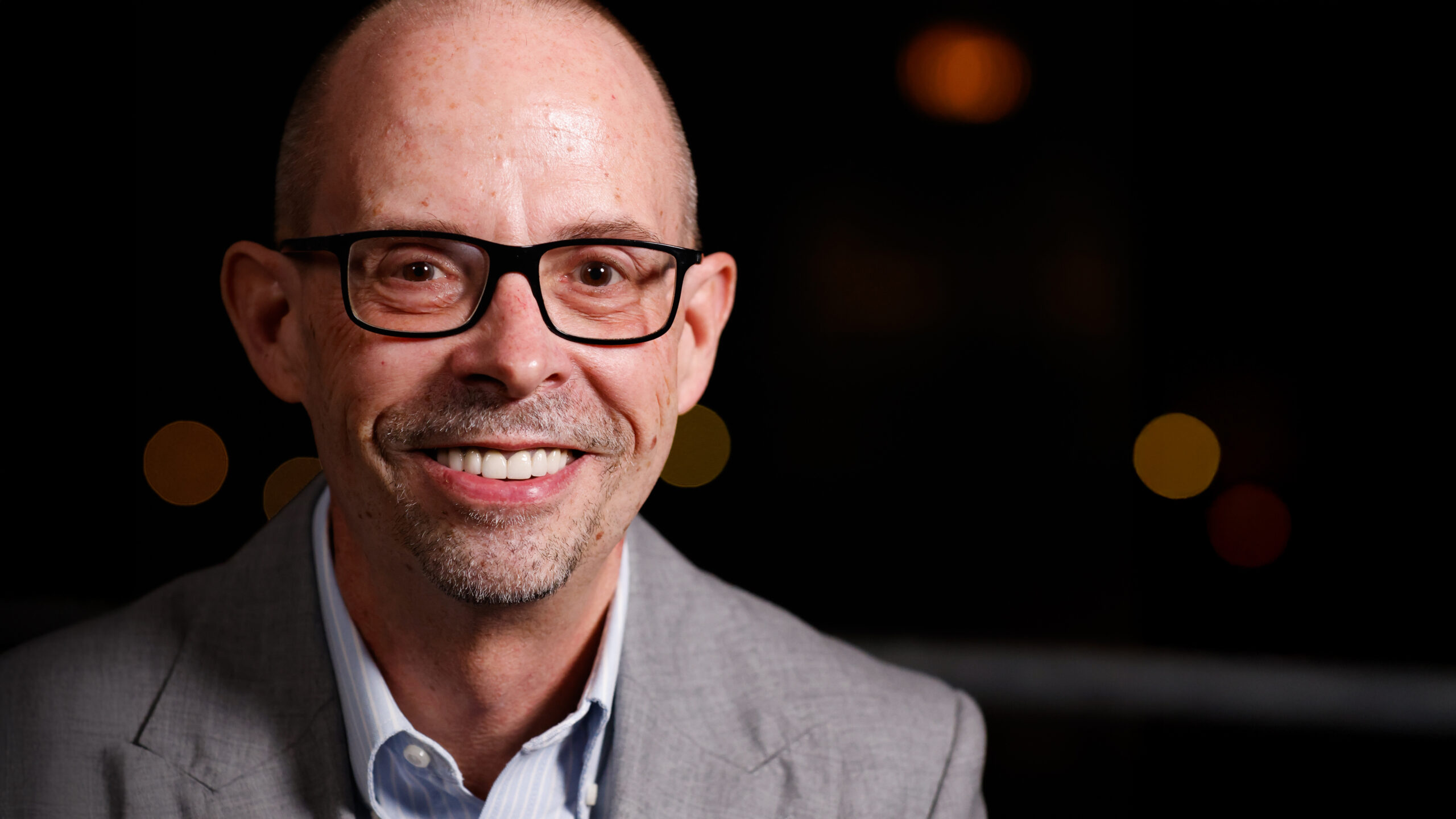
In his early days in Rome, John told me that he aspired to be like George Will, the political journalist who combined top-rate reporting with insightful commentary and who was seemingly everywhere in the ’70s and ’80s—newspaper columns, books and television appearances.
Midway through his career in Rome, however, when John’s reputation as a top Vatican reporter was already well established, he was faced with a choice: to go solo and enjoy a lucrative writing and speaking career or to take a big financial and professional risk and establish Crux as an independent magazine after it lost the backing of The Boston Globe.
That he chose Crux tells you something about John; that he considered it one of the most important things he accomplished tells you the rest.
With Crux, John enjoyed the camaraderie of a staff of writers and the satisfaction of knowing he helped launch the careers of many young journalists. He considered those young journalists his true legacy to the world of Catholic journalism, rather than any book he wrote or speech he gave.
The launch of Crux in 2016 in the auditorium of the North American College in Rome was a highlight of his career. I have never seen so many cardinals and members of the curia voluntarily attending a journalism event, but as Cardinal George Pell said at the launch, they all read John to find out what was going on in the Vatican.
We were unlikely friends—a champagne-and-caviar California blonde and a beer-and-burger Kansas boy—but we both possessed a Catholic pilgrim soul and found ourselves companions on the adventure for nearly thirty years of papal trips, CNN and CBS reporting, and thousands of Vatican press conferences and events.
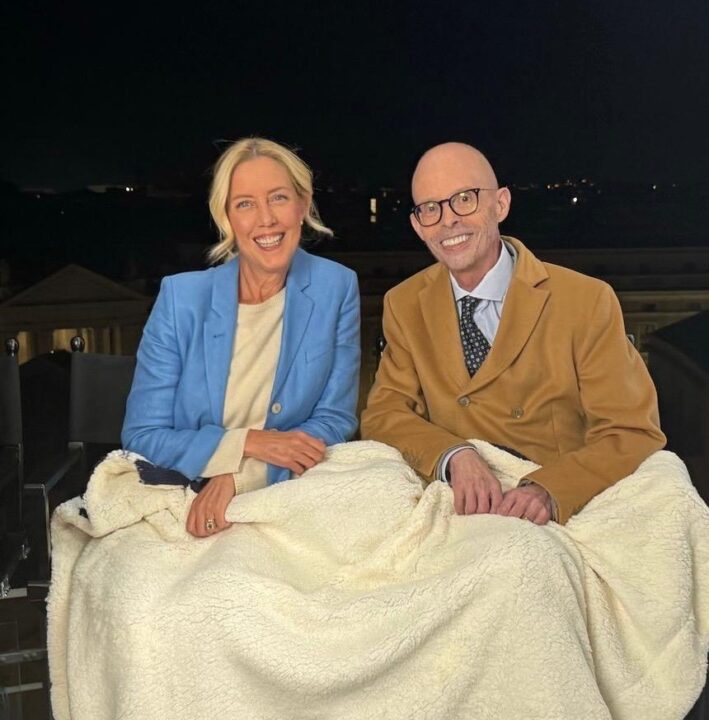
Many of our early reporting days were spent in and out of the Vatican press office just in front of St. Peter’s Basilica on the Via della Conciliazione.
In those days, things could not be done by remote Zoom calls or email. You had to be there. A day at the office did not mean sitting in front of a computer or on the phone but walking the streets of the Vatican, pen and notepad in hand, meeting curia officials in their offices, hanging out with the old-time journos—who had been at Vatican II!—listening to their stories, and many, many long Roman lunches where you inevitably bumped into important monsignori and a cardinal or two.
John did not have a public persona versus a private one; he was simple in that way.
He did not “prepare” to go on television: He walked in, sat in the chair, spoke to the camera, and walked out, as if he were visiting a neighbor or going to the dentist rather than speaking to millions of people on national television.
He was nonplussed by the idea that people were watching or listening. He was not afraid.
John was blessed to have found his vocation and lived it to the full. That is not always a given in life. It was a gift to him and to all of us who knew him and read him. Many have already spoken about his fairness, generosity, and largesse, whether it was sharing contacts, giving interviews, or picking up the tab at restaurants. John lived large, but part of him always remained the simple Kansas boy who marveled that cardinals in Rome had shown up to his event and that people on the street stopped him to shake his hand.
He loved it all.
Covering the funeral of St. John Paul II in 2005 for CNN, while live on-air sitting between Christiane Amanpour and me, John broke down in tears. Christiane delicately asked him why he was crying, and John explained that every single moment of his journalistic life in the last five years had been dedicated to this pope, that it was impossible not to feel moved that it was all now over.
That sensitivity and intensity did not waver for another twenty years, covering three more popes.
John was blessed to have found his vocation and lived it to the full.
John was already ill and in the midst of chemotherapy when Pope Francis died. He postponed his treatment to be able to cover the conclave that elected Pope Leo.
During the conclave coverage, we took a brief break from our chairs on the CBS set and decided to go down to St. Peter’s Square. We had no particular destination, so I asked John which way he wanted to go.
“I guess we could go pray,” he said, pointing to the Church of Santo Spirito in Sassia on a side street near the Vatican.
We entered the doors and walked down the side aisle to the large painting of Jesus of Divine Mercy. We had both been with John Paul II on his trip to Poland in 2002 and visited the original Divine Mercy Shrine there. We knelt side by side on the red velvet kneelers; I don’t know what John prayed for, but I prayed for him.
John did not have brothers, sisters, or children. His parents both died when he was young. In the last weeks of his life, several close friends took turns staying by his bedside.
The day before he died, I found myself once again by his side praying in silence. Well, not entirely in silence. Not wanting to exhaust him with talk, I played Mozart from my phone, sure that this music of the angels would accompany him to the threshold of his new life more than any words that I could utter.
I did speak to him mentally, imagining a beautiful welcome for him in heaven with his parents, his beloved grandparents, and, for good measure, George Pell, Ratzinger, and Pope Francis. He could finally get all the scoops he ever wanted. I reminded him of the words of the first pope we covered, John Paul II, “Be not afraid,” and asked Mary and the angels to accompany him on his way.
John died on Thursday afternoon, January 22, at 2 p.m. in the company of his beloved wife, Elise, and a dear priest friend.
As I write this, the thought occurs to me to send it off to John for editing before publication. I was never a confident writer, much to his chagrin. My brain has forgotten, momentarily, that he is no longer around. Such is death.
My heart, however, is filled with confidence that he is awakening to a beautiful new world in our Lord, where conversations and friendship never end.