

The College Beat: ARTICLE XVIII
. . .
In the past few months, The New York Times, The Atlantic, and the Wall Street Journal have all published stories on the renewed interest of Generation Z in faith and religion. Gen Z, born between 1997 and 2012, never experienced life without the internet, do not remember air travel before the events of 9/11, and suffered the unprecedented lockdowns and social restrictions of a global pandemic during their most formative years. Yet, many young men and women of this generation, currently in their teens and twenties, are unapologetically seeking to quench their spiritual thirsts in traditional religion. In this essay I hope to show how Flannery O’Connor—who kept a prayer journal documenting her own spiritual journey during her early twenties—would not be surprised by the spiritual quest of Gen Z, or that many of them are finding their place in her beloved Catholic Church.
I will begin by demonstrating how the experience of the COVID-19 pandemic acted as a moment of grace for Generation Z, offering transformation of mind and heart to things beyond this world. Second, I will show how Flannery O’Connor stands as a strange yet credible witness to an authentic way of life that offers meaning and truth to members of a generation longing to be part of something bigger than themselves. Third, I will argue that reading the stories, letters, essays, and prayers of Flannery O’Connor allow Generation Z an opportunity to reflect on their own lives and interpret their experiences in a context that both challenges and comforts their habit of being.
The COVID-19 Pandemic as Grace
To consider the COVID-19 pandemic and all the lockdowns and restrictions that followed from it “a grace” may seem ridiculous to many, but not to Flannery O’Connor, or to those who give papers about her at academic conferences. For in a letter to John Hawkes dated April 14, 1960, O’Connor explains, “Grace, to the Catholic way of thinking, can and does use as its medium the imperfect, purely human, and even hypocritical.” It is the grace that arrives after your family is murdered in the woods and you are face-to-face with the Misfit, or when your leg is stolen in a barn by a traveling Bible salesman, or when you crash a tractor into a tree, setting is ablaze and losing your shoes, or when you accidentally shoot your mother instead of the slut, or when you are assaulted by a fat girl of eighteen or nineteen with bad acne in the waiting room of a doctor’s office. These are all terrible things—terrible experiences, but they are also all moments of grace in the fiction of Flannery O’Connor, moments in which her characters are afforded an opportunity for repentance, healing, and redemption—a new way of seeing, a new way of living, a new way of being. O’Connor writes, “There is a moment in every great story in which the presence of grace can be felt as it waits to be accepted or rejected, even though the reader may not recognize this moment.”
Very few people were calling the pandemic a grace when we were going through it six years ago. I was a doctoral student in Rome at the time, already under government lockdown, writing a dissertation on Flannery O’Connor when the American embassy called our rector and told him that we all had to go home. After packing a suitcase full of books and shaving my beard down to a mustache so that the mask would seal over my face, I flew out of Fiumicino airport on March 24, 2020, and landed in Cleveland a little after midnight the next day, Flannery O’Connor’s birthday. Because I had arrived from Italy, which was the epicenter of the pandemic, I had to quarantine for two weeks and take my temperature twice a day and report it to the county healthy board when they called me at three o’clock in the afternoon each day. Fortunately for me, as a Gen X celibate doctoral student who was used to long periods of solitude, I kept to the writing schedule I had in Rome, and it kept me sane. But it was an entirely different story for Gen Z.
During the spring of 2020 across the US schools and churches and many businesses closed their doors, while social distancing, constant handwashing, masking, and online classes became the norm. For the older members of Gen Z, Spring sports, musical performances, and theatre productions were cancelled, along with prom, and in some cases, even graduation ceremonies. Weddings, if they happened at all, became restricted and intimate events with only a few family members and friends. If your loved ones were in a hospital or a nursing home, visits became tricky, if they happened at all, and not without PPE (personal protective equipment). The world went from in-person to online, and a generation that already spent an inordinate amount of time attached to screens was exacerbated by pandemic protocols. Moreover, Gen Z had already reported higher rates of anxiety and depression than previous generations, but the numbers climbed “steeply upward after 2020.” More depression, more anxiety, more suicidal ideation.
Where is the grace? How could all this apparent “bad news” about Gen Z’s pandemic experience bring about anything good? Perhaps at this point we ought to turn to O’Connor herself, specifically a line from the first entry of her prayer journal. “Please help me get under things and find where you are,” O’Connor writes. Even if we don’t believe in God or choose not to pray like O’Connor did, we ought to notice that many members of Generation Z did want help to “get under things” and to find God after their pandemic experience, as many of them reported wanting to be part of something that was “bigger than themselves.” In a recent interview with Vox, one member of Gen Z put it this way: “I did not grow up going to church. My family never went to church when I was younger, but I always had questions and felt like something bigger was out there. . . . So as soon as I could drive myself, I went to church and started looking for those answers.”

A 2025 Pew Research poll reported that “recent polling shows no clear evidence of a religious revival among young adults,” although the same report noted that the decline of Christianity has stabilized and that “there are some interesting things happening with religion among young people.” One of those interesting things is that Gen Z is finding a home in O’Connor’s Roman Catholic Church, as the average American diocese saw about 38 percent more people joining the Church in 2026 compared with 2025. The New York Times interviewed Archbishop Mitchell Thomas Rozanski of St. Louis about the recent surge of young converts and he said, “I think technology has isolated us from one another. I think that COVID just really magnified the situation. We are realizing that many of the ills of our society, particularly anxiety and depression, come about from that isolation.”
Gen Z can be likened to Hazel Motes in Flannery O’Connor’s first novel Wise Blood. It is only when Haze loses everything—in the scene where patrolman pushes Haze’s car over the embankment – that he begins his turn back to God. That is grace at work. And I argue it is that same saving grace that was at work on Generation Z during the pandemic, whether anyone noticed it or not. And it is that same grace which is now being accepted, certainly not by every member of Generation Z, but by enough of them to make The New York Times take interest.
Flannery O’Connor as an Authentic Human Witness
In her 2023 book, Generations, Jean Twenge reports that Gen Z is “concerned with authenticity.” At first glance this desire for authenticity may not seem novel, for young people of every generation have been marked with a desire for what is real and true, but a closer look reveals that there is a notable gravitas on display in Gen Z’s relationship to authenticity, particularly because of the ubiquity and perceived threat of AI. In recent weeks, across the country at college graduation ceremonies, “listeners have balked as commencement speakers have either told them to embrace artificial intelligence, or have otherwise mentioned the ever-expanding technology in a speech.” Gen Z graduating classes have literally booed such speakers. They want authentic human encounters, and they value authentic humans.
The Gen Z actor and musician, Maya Hawke, found that authentic human witness in Flannery O’Connor. She explains, “I was assigned Flannery O’Connor by my English teacher, and I wanted to do some extra reading. I found her prayer journal. And then I read it and loved it. And I knew that my dad had always been extremely interested in smart people who are interested in God. It’s a very large class of people that exist, and they’re kind of underrepresented. And the prayer journal is this smart young woman who was really, really interested in her faith and God.”
Although Pew Research Center has not yet polled Gen Z on how Flannery O’Connor has impacted their world view, anecdotally, as one who has taught O’Connor to Gen Z and as one who spends of lot of his time ministering to Zoomers, I want to make a case for Flannery O’Connor as a model of authentic human witness.
Louise Abbot, one of O’Connor’s closest friends described Flannery in this way: “I never saw any kind of contradiction or inconsistency. It seemed to me that another gift she has was that she was always sincere. . . . Even in the company of other people, she was always herself.” Robert Giroux, O’Connor’s editor and dear friend said, “We knew she was as honest as the day is long, and that was just part of her nature. At least I felt I knew it, upon meeting her, just talking to her. And you can do it with most people. I mean, you can really tell almost immediately.” St. Thomas Aquinas, one of O’Connor’s intellectual heroes, taught that human beings are agents of truth, that we are made to know truth and we take delight in knowing it. When truth is embodied in a human person, we call it integrity or authenticity, and that is what we find in the person of Flannery O’Connor.
What makes Flannery O’Connor a most attractive artist and such an esteemed human being to so many of us—and, I argue, increasingly, members of Generation Z—is her near perfect balance of confidence and humility. On one hand she acknowledges her giftedness as a writer: “I write because I write well,” while on the other hand she does not neglect the Giver of that gift: “Don’t let me ever think, dear God, that I was anything but the instrument for Your story—just like the typewriter was mine.”

Flannery O’Connor was one of the greatest Catholic artists of the twentieth century and was a masterful Christian apologist, insisting, “I am no disbeliever in spiritual purpose and no vague believer. I see from the standpoint of Christian orthodoxy. This means that for me the meaning of life is centered in our redemption by Christ and what I see in the world I see in its relation to that.” Yet, this confidence in Christian orthodoxy does not position her above others. She writes to Louise Abbot, “I don’t set myself up to give spiritual advice but all I would like you to know is that I sympathize and I suffer this way myself. When we get our spiritual house in order, we’ll be dead. This goes on. You arrive at enough certainty to be able to make your way, it is making it in darkness. Don’t expect faith to clear things up for you. It is trust, not certainty.”
As a Catholic, O’Connor embraced a high standard for sexual morality, although she witnessed its opposite during her time at Yaddo: “In such a place you have to expect them all to sleep around. This is not sin but Experience, and if you do not sleep with the opposite sex, it is assumed that you sleep with your own.” However, O’Connor also notes that, “Purity strikes me as the most mysterious of the virtues and the more I think about it the less I know about it,” and that, “Anyone who thinks he’s pure is surely not.” And we know that O’Connor did not think herself pure, for she writes in her prayer journal, “Today I have proved myself a glutton—for Scotch oatmeal cookies and erotic thought. There is nothing left to say of me.”
Flannery O’Connor sees herself as she sees her characters in her fiction: wounded and in need of healing, weak and in need of strength, human and in need of the Divine, good but always under construction, at least on this side of the veil. That amalgamation of confidence and humility, of agency and dependence, which manifests itself as O’Connor’s authenticity is what I argue has made her, and will continue to make her, a friend and hero of Gen Z.
Flannery O’Connor as Interpreter of the Gen Z Experience
During Lent of 2026 I spent every Wednesday evening with a room packed full of young adults at the cathedral of St. John the Evangelist in downtown Cleveland reading Flannery O’Connor. Over those seven weeks we studied “A Good Man Is Hard to Find,” “The River,” “Good Country People,” “The Enduring Chill,” “Parker’s Back,” “Everything That Rises Must Converge,” and “Revelation.” Although there were some young Millennials present, the majority of those gathered were members of Gen Z, and most had never read Flannery O’Connor.
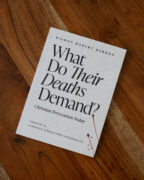
As you might imagine, the first night was difficult for some, especially those who had heard that O’Connor was a faithful Catholic, only to discover that her most famous story—the one we studied on Ash Wednesday—was about a hard-headed grandmother whose family gets murdered in the woods, and, by the end, she herself takes three rounds to the chest and collapses in a ditch and rests cross-legged in a puddle of her own blood, and that somehow this story is supposed to be about grace. With their foreheads still marked with black crosses of ash, my Gen Z friends looked at me and wanted answers. Slowly, we started to examine characters, identifying qualities of the Grandmother and the Misfit, thinking about which of them would make a better friend and why. We started to ask if there is anything about the Grandmother that reminds us of ourselves. Are we ever self-absorbed? Stubborn? A little racist? Do we ever lie? Have we ever doubted our faith?
For a Generation that is constantly expected to show only the best experiences of their lives on social media, posting photos and videos that show the good times, the joys, the victories, and the successes, with filters that enhance or even alter reality to some idealistic state, to be able to identify fallen human nature and its need for redemption and healing in the dark comedic literature of Flannery O’Connor can be a welcomed grace. To come to understand that we humans all have parts of ourselves that are not pretty, are not whole, are not healthy, but distorted, deformed, and grotesque—like a missing arm, a missing leg, or a clubfoot—can be a relief, especially when you realize you are not the only one.
Moreover, it is comforting to know that when Flannery O’Connor was a young adult, she struggled with the same sorts of things that many members of Gen Z are struggling with today. Fear: “I dread, Oh Lord, losing my faith.” Discouragement: “Dear God, I am so discouraged about my work.” Gossip: “I say many many too many uncharitable things about people everyday.” Spiritual desolation: “The summer was very arid spiritually & up here getting to go to Mass again every day has left me unmoved—thoughts awful in their pettiness & selfishness come into my mind even with the host on my tongue.” And the desire to be faithful without abandoning one’s reason: “I would like to be intelligently holy.”
Just as the COVID-19 pandemic was a significant formative experience for Generation Z, so too was it for Flannery O’Connor, or at least for her legacy. She almost got cancelled. The fact that you are reading this article in this journal is evidence that the violent bear it away and that everything that rises must converge. It is mysteries like these, on full display in the life and art of Flannery O’Connor, that I think will hold Gen Z’s attention for some time.