
When three popes recommend a novel, it must be a page-turner.
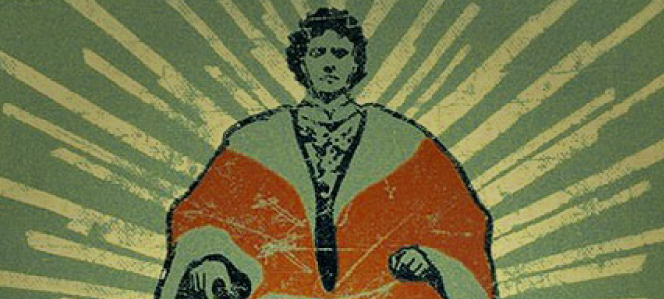
Lord of the World (1907) is a dystopian, apocalyptic novel. It is dystopian insofar as it describes a utopian world that goes badly awry—as they always do. It is apocalyptic, featuring catastrophic events that may—or may not—presage the end of time. In addition, it borrows images and themes from the Book of Revelation. To be sure, Lord of the World is intriguing, well-conceived, and elegantly written.
The story is told from the perspective of the Catholic Church, which makes it distinct from other books in the same genre. Those books include but are not limited to 1984 by George Orwell, Brave New World by Aldous Huxley, Fahrenheit 451 by Ray Bradbury, Parable of the Sower by Octavia E. Butler, A Canticle for Leibowitz by Arthur Miller, and The Road by Cormac McCarthy.
When I first read Lord of the World, I found it interesting. Re-reading it, I find it unsettling because it seems so eerily applicable to the present day. The pontiffs Benedict XVI, Francis, and Leo XIV are spot-on with their recommendation, however disquieting the novel may be for some. Although futuristic, it is not science fiction; rather, the author anticipates, for example, air travel with “volors” that provide regular flights from Rome to London, overflying the Alps. Hardly the stuff of science fiction.
The author, Msgr. Robert Hugh Benson, a Catholic convert from Anglicanism, was the son of the Archbishop of Canterbury, Edward White Benson. Not surprisingly, the younger Benson’s conversion created quite a stir in England. In the preface to the novel, Benson fears that he has written in a too sensational manner, although contemporary readers will not find it excessive at all. Any violence or spectacle in Lord of the World pales in comparison with the lurid The Hunger Games or the razzle-dazzle of the 1970 sensation, The Late, Great Planet Earth. Benson apologetically writes,
I am perfectly aware that this is a terribly sensational book, and open to innumerable criticisms on that account, as well as on many others. But I did not know how else to express the principles I desired (and which I passionately believe to be true) except by producing their lines to a sensational point. I have tried, however, not to scream unduly loud, and to retain, so far as possible, reverence and consideration for the opinions of other people. Whether I have succeeded in that attempt is quite another matter.
A New, Disconcerting World
The novel takes place in London and Rome, and the action alternates from one city to the other. The leading protagonist in Rome is Fr. Percy Franklin. Located in London are Oliver Brand and his wife Mable. Brand is a communist who occasionally worries that Mable has been “tainted” by her now-abandoned Christian upbringing. The geopolitical circumstances are straightforward: The world has evolved into three “empires”: the American Empire (including Canada), the European Empire, and the Eastern Empire (including Australia and New Zealand).
When I first read Lord of the World, I found it interesting. Re-reading it, I find it unsettling because it seems so eerily applicable to the present day.
The universities have collapsed under the weight of their own irrelevance. Men and women have learned “the primary lesson of the gospel that there was no God but man, no priest but the politician, no prophet but the schoolmaster.” The “Ministry of Euthanasia” serves those in physical, emotional, and psychological distress; although, lest you worry, there is a mandatory eight-day waiting period. The pestilence of individualism has given way to the comfort of Communism; excitement and enthusiasm explode with the emergence of the mysterious multilingual Julian Felsenburgh, who brings the promise of universal brotherhood.
Protestantism has died, the Anglican Church in England has been disestablished, the House of Lords abolished. The Nicene Creed is a curious relic. The competing worldviews are Catholicism and Humanitarianism. Humanitarianism (which includes elements of pantheism and Freemasonry) is secular, although, as it grows, it assumes religious characteristics that include “clergy” and “liturgy.” The mandatory festivals, Maternity, Life, Sustenance, and Paternity create a new generation of Catholic recusants.
Flannery O’Connor helps us understand the danger of humanitarianism unmoored from religious or even philosophical guiding principles in her renown introduction to A Memoir of Mary Anne:
In the absence of . . . faith now, we govern by tenderness. It is a tenderness which, long since cut off from the person of Christ, is wrapped in theory. When tenderness is detached from the source of tenderness, its logical outcome is terror. It ends in forced-labor camps and in the fumes of the gas chamber.
A Multi-Front Fight, a Purifying Fire, and Clarifying Distress
The spiritual warfare is unprecedented as centuries of persecution have coalesced into an assault on all fronts:
Once, in the early ages, Satan’s attack had been made on the bodily side, with whips and fire and beasts; in the sixteenth century it had been on the intellectual side; in the twentieth century on the springs of moral and spiritual life. Now it seemed as if the assault was on all three planes at once.
Yet, the chief weapons remain “the mass, prayer, and the rosary.” Franklin, though, observes that sometimes the greater hazard are over-zealous Christians: When a Catholic tries to assassinate Oliver Brand, he provides a convenient excuse for savage persecution. The latest slogan? “Scratch a Catholic and you’ll find an assassin.”
The difficulty of the times purifies the faith and clarifies Catholic doctrine. Indeed, “the very desperateness of the cause” inspires the believers. No temptation appears “to lean on the arm of flesh” because no one “fought for them but God.”
Their nakedness was their armour, their slow tongues their persuasiveness, their weakness demanded God’s strength, and found it.
As he loses his faith, Fr. Francis, who becomes the chief liturgist for Humanitarian quasi-religious events, had already set himself up for apostasy as he “had allowed ceremony to play too great a part in his religion, and prayer too little. In him the external had absorbed the internal.” He had not, moreover, understood the warning “that the heart is as divine a gift as the mind, and that to neglect it in the search for God is to seek ruin.”
Indeed, troubling times focus the mind. The heroic Fr. Franklin observes that though Catholicism doesn’t clear everything up for the believer, it offers more than any other religious system.
The Catholic Religion . . . gave the only adequate explanation of the universe; it did not unlock all mysteries, but it unlocked more than any other key known to man; He knew, too, perfectly well, that it was the only system of thought that satisfied man as a whole, and accounted for him in his essential nature.
A Search for “Giants”
Readers may find it interesting that the unnamed pope of the novel, in response to the distressing times, announces a fresh and vital strategy: a new religious order. This had been anticipated early in the novel by Fr. Franklin when he sadly observes, “There seemed no giants on the earth in these days.” He asks himself, “What in the world was to be done?” and concludes,
Yes; what was wanted was a new Order in the Church; the old ones were rule-bound through no fault of their own. An Order was wanted without habit or tonsure, without traditions or customs, an Order with nothing but entire and whole-hearted devotion, without pride even in their most sacred privileges, without a past history in which they might take complacent refuge.
Fr. Franklin dreams of God’s Franc-tireurs, the French resistance fighters who opposed the Prussians, and seventy years later, the Nazis.
The difficulty of the times purifies the faith and clarifies Catholic doctrine.
As the novel progresses and the world darkens, the pope makes it official and puts his plan in historical context.
While the army of Christ is one, it consists of many divisions, each of which has its proper function and object. In times past God has raised up companies of His servants to do this or that particular work—the sons of St. Francis to preach poverty, those of St. Bernard to labour in prayer with all holy women dedicating themselves to this purpose, the Society of Jesus for the education of youth and the conversion of the heathen—together with all the other Religious Orders whose names are known throughout the world. Each such company was raised up at a particular season of need, and each has corresponded nobly with the divine vocation.
Members of the order, the pope explains, must be prepared for martyrdom should it come. In the meantime, the Order of Christ Crucified will provide “an opportunity for adherents to fully dedicate themselves to God and his work. They will maintain lines of communication.” They will moreover, “develop strategies for the preservation of the faith and the administration of the sacraments.”
Indeed, the narrator later acknowledges “that it was plain enough by now that had it not been for the Order, the Church would have been little better than paralyzed under these new conditions.” The implication is that not only are religious orders prompted by inspiration from within the Church, but they are also impelled by the state of the world outside of the Church.
Most importantly, for those seeking the enrichment of their inner life, Fr. Franklin serves as a guide. Amid civilizational tumult, he does not cease to cultivate his habit of leaving the world behind and entering God’s presence. In stepwise fashion, he departs the sense-world, until “the Presence surges about him.” No place is more important for Fr. Franklin than his prie-dieu, his place of prayer.