
The College Beat: ARTICLE XX
. . .
Editor’s Note: In honor of America’s 250th birthday, the College Beat wanted to take a moment to reflect upon our liberal representative democracy and constitutional federal republic after a quarter millennium of trial and error. It is especially timely to do so as people prepare to vote for local, state, and federal representatives. As George Bernard Shaw once puckishly mused about the experiment of self-governance, “Democracy is a device that ensures we shall be governed no better than we deserve.” Let’s be sure we deserve the best.
The University of Notre Dame’s Nicholas Damberg recalls the Christian meaning behind the stirring words of our founding Declaration.
. . .
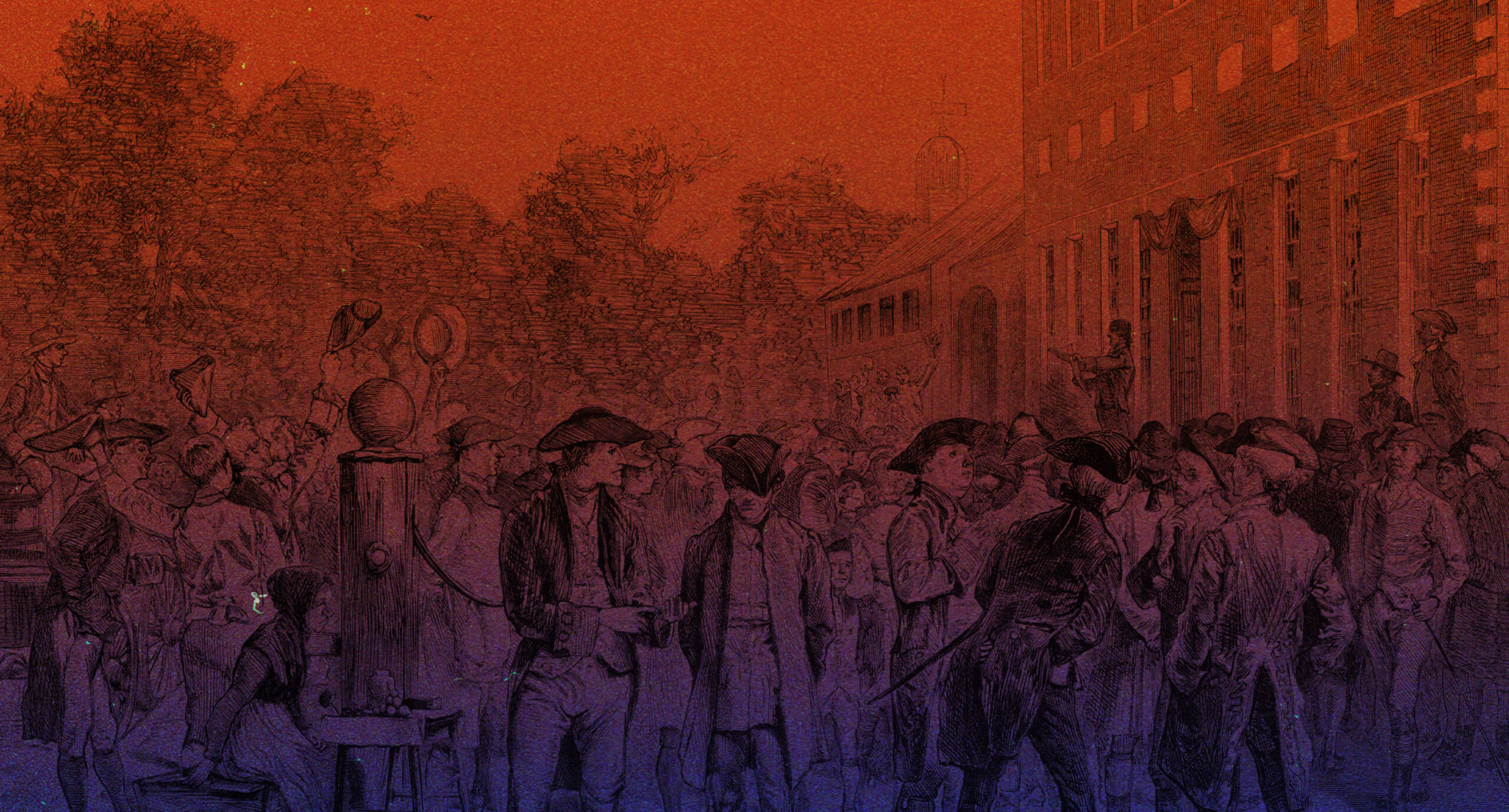
On a sweltering day, in the throes of the summer heat, a crowd gathered outside Pennsylvania State House, now Independence Hall, to listen to the resolutions approved by the Continental Congress. One can only imagine the scene of men, women, children, and let’s assume soldiers, hearing the first words of their new country proclaimed. Everyone edging closer, squirming amongst one another, to listen as Colonel John Nixon read from the steps of the State House, “We hold these truths to be self-evident, that all men are created equal, that they are endowed by their Creator with certain unalienable Rights, that among these are Life, Liberty and the pursuit of Happiness.”
250 years later, a similar scene unfolded in Boston. Thousands of men, women, and children on top of their parents’ shoulders surrounded the second-floor perch of the Old State House. Luckily for those gathered there, bespeckled with red, white, and blue, including myself, we did not have to strain our ears to hear as those in Philadelphia surely did. Despite standing amongst people from across the country and around the globe (World Cup jerseys abounded), everyone was united in reaffirming our founding vows. Later that day, along the freedom trail at Bunker Hill, Faneuil Hall, and onboard the USS Constitution (Old Ironsides, as she is affectionately known), we gathered to recognize and admire the sacrifice and bravery of our forefathers. Along each stop, it was impossible not to feel a deep sense of awe and admiration at the moral courage and fortitude of the men and women who had consecrated those sites. How could poor farmers, cobblers, and merchants believe they could defeat the British army? How did the mothers and wives, left behind with children, continue to provide for their family without a normal source of income? In retrospect, nearly every aspect of the American Revolution appears to defy belief. While walking through Boston, I wondered what gave them such purpose and strength. Perhaps the better question to ask is—who gave them such purpose and strength? I believe the answer lies in the very words of the Founders.
It was impossible not to feel a deep sense of awe and admiration at the moral courage and fortitude of the men and women who had consecrated those sites.
The Declaration’s assertion that the “pursuit of Happiness” is instilled in all men by God reminds us of our God-given mission. The Founders held the firm belief that every person was created to find happiness—a natural right. Preserved within this right was the freedom to practice the religion every man believed led to his salvation. Likewise, in 1776, the Virginia Declaration of Rights asserted that religion was “the duty we owe to our Creator,” making all men “equally entitled to enjoy the free exercise of religion. “The Virginia Declaration had initially provided for only “the fullest Toleration in the Exercise of Religion.”A young James Madison, however, just twenty-five years old at the time, saw in the word “toleration” a condescending limitation on man’s natural right to fulfill his obligation to God. The right of religious freedom struck a chord common among many of our Founders and was subsequently enshrined in our Constitution. Evident in our founding principles is the assertion that the human person has an inherent duty to God—to praise and love him through religious practice. A part of our “pursuit of Happiness” is to fulfill our duty to God. Thank goodness our Founders recognized that only through freedom can we carry out our proper duties.
As Catholics, we believe God created us for love and happiness. We search and find them truly only in him, and ultimately—should we be so fortunate—we will return to God at his heavenly banquet after our earthly death. In our present state, however, we tend to pursue happiness through other means. Worldly splendor, gratifications of the flesh, and the plaudits that follow fame and fortune all lead us away from our deepest longing: to be with God. St. Augustine once recognized this simple yet difficult truth in his Confessions when he wrote, “Thou movest us to delight in praising Thee; for Thou hast formed us for Thyself, and our hearts are restless till they find rest in Thee.” God gifts man freedom so that he may choose—most likely after he has tried everything else—to find rest in God. Man is made to discover himself as a child of God, but to do so requires choice. By proclaiming a right to a “pursuit of Happiness,” the Founders were walking in the Christian tradition.
On the 250th anniversary of our country’s founding, let the words of the Declaration of Independence remind us of the true source of our happiness and purpose. Let them impress upon us the duties that accompany our freedom, for rights never exist without corresponding responsibilities. Just like the crowd cheering outside Boston’s Old State House this year, may we also find ourselves inspired to continually uphold the right to “Life, Liberty, and the pursuit of Happiness” for all. These words are not simply ideals but tangible reminders of the freedom God has created within us for his glory. And there, we find the source of our strength.
Happy 250th birthday, America! May God forever bless the red, white, and blue.