
Lisa Galalis
St. Gertrude the Great Writing Group
When a young person decides to pursue writing fiction or music, or acting or photography or screenwriting, a well-meaning uncle is likely to say, “When are you going to get a real job?” A sympathetic aunt might exchange a glance with his mother and say, “He’s an artist. Maybe he will be famous one day.”
For many adults, making art is an unrealistic pursuit, something risky, something we must put down and shove into a drawer when we come to an age to take up the serious work of living.
But is it true that art and storytelling are a distraction from life? Does art get in the way of real relationships? Or can fiction serve us in our real lives? Could it be worthwhile for an artist to pursue his art, even if he does not become famous? Does an artist need a grand talent or a grand stage to justify his pursuit of art?
Anyone interested in these questions might enjoy the final short story collection published by the late Danish author Karen Blixen, best known for her memoir, Out of Africa. Anecdotes of Destiny by Isak Dinesen (Blixen’s pen name), published just four years before her death, is a collection of five short stories that traverse the globe from Norway and Denmark to Persia and China.
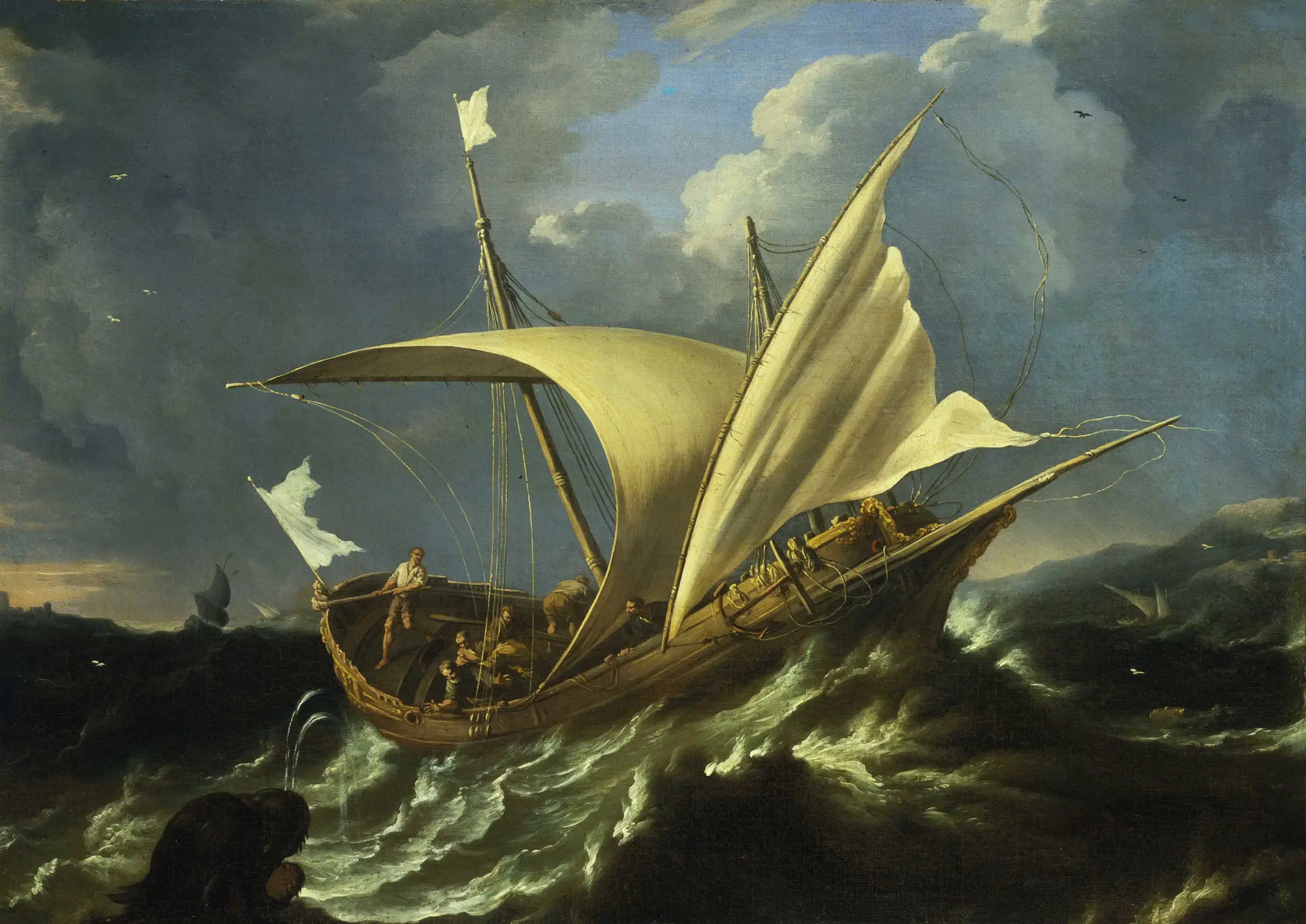
The five stories feature in turn a Persian theology student who believes he is visited by an angel (“The Diver”), two Puritan sisters who host a French refugee who becomes their cook (“Babette’s Feast”), a teenaged actress who helps save a ship caught in a storm (“Tempests”), a miserly sea merchant who attempts to twist an old sailor’s yarn into a fact (“The Immortal Story”), and a young wife who encounters a thief (“The Ring”).
Throughout this collection, Blixen was particularly interested in exploring the relationship between art and life, fiction and fact. She effectively uses omniscient third-person narration to give us finely sculpted characters who live on in the reader’s mind long after the book has been closed.
The highlight of the collection—and the most famous—is “Babette’s Feast,” which was adapted into an Academy Award–winning foreign language film. Here Blixen most skillfully uses her fine prose style and vivid characters in service of a unified whole.
In this story, a French cook and political refugee comes to live as a servant for two spinster sisters, Martine and Philippa, who preside over the elderly remnant of a small Puritan congregation founded by their late father, who had ruled both the congregation and his daughters with a heavy hand. In her youth, each sister had been a great beauty and had had a young admirer. Martine’s was a young officer, to whom she gave little encouragement and who was intimidated by her father and fled in despair. Philippa’s admirer was a French opera singer named Pepin, who recognized her astonishing singing voice and dreamed in vain of stealing her away to the concert halls of Paris.
The titular “feast” comes about when Babette wins 10,000 francs in a lottery and asks the sisters for permission to use it to host a “real French dinner.” When their guests include Martine’s former admirer, the story builds to its breathtaking climax, in which a sensual dining experience becomes the vessel of spiritual insight, and in its glow old bitterness and regrets are dissolved in the possibility of forgiveness—even forgiveness of oneself. As one guest puts it: We “tremble before making our choice in life,” but “grace is infinite,” so that “that which we have chosen is given us, and that which we have refused is, also and at the same time, granted us.”
This story also touches on whether great artistry in fact demands a grand stage. In the eyes of Pepin, Philippa’s exceptional voice had been destined to “fill the Grand Opera of Paris”; but years later, finding himself “gray, lonely, forgotten by those who once applauded and adored me,” even Pepin wonders if fame and glory were what he had once thought them to be. He tells Philippa that, in paradise, “You will be the great artist that God meant you to be. Ah! How you will enchant the angels.” The same words will be spoken to a very different sort of artist later in the story, to great effect.
In the other four stories, Blixen’s theme centers less on artistic expression than on the power and peril of the stories one tells or that one is told. They all involve the possibility of discovering that one’s happiness was to some degree based on illusion.
For instance, in “The Diver,” a Persian student of the Qur’an finds that the “angel” who has given him so much joy is not what she at first appeared to be, and he himself is also a character first introduced in a story within the story; in “Tempests,” a young actress creates a dilemma for herself when she falls so deeply under the spell of Shakespeare that she does not always distinguish between her dramatic role and her real life; in “The Immortal Story,” an elderly miser, Mr. Clay, is ashamed to discover that a story whose factual authenticity he had long taken for granted is just an old sailor’s yarn that nobody else believed, and he devotes the last days of his life to collecting real people who will act out their parts in it—the titular immortal story—so that the story will come true after all; and in “The Ring,” a sheltered young wife’s comfortable notions about herself and her marriage are shattered by a brief encounter with a sheep thief.
The intermingling of sensual and spiritual experience evidently fascinates Blixen. In most of the stories, one gets the impression of an author who senses the power of the spiritual side of life—verses from the prophet Isaiah are a major plot driver in two of them—but is not encumbered by “conventional morality” in romantic pairings and is skeptical of happy endings. Only in “Babette’s Feast” does Blixen suggest that, through an artist’s skill, an appeal to the senses might point the way to some degree of human happiness.
The best part of Blixen’s writing is her rich character portraits. Seen through her sympathetic prose, one comes to pity even the pitiless Mr. Clay: wracked with painful gout but trying desperately to control other people. In two of the longer stories (“Tempests” and “The Immortal Story”), however, Blixen delves so deep into character study that the reader loses track of the arc of the story.
In “The Diver,” the weakest of the five, her spiritual meanderings are more muddled than insightful; she seems to allude to Jesus’s parable of the pearl of great price and devotes a lengthy digression to a fish’s perspective on Noah’s flood, but one is not sure exactly what she is trying to say about either one, or what they have to say about the transformation of the disillusioned theology student whom we meet in the first half of the story into the successful pearl fisherman of the second half.
Notwithstanding these weaknesses, Blixen’s fine style and her careful character portraits make these stories a pleasure to read. Anecdotes of Destiny will intrigue and delight readers who share Blixen’s fascination with the power of words and who are spiritual, if not necessarily religious. It might be a good choice for a monthly book club read. And for some readers, Blixen’s exploration of art and the artist in “Babette’s Feast” might even inspire them to pull that old notepad out of the drawer or instrument out of the closet and try to make a little art of their own.