
Sometimes the only way the good Lord can get into some hearts is to break them.
—Ven. Fulton J. Sheen
It is said that famous men are usually the product of an unhappy childhood. The stern compression of circumstances, the twinges of adversity . . . are needed to evoke that ruthless fixity of purpose.
—Winston S. Churchill
It was a quiet ride home. Annabel, my high school freshman at the time, sank exhausted in the passenger seat after a taxing basketball practice. It was her turn to run the music. After a few taps into her Spotify account, there came a strumming guitar, a crystal falsetto, a harmonizing voice, and a haunting message.
Oh, you’re spiralin’ again
The moment right before it ends, you’re most afraid of
But, don’t you cancel any plans
’Cause I won’t let you get the chance to never make themStayed on the line with you the entire night
’Til you let it out and let it inDon’t let this darkness fool you
All lights turned off can be turned on
I’ll drive, I’ll drive all night
I’ll call your momOh, dear, don’t be discouraged
I’ve been exactly where you are
I’ll drive, I’ll drive all night
I’ll call your momI’ll call your mom
Whoa.
“Who is this?” I asked.
“Noah Kahan.”
In an age awash with Rodrigos and Swifts and Cardi Bs, my daughter found Noah Kahan. And through her, so did I.
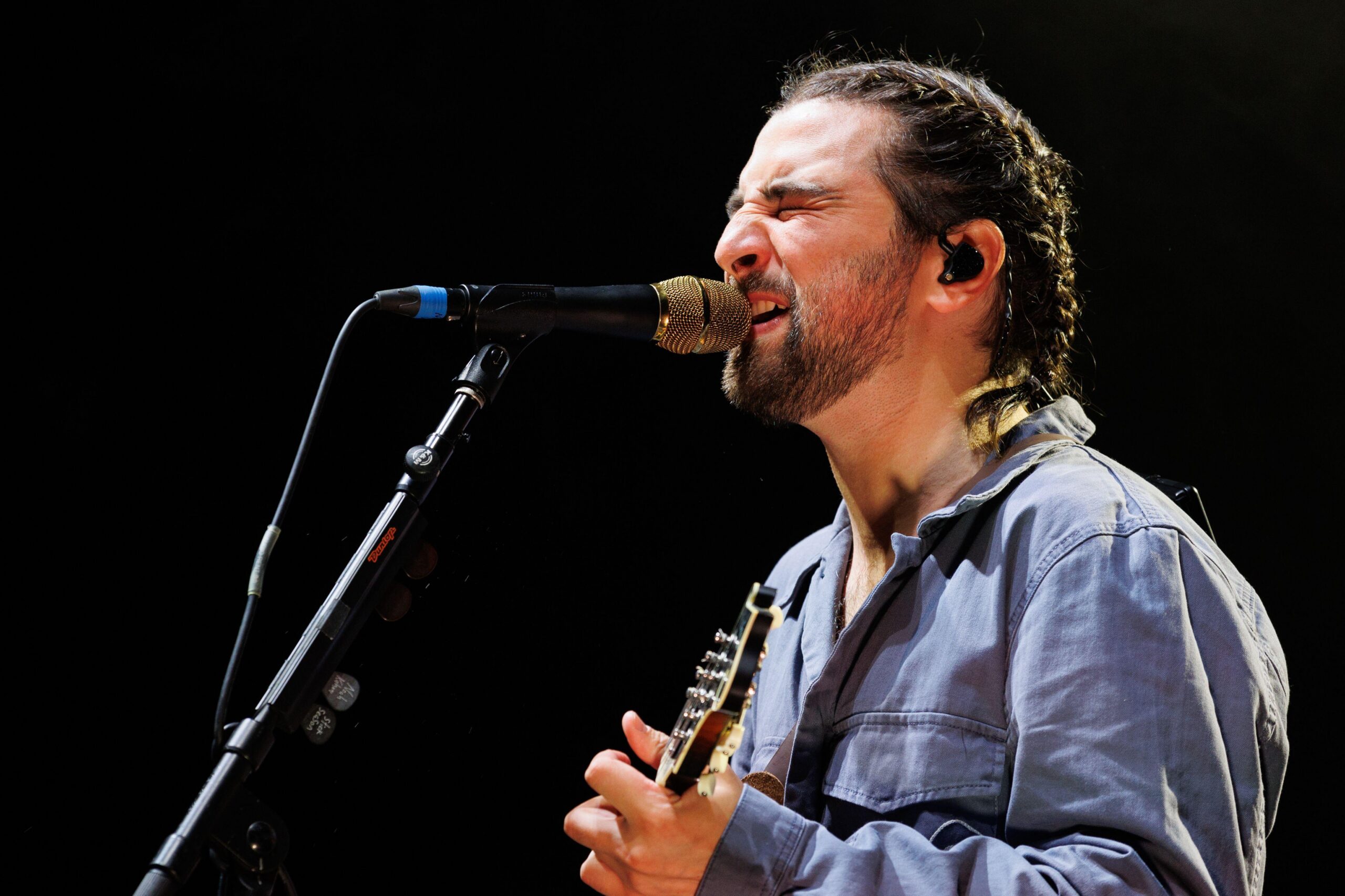
Noah Kahan is a Vermonter. A long-haired, bearded (but baby-faced) twenty-nine-year-old, he erupted onto the indie-folk-pop music scene during the COVID pandemic.
After Annabel played “Call Your Mom” and saw my reaction, she smiled. Becoming more animated, she insisted, “If you liked that, listen to this. This is ‘Stick Season.’”
As you promised me that I was more than all the miles combined
You must have had yourself a change of heart like halfway through the drive
’Cause your voice trailed off exactly as you passed my exit sign
You kept on drivin’ straight and left our future to the rightNow I am stuck between my anger and the blame that I can’t face
And memories are somethin’ even smokin’ weed does not replace
And I am terrified of weather ’cause I see you when it rains
Doc told me to travel, but there’s COVID on the planesAnd I love Vermont, but it’s the season of the sticks
And I saw your mom, she forgot that I existed
And it’s half my fault, but I just like to play the victim
I’ll drink alcohol ’til my friends come home for Christmas
Sheesh.
You know that moment when you hear a song and know this is different? That’s how I felt when I first listened to Noah Kahan. His music was simply arresting. Swirling falsettos, unpredictable rhythms, folky jams, and piercing ballads. Of course, the guitars and banjos, fiddles and mandolin, and the intimate front porch vitality are common fare for folk music, but Noah Kahan’s voice and message are simply unparalleled. Noah Kahan himself—what comes out of his mouth—is a singular musical style, a distinct musical genre. Nobody sings music like this.
And so I listened even more.
There is a sense of physics to his music informed by a momentum that builds and slows, acts and reacts, like pregnant pauses about to burst, drawing you along in every verse.
Selections from three albums—Busyhead, I Was/I Am, and Stick Season—accompanied me to and from work, on long trips and short errands. I came to discover that Kahan’s talent rested in an element of surprise. At unexpected moments in his songs, the ponderous slow became the exhilarating fast (think “Forever”), the pensive baritone became the playful falsetto (think “She Calls Me Back”), sometimes he rhymed and sometimes he didn’t, and within and between verses he forever built a stretching tension that snapped back with brilliant release (think “Dial Drunk”).
Kahan’s music has a cadence I have never heard before in my life. There is a sense of physics to his music informed by a momentum that builds and slows, acts and reacts, like pregnant pauses about to burst, drawing you along in every verse. His tempo forever shifts with punctuated micro-accelerandos and micro-ritardandos (or, in other words, tempo elastico with agogic accents). To me, Kahan’s music perpetually conjures images of a tensed and released slingshot. Or, for the more landscape-minded, a lazy river that rounds a bend into unexpected and furious rapids only to drop into the lazy once again just when you feel you can’t handle the dizzying lifts and plummeting drops.
And that’s just the music.
The true magic of Kahan’s music, however, is not the music itself. It’s the message.
Between (and within) his songs, Noah Kahan perfects the dynamic tensions found in the human condition. In “You’re Gonna Go Far,” we ache over the mixed pain and pride a parent endures in seeing their child leave their small town home for a bigger and questionably better life.
So, pack up your car, put a hand on your heart
Say whatever you feel, be wherever you are
We ain’t angry at you, love
You’re the greatest thing we’ve lostThe birds will still sing
Your folks will still fight
The boards will still creak
The leaves will still die
We ain’t angry at you, love
And in “Homesick,” we experience the mixture of aching wanderlust for home and the galling nostalgia when away.
I would leave if only I could find a reason
I’m mean because I grew up in New England
I got dreams but I can’t make myself believe them
Spend the rest of my life with what could have been
And I will die in the house that I grew up in
I’m homesick
Embedded in the lyrics of Noah Kahan, I would reason, is a touch of Springsteen, Dylan, and Cash. The late-night phone call from the drunk tank. A quiet talk with one friend about the death of another. The sheepishness of being found stuck in a small town. The orange juice always in the fridge for the sober friend. His songs have echoes of “Thunder Road,” “Girl from the North Country,” and “Folsom Prison Blues.” Just read. Just listen. There is such an ache.
And we’re so alone most of the time
Most of the time, we don’t have anyone
Where do we go when we die?
I wouldn’t mind right here, I wouldn’t mind at all
—“Dan”
One day, I’m gonna cut it clear
Ride like Paul Revere
And, when they ask me who I am
I’ll say, “I’m not from around here”
—“Paul Revere”
This ain’t Watertown, I’m on alien ground
I’m a college kid with my windows down
I’m an astronaut, you’re the Moon
I stare at you, I sing to youAnd I clutch my cloth, and I bite my tongue
I’m an aging wolf who lost the taste for blood
Even anxious pups need the Moon
I howl for you, I sing to you
—“Orbiter”
These are songs of the dirt road and the disheveled house, windblown pastures and dried-up cricks. Songs of love that winces and pain that resurrects. Noah Kahan’s music grapples with nothing less than the splendid and galling human condition. Songs of the sacred and the profane. Songs, in fact, of you and me.
But how does a twenty-nine-year-old know such bitter pain, such disconcerting complexity, and such failing hope at such a young age? To watch Kahan’s Netflix documentary Out of Body, you discover a sleepy town, a brain-injured father, a broken home, and a mind wracked with worry. You see a person perpetually ill-at-ease and incessantly seeking his way through. Mark Twain once advised, “Write what you know.” And novelist Flannery O’Connor asserted, “The fact is that anybody who has survived his childhood has enough information about life to last him the rest of his days. If you can’t make something out of a little experience, you probably won’t be able to make it out of a lot.” Noah Kahan has made much out of his young experience. He knows darkness—his own. But he senses a light that outlives it.
Last Wednesday, my wife, daughters, and their two friends and I found our way to Noah Kahan’sThe Great Divide concert at Minneapolis’s Target Field (pleased that we had also been able to go to his previous Stick Season concert). On a stage, brilliantly graced (apropos of his life) with a facade of his childhood home, Kahan dazzled. Favorites in my family included “Doors,” “Orbiter,” “She Calls Me Back,” “Haircut,” and “The View Between Villages.” It was hard not to think of this complicated young man crafting music on a solitary bench in a lonely Vermont field, to think of the fun he would be having jamming with his bandmates, or the poignancy of dueling guitars with his compromised father. Even though he was at Target Field, Noah could just as easily have been strumming on his own front porch.
At times, he flashed a smile. At other times, he widened his eyes. A few times, his voice choked with well-earned emotion. Noah Kahan brought his talent but also his soul in all its rawness and beauty. For a man born of difficulty, he surely gave people joy.
And for a moment that night, my eyes wandered from the stage and glanced down my row. At my side, my wife leaned in closer as her hand slipped warmly into mine. Further down, Vivian and Lily joyfully sang and clapped. Next to them, Annabel and Lauren eagerly smiled and harmonized. The songs they sang were complicated—complicated like them, complicated like all of us—about brokenness and recovery, heartbreak and hope. Songs that navigate the morass of the human condition. Happy, sad, human.
These songs were Noah Kahan’s own.
But they were ours as well.
From a quiet ride home years ago to a captivating concert last week, Noah Kahan made my daughter smile.
And I smiled with her.