
Rob Abney
St. Francis de Sales Writing Group
Just as iron sharpens iron, reading a rigorous yet exciting book is a great way for one man to sharpen another’s mind and potentially even hone a desire to chase impossible dreams. The book I have found to accomplish this feat is Moby Dick by Herman Melville (Arcturus, 2019). Though many readers will enjoy this book, I specifically propose it to young men who are in search of a challenge that can only be found through an adventure. Here is a story that involves men chasing dreams to get rich in the whale oil industry, to catch the uncatchable, or simply to enjoy the thrill of the chase.
This book provides a challenge, on several fronts. First of all, and most obviously, it is a tome, meaning a commitment is required to read this book. The edition used for this review is 538 pages spread unevenly over 135 chapters. Many have tried to read it and failed; many have read it only because they were required to read it. And even those who have committed to reading it of their own accord have often given up because of time constraints. The four different audio editions available on Spotify list the listening time between twenty-three and twenty-five hours, so the average reader would need to commit to about one hour nearly every day for a month. Of course, “sharpening” requires sacrifice, and substituting the reading of a classic American story for a small part of the time that is typically spent online seems reasonable and an easy way to upgrade one’s use of time with a good habit.
Melville’s book, originally published in 1851, sharpens one’s mind because it is written in a style that requires the reader to spend time to properly understand each sentence. The words that make up these sentences are often only vaguely familiar and the sentence structure is frequently of the compound-complex variety. In other words, a picture is worth a thousand words and there are no pictures in this book, so the words are plentiful. The reader must engage his mind through the exercise of deep reading and to overcome the weakness of mind that comes from reading the bare minimum that is so prevalent today.
Another habit-building activity herein is the impetus to read additional texts to decipher and fully understand the author’s meaning. This ancillary activity will expand the mind of the committed reader as he finds himself reading—or at least referring to—history and biology texts, as well as Shakespeare’s sonnets, to supplement the already unrestrained story. The most common text to reference for this book, though, is surely the Bible, as the story has biblical allusions aplenty. Ishmael and Ahab are biblical characters and are joined by many others, and the whale can easily be seen as symbolic of the biblical Leviathan.
The famous first line of the novel, “Call me Ishmael,” introduces the narrator, who is also a character in the story. The biblical Ishmael survived harsh conditions after being set free to roam in the wilderness; Ishmael the narrator—spoiler alert—survived the harsh wilderness of a three-year whale-hunting voyage. He tells the reader intricate details about the main characters, especially Captain Ahab and his nemesis, the white whale named Moby Dick.
As exciting as those two characters and their interactions with each other are, the backstory and supporting characters are also essential to the development and interpretation of the story. Those characters include a few Nantucketers, who are introduced before the actual voyage begins in order to emphasize the glory that is lauded on whalemen. Then there are the numerous unique characters that make up the crew, including Queequeg, an oddly tattooed harpooner of Polynesian descent, whose desire to “visit Christendom” led him to leave his homeland. Readers will likely find Starbuck an interesting character to meet and to ponder about his connection to coffee. Other characters include a man named Elijah who, like his biblical namesake, prophesied to avoid the evil ways of Ahab, a prophecy that was ignored.
The reader becomes well acquainted with the Pequod, the whaling ship that serves as home for the crew for most of the book, and is treated to a voyage that nearly circumnavigates the earth. The Pequod encounters numerous other whaling ships, and these ships and their crews continue to present symbolic puzzles for the reader to piece together.
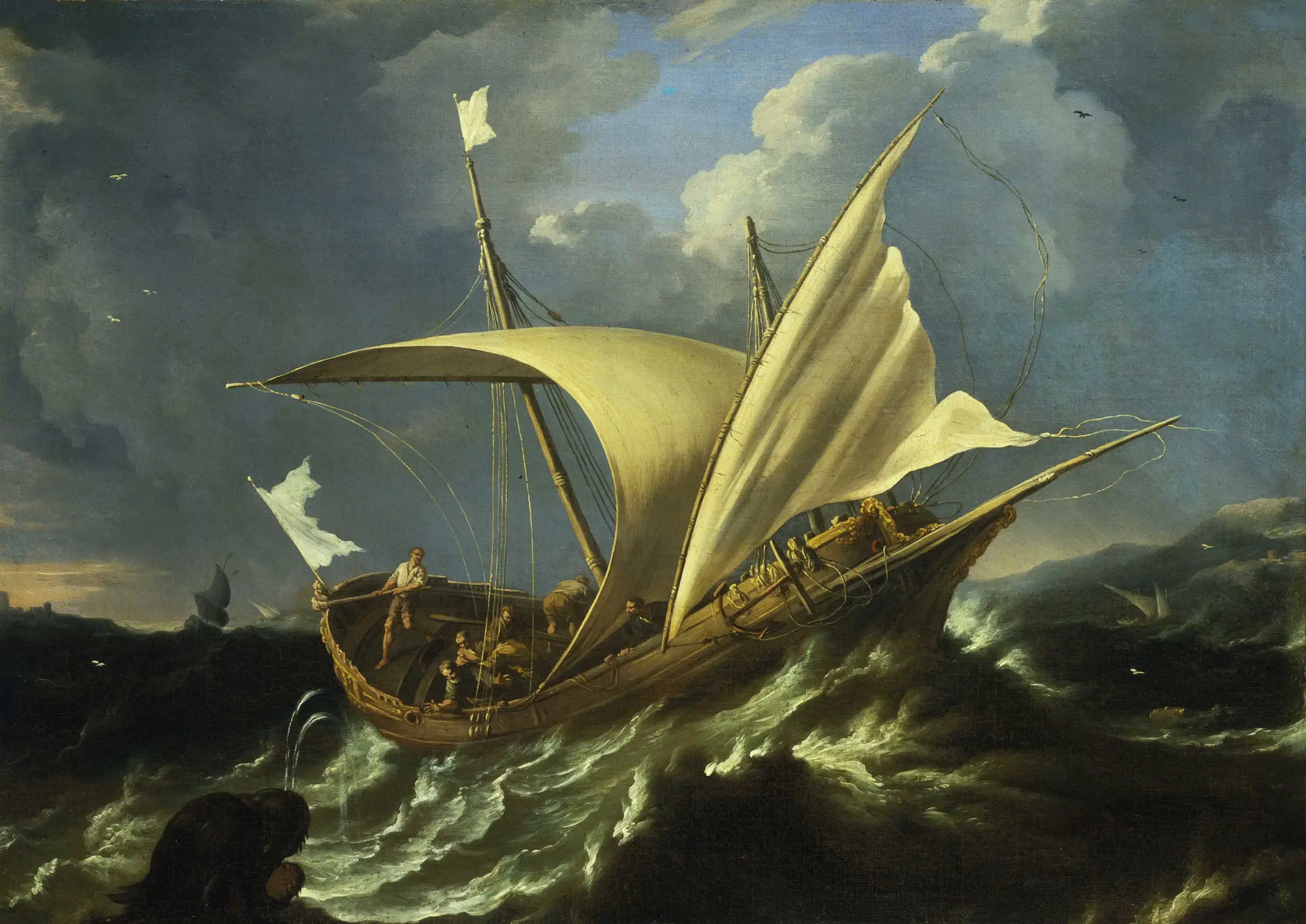
This exhilarating story takes the reader on an adventure that is almost certainly unfamiliar and exotic. It is a grand story with many nuances. While there is a voluminous amount of the story devoted to developing the riveting character of Ahab, in contrast there are only a few short chapters about another famous whale encounter: Jonah and the whale. His story is told, early in the book, in a Nantucket church that is as nautical as a building could be without being afloat. It is told by Father Mapple, who passionately extols the consequences of disobeying a prophetic command. The brevity of the Jonah story may be because it was and is a well-known story thanks to the role of the whale, but the reader should consider keeping this story in mind to contrast Jonah and Ahab’s interactions with forces much more powerful than themselves.
I heartily recommend this great book, Melville’s magnum opus, not only for entertainment and not merely to learn about whales but to examine and challenge one’s own paradigm in comparison to these two whalemen, Ahab and Jonah.