
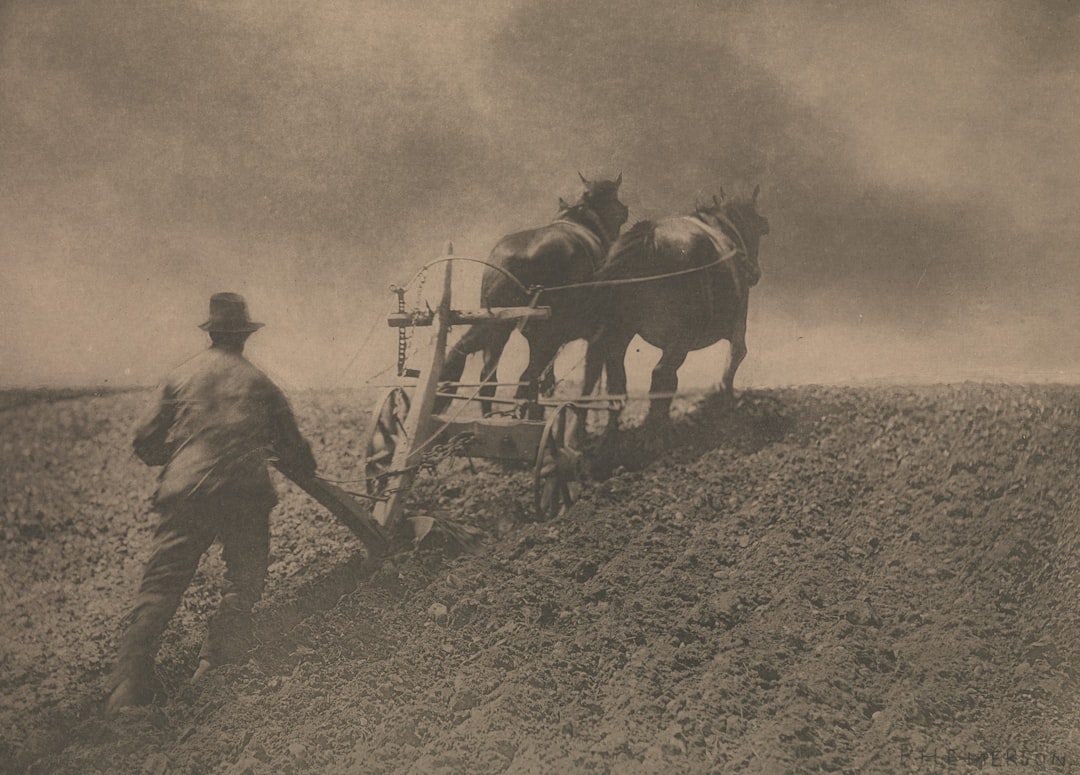
As many as possible should share in the ownership of the land and thus be bound to it by economic interest, by the investment of love and work, by family loyalty, by memory and tradition.
—Wendell Berry, The Unsettling of America
In the coming days, weeks, and months, scores of elegies will pour into the discourse grieving the loss and celebrating the life of Wendell Berry. I am not well versed in his work; I’ve only read a tiny fraction of his mammoth output as a poet, novelist, and essayist. But I know for certain that he changed my life, and because so much of his life was dedicated to recovering a robust sense of what human beings are made for and to striving against the most destructive impulses of the human spirit, it would be discourteous not to concentrate instead on the effect his project has had on me, in this case a few rambling thoughts extended from my modest reading of him.
Berry wanted to inspire real human change; he was a prophet who chronicled the end of a certain age in the history of mankind and saw the beginning of a new one. So it seems that rather than just reflecting on his legacy, my energies would best be put toward picking up the story he told tirelessly, toward reflecting on how the new wineskin of our age might be filled with new wine made from the fruit of his prophecy.
* * *
A driven Christian, Berry often drew attention to the parables of Christ, who frames most of them in the context of agrarian life: the barns, the wheat and the chaff, the workers in the field, the sower, the grain that cannot bear fruit unless it falls to the ground and dies. It’s reasonable to suppose that since Jesus lived in an agrarian society, he simply chose images and concepts that were close at hand, and that if he lived in another kind of society, he would have chosen other images and concepts. It’s reasonable, but I think it’s wrong. Human identity is inextricable from the land. We need to eat in order to live, and we do not eat if we do not grow food, and we do not grow food if conditions don’t support growth. No matter how advanced humanity gets, we will not survive if we do not integrate with creation.
Berry wanted to inspire real human change; he was a prophet who chronicled the end of a certain age in the history of mankind and saw the beginning of a new one.
* * *
Extend this all the way to the heart of Catholicism: the Eucharist, the source and summit of the Christian life, which Christ himself said is his flesh for the life of the world (John 6:51), cannot be confected unless wheat and grapes—the fruits of the earth—are grown, harvested, and processed into a very specific type of bread and wine suitable for the sacrifice. Let’s face it: The Church cannot be the Church unless people can ensure that the land can yield wheat and grapes and craft them into food. In a real sense, the health of our souls—the source of our union in Christ—is in the soil. How’s that for identity?
* * *
When Mary Magdalene first saw Jesus after he rose from the dead, she mistook him for a gardener. God forbid we mistake this as a mere accident or happenstance. Adam and Eve were created in a garden, they lived in a garden, they sinned in a garden, and they were damned in a garden. Could we do otherwise but discover our redemption in a garden?
* * *
We don’t have enough gardens. Practically speaking, humans are made to grow their own food. “I have given you every plant yielding seed that is upon the face of all the earth, and every tree with seed in its fruit; you shall have them for food” (Gen 1:29). Obviously we’re not all supposed to leave the city and start homesteads. Obviously we can’t deconstruct modern life and resurrect agrarian life tomorrow. But more of us could use our property to grow vegetables, and for those of us who can’t or don’t own property, why can’t we buy some pots, fill them with soil, learn how certain vegetable plants grow and how much sunlight and water they need, and grow them? Why can’t we swear off the vegetables in the grocery store and choose to depend on what we can produce on our porch? Why can’t we live by the seasons, sticking to broccoli in the spring and tomatoes in the summer? When was the last time we bought meat from a local cattle farmer? Limitations on our existence make us more human. “We have tried to escape the sweat and sorrow promised in Genesis—only to find that, in order to do so, we must forswear love and excellence, health and joy.”
* * *
Catholicism integrates every aspect of life into a harmonious whole. Wendell Berry was not Catholic, but through his account of the inner mechanisms of industrial, consumerist society, I began to grasp just how disintegrated my own life was. How especially impoverished I am because of my manicured independence from my local community! I have no meaningful relationship to the land that I live on and to the neighbors that live down the street from me, and that is what modern technological society is designed to achieve. This isn’t a conspiracy theory, because all it takes to see the proof is to look out your window. It’s hard to be Catholic when we are made to belong to where we live and we cannot even break bread with our neighbors. Of course, it is difficult to be Catholic in any age; it’s not like getting to heaven is any harder than it ever has been. But as Dorothy Day says, “God meant things to be much easier than we have made them,” and as her friend and fellow Catholic Worker Peter Maurin stressed, part of the aim of the Catholic Church is to cultivate society in such a way that it is easier for people to be good. Is it too much to wonder, as some already have, whether contemporary culture is diametrically opposed to Christianity? It was Berry’s writing that first led me on this path of inquiry, and it has made me a better (if still woefully bad) Catholic.
* * *
Berry is one of those totalizing writers whose worldview is easy to apply to everything, similar to thinkers like René Girard. Many, myself included, have been inspired at one time or another to adopt a Berrian style, emulating his project in a performative way but not a substantive one, lamenting the absence of real community but not really making the heavy sacrifices necessary to cultivate it, grieving over the destruction of vast swaths of land while failing to care for the soil in my own backyard, et cetera. I hope Berry never had the misfortune of encountering the term “aura farming,” and I shudder to think there could be someone out there doing such a thing on his account. Berry would, I suspect, just shake his head and keep picking tobacco. We don’t get anything done by peddling sentiments.
* * *
Through Berry, I have come to understand that salvation is not vague: One is never saved in a vacuum, in some obscure part of the person that we never perceive. Rather, the work of salvation is done on the land, in a particular place, within a concrete community. The sacraments are always performed in person. Whether you get saved depends, in part, on what you did or did not do where you live. Redemption in Christ is not divorced from the earth. He allowed us to bury him in it.
* * *
Pater meus agricola est. “My Father is a farmer” (John 15:1).1 Do we not know that we must be about our Father’s business?
1 I’m grateful to Jason Craig, an ardent reader of Wendell Berry, for first drawing my attention to the Vulgate text of this verse.