
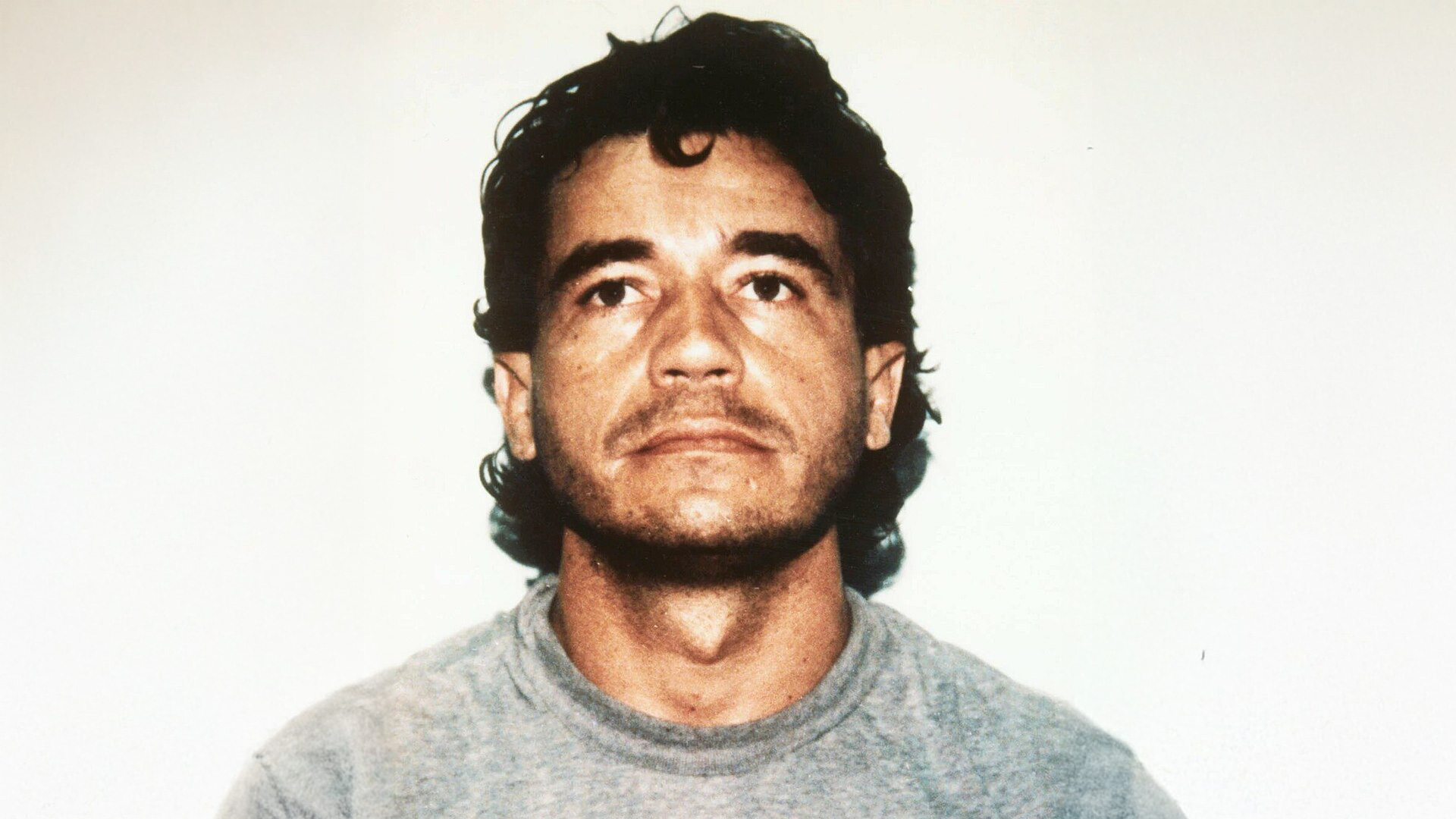
There is a saying in Colombia for when someone is in great debt: “He owes this life and the next one.” But when Carlos Lehder was arrested for running the largest pirate operation in history (a scene present in the American mind via the hit Netflix show, Narcos), it was determined that he owed the American government all that and a little bit more—one life sentence plus 135 years to be precise. Now, Lehder recognizes that the worst day of his life became, in many ways, the reason he is still alive and had the opportunity to do what other narcos never could: repent and ask for forgiveness.
Decades after this historic arrest, the once-feared kingpin of the Medellín Cartel and the man who worked to bring the Nazi party to South America has turned his life around 180 degrees. His journey is a reminder that Jesus is truly leaving the ninety-nine to seek the one lost sheep.
In the lush mountains of Colombia, right where the Andes mountains end and slowly merge into the tropics, there’s rich soil fueled by the perfect weather where almost anything you sow will grow. These are the perfect conditions for the highest quality coffee, but also for the coca leaf—the raw material for cocaine. For locals, it almost feels like an unfair tax for being gifted with such a beautiful environment. Across this natural beauty reigned the Colombian narcos and specifically, the Medellín Cartel. Named so by the Drug Enforcement Administration (DEA), this organization grew coca leaves, turned them into cocaine in clandestine labs hidden across the jungles, and shipped it internationally. That last step was Carlos Lehder’s responsibility.
Carlos is a half–German, half–Colombian, self-identified black sheep in almost every circle he has run in. According to his own words, he was quite different from his siblings. In the drug world, he also differed considerably from his fellow narcos—the most famous one being one of his greatest business partners, Pablo Escobar.
Every narco (as most criminals) knew they would end up either dead or in prison, but in the specific narco world Carlos Lehder helped build, there was something even worse than those two alternatives: extradition. The Medellín Cartel bombed planes and murdered officials and politicians to avoid it. Its members had a slogan for it: “Better a grave in Colombia than a cell in the United States.” Pablo Escobar was gunned down on a Medellín rooftop in 1993. José Gonzalo Rodríguez Gacha, “El Mexicano,” died in a police raid the same year. Lehder was already gone by then; he was extradited in 1987 and locked in an American maximum-security cell, out of reach of the war that killed almost everyone with whom he built the cartel.
The worst day of his life became, in many ways, the reason he is still alive and had the opportunity to do what other narcos never could: repent and ask for forgiveness.
His story has been told by multiple movies, documentaries, and TV shows. But now, he is telling his own story. In the preface to his 2024 memoir, Vida y muerte del cartel de Medellín (The Life and Death of The Cartel of Medellín), this now-elderly man sits down to explain how he became one of the most feared drug traffickers in history. He begins, of all places, at his own baptism days after his birth in the cathedral of Armenia, Colombia, where he was christened Carlos Enrique Lehder Rivas. It’s a strange place to start a book about cocaine, murder, and a criminal empire that drenched a whole country in blood, but I couldn’t help notice that Lehder—the co-founder of the Medellín Cartel and the first major Colombian trafficker ever extradited to the United States—recognizes the spiritual thread ever present in his life and intentionally includes it in the story as an important moment.
His story is sprinkled with details like the time he promised Our Lady of Mount Carmel, patroness of transportation, he would never steal cars again—a promise he kept even when a tempting opportunity arose. Nonetheless, he was still in the midst of building the most lucrative illegal drug routes in history. That honesty and the details about his faith life and its maturity tell the story of the transformation of his life in his own telling—a story about faith lost and eventually found.
The Prodigal Son
Many of Colombia’s traffickers clawed their way out of genuine poverty with no path to anything else. Lehder wasn’t one of them. His father, Klaus Wilhelm Lehder, was a German engineer who came to Colombia in 1927 to build railways; his mother, Helena Rivas, came from a proper local family. They married in the Catholic Church, raised four children, and by Lehder’s own account in his memoir, they lived a very ordinary, happy, and respectable life. The Lehder children attended private Catholic schools, were raised trilingual (English, Spanish, and German), and all except Carlos completed university degrees.
But life wasn’t too perfect. As was true for many other German families, losing World War II had a huge impact on Lehder’s father, and this led to divorce. In the midst of this abundance of opportunities and the breakdown of the Lehder family, Carlos, with his insatiable ambition, told his parents he wanted to pursue the American Dream, and they supported him. At just fifteen, he transferred his studies to a New York boarding school. The initial plan was to make money in US dollars and move back to Colombia with enough cash to buy a farm and live a peaceful life. But Carlos quickly realized that there was a faster way to reach his financial goals: reselling stolen cars and dealing marijuana to hippies. By sixteen, Carlos had chosen, in his own later words, “the wrong profession” when the right one had been sitting there for the taking.
He was eventually caught and sent to the Federal Correctional Institution Danbury in Connecticut. This only skyrocketed Carlos’s criminal career and became his own sort of university degree. It just so happened that in this prison Carlos met drug mules and received his first lessons in the emerging business of cocaine. Coincidentally, he was also in prison with the lawyers involved in the Watergate scandal—G. Gordon Liddy and E. Howard Hunt, Jr., among others. According to his own account, he learned about the American legal system from them.

After his release and deportation, Lehder visited his father and admitted that he planned to continue his life of crime, to which his father reminded him that he had a strict policy of no criminals in his house, even if it meant his own son. They hugged and didn’t see each other again for many years.
In the years that followed, Carlos Lehder bought Norman’s Cay, a private Bahamian island he turned into a cocaine transshipment hub in the late 1970s. This turned Carlos into an official pirate. From there, he managed the shipments for almost every narco. By the time of his ultimate arrest at thirty-seven years old, he had been making an estimated $300 million per year.
When Worse Than Death Happened
At one point in the War on Drugs, Colombian and American authorities recognized that the narcos were too powerful to be held accountable in Colombian courts, so they decided to actively enforce the 1979 extradition treaty. This meant, if a narco is caught in Colombia (or anywhere else), they would immediately be brought to the United States to face trial. The narcos knew this was a real threat and fought it under the banner of Los Extraditables (“The Extraditables”), an organization led by Pablo Escobar himself. A gruesome and violent war erupted with much bloodshed. Now, it is understood that Pablo Escobar worked a deal in order to avoid extradition by betraying one of the narcos, and Carlos Lehder was the lucky one.
Extradited in 1987, he was delivered into the maximum-security federal system and received his famous sentence of life without parole plus 135 years. He was never meant to set foot on Colombian soil again. He landed at the US Penitentiary in Marion, Illinois—one of the harshest prisons in the American system—and by his own account, spent years of his sentence in near-total isolation. It was there, cut off from the empire he’d built and the country he’d terrorized, that the second half of his story begins.
The Priest Who Ministered to Monsters
Few figures in Colombian religious life are as loved and complicated as Fr. Rafael García-Herreros. He established the Minuto de Dios (Minute for God), which started as a radio show but grew into a television show in which he preached nightly homilies to millions of Colombians and later became a non-profit assisting the poor. Fr. García-Herreros was to Colombians what Fulton Sheen was to Americans, and similarly, there’s now a beatification case opened for him. He’s already been declared a Servant of God.
The narcos’ faith and relationship to the Church and God himself is a tangled web of mysteries.
But some of his ministry was not as beloved by Colombians because somehow in the midst of his very busy work, he was, controversially, a sort of chaplain to the Medellín Cartel itself. Fr. García-Herreros baptized and offered sacraments to the narcos and their families even during the height of their reign of terror. Critics accused him of legitimizing men with blood on their hands, while supporters said he was doing what a priest is supposed to do: reaching out to sinners nobody else would go near. In 1991, it was Fr. García-Herreros who brokered Pablo Escobar’s dramatic surrender to Colombian authorities, standing beside him as cameras rolled. A year later, when Escobar escaped, Father used his television show to publicly ask Pablo Escobar to submit himself to the law.
The narcos’ faith and relationship to the Church and God himself is a tangled web of mysteries. Perhaps it is the constant proximity to death accompanied with the abundance of greed that brings about this paradox. There’s a famous story about how Pablo Escobar was almost caught multiple times because his mom refused to stop attending Mass. Undercover agents were always looking and waiting for her at churches in order to follow her in the hopes of catching her son.
Fr. García-Herreros didn’t stop at Escobar. He travelled to visit and minister to Lehder inside the walls of the prison. While Lehder recognizes that he had turned away from God and his faith in general, he also admits that he didn’t fully stop praying in times of need and constantly sought Our Lady’s intervention. Eventually, those prayers were answered.
In his memoir, Carlos shares that, while in prison, he recognized that for the sake of survival, he needed to completely forget about the outside world—forget about money, forget about women, forget about power, basically forget everything he had known and cherished. Once he achieved this, he encountered God.
During Fr. García-Herreros’s visits, Carlos had his first confession in decades.
The Second Chance
It was well known that since Lehder’s arrest, the Panamanian dictator, Manuel Noriega, had further extended his assistance to the Medellín narcos, but the Americans didn’t have enough evidence of this to bring him to court. Happily for them, they had someone in prison whose testimony was more than enough to put Noriega on trial. In one of his visits, this was discussed and Fr. García-Herreros encouraged Carlos Lehder to do what all narcos vow to never do: collaborate with the authorities. For the sake of his family’s safety, Lehder needed Pablo Escobar’s blessing before he could cooperate with American prosecutors against Noriega. Fr. García-Herreros became the unlikely go-between, carrying word to Escobar and returning with a promise that Lehder’s family would not be harmed.

It’s important to note that this priest’s relationship with the narcos revolved around the sacraments and leading the narcos out of crime. Even if this didn’t cause a mass conversion amongst the narcos, it did allow for Carlos, the black sheep, to be recovered by Christ.
Lehder testified against Noriega for five days. His sentence was eventually cut to fifty-five years, and he was moved into the Bureau of Prisons’ witness protection track. He calls Fr. García-Herreros’s intervention the moment that saved him from dying in prison. Shortly after this, Fr. García-Herreros died in 1992. Lehder still speaks of owing him a debt he can never repay.
The Black Sheep
Lehder says his own family had a name for him: “the black sheep.” It’s a phrase he returns to again and again in the book and in interviews, almost as an admission in itself. But Lehder never reaches for the obvious biblical image that phrase references: the parable of the shepherd who leaves ninety-nine sheep safely penned to go looking for the one that wandered off. At this point, I don’t think he needs to be any more explicit. He’s told the story of his own legal, physical, and spiritual rescue openly and enough times for the clear picture to emerge: A man cut off from everyone, in the harshest prison in the American system, was sought out by a priest who crossed an ocean (at the age of eighty-two) to find him and bring him back to Christ. That is, if Lehder wanted to come back.
Many details about his conversion, atonement, and repentance remain between God and Lehder. But for us outsiders, Lehder’s conversion story is a true-crime and action-film version of the parable of the shepherd and the one lost sheep—black or not.
What’s Left
Lehder was released in 2020 after thirty-three years behind bars and was deported to Germany, his father’s homeland. He didn’t return to Colombia until March 2025—nearly four decades after he left it in chains—to publish his memoir. He writes that the fortune he once owned is gone, and he now lives a very quiet country life, filling his time reading and walking around the mountains of Colombia where everything started. And he keeps repeating, to anyone who will listen, the same warning: “Everyone who gets involved in drug trafficking ends up either in prison or in the cemetery.”
One of my personal motivations to write this piece was the fact that on a recent trip to the Colombian coffee axis, I drove multiple times past what once was Lehder’s castle on the hill—a large house visible from a distance. It was once meant to mark the territory but is now in ruins. You’d think it would’ve been demolished by now, but it’s been intentionally left as is as a testament: Crime may buy you a castle on the hill, but it will be worthless anyways.
Carlos Lehder escaped death in prison and a violent death in the hands of crime by the narrowest and strangest of margins. The sentence meant to take everything from him became the reason he, the black sheep, survived long enough to return—return to his family, to the country he loved, and return to Him.