
In Josef Pieper’s Only the Lover Sings: Art and Contemplation, the German philosopher writes, “It is a fiction to declare work, the production of useful things, to be meaningful in itself.” Pieper is talking specifically about the tendency within the “world of work” to reduce human life to mere labor and the completion of useful tasks. In other words, he highlights the danger of seeing human labor as only meaningful when it produces a material good or service, as opposed to it being intrinsically meaningful because it reveals the dignity of the human person. The insight translates to our spiritual lives too. We can often judge the spiritual merit of our actions by how useful or efficacious they seem. We design evangelical or catechetical programs and evaluate them on whether they, well, evangelize and catechize. We launch ministries and apostolates to provide spiritual and corporal works of mercy and, naturally, hope to see their respective fruits.
We’re not wrong in desiring this, and we’re even told by Christ to judge things according to their fruit: “You will know them by their fruits. Are grapes gathered from thorns, or figs from thistles? In the same way, every good tree bears good fruit, but the bad tree bears bad fruit” (Matthew 7:16–17). And yet, sometimes we don’t see fruit at all, despite our great intentions or efforts. Now, this might be because we are attempting to force spiritual fruit through our own will and agency apart from God, which, the Lord reminds us in Scripture, will inevitably result in barrenness. Without God, we can do nothing. But this means the opposite is also true: With him, all things are possible.
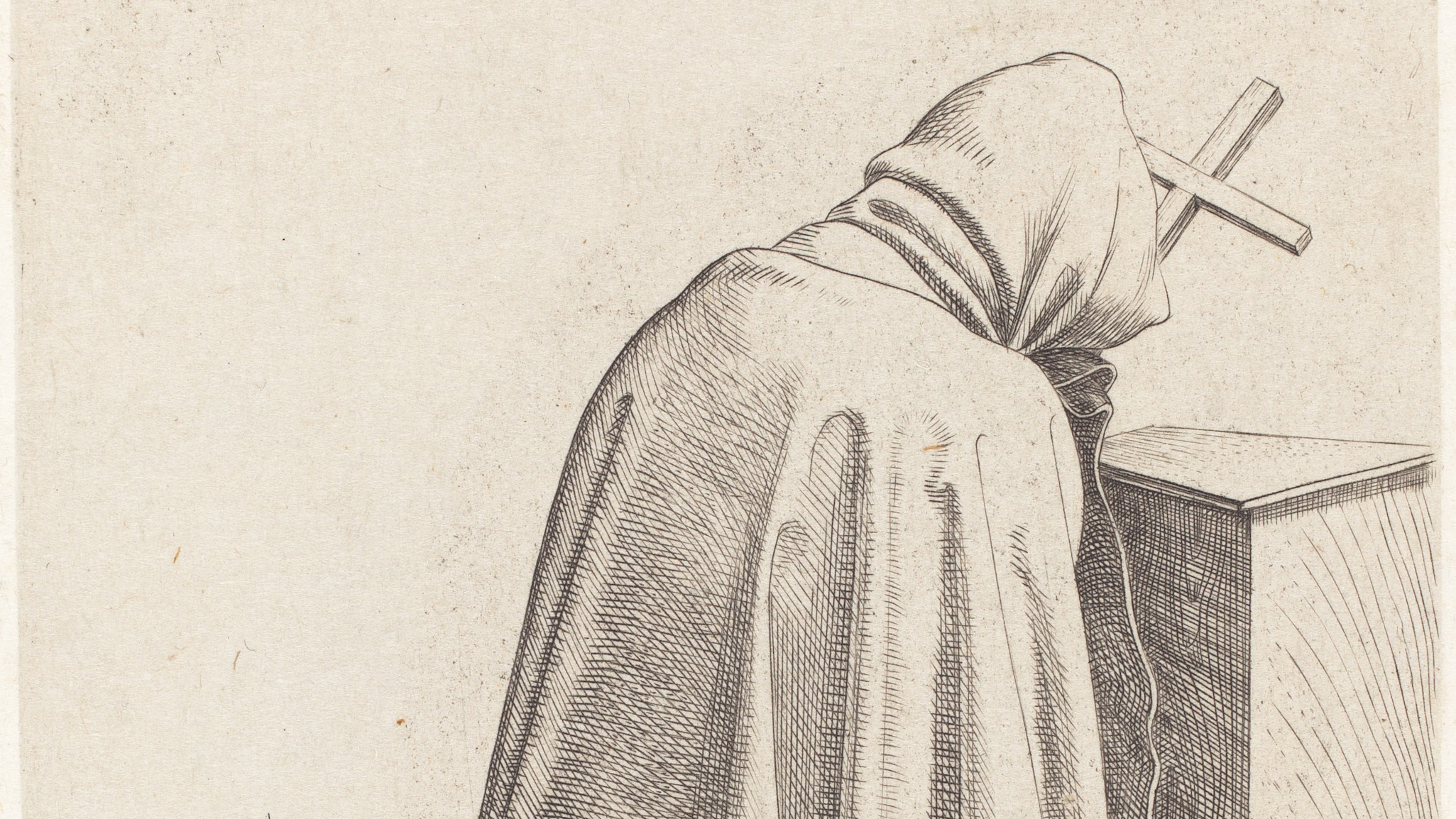
This spiritual truth is embodied most strikingly through the lives of contemplative monks and nuns. Through the eyes of the world, these individuals are living useless, ineffective, and wasted lives. While some orders’ labor might produce and sell a little beer or coffee, thereby contributing some slight economic benefit, they spend the majority of their waking hours doing, seemingly, nothing. They remain locked away, hiding their abilities and education and talents and gifts from the world. Even when the world is willing to admit that certain religious are useful, it’s only when they are doing something visibly beneficial: serving in hospitals, teaching children, feeding the homeless, and so on. While most Christians are called to both an active and contemplative life, there are still those, like the Cistercians, who live predominantly contemplative lives of fasting, penance, prayer, and solitude.
He can make a single Our Father offered up with humble trust a thousand times more fruitful than a hundred sermons powered by one’s self-will.
However, through the eyes of faith, these hidden few sustain God’s people through their prayer, sacrificial offerings, and humility. These souls spend their lives gazing lovingly at God, at the fundamental reality of all things, for the sake of the world. This isn’t spiritual sentimentalism or religious romanticism, a type of rationalization of passivity or laziness, but the very heart of our faith. God himself tells us in Luke 10:38–42 that the contemplative has the better part:
Now as they went on their way, he entered a certain village, where a woman named Martha welcomed him into her home. She had a sister named Mary, who sat at the Lord’s feet and listened to what he was saying. But Martha was distracted by her many tasks; so she came to him and asked, “Lord, do you not care that my sister has left me to do all the work by myself? Tell her then to help me.” But the Lord answered her, “Martha, Martha, you are worried and distracted by many things; there is need of only one thing. Mary has chosen the better part, which will not be taken away from her.”
Contemplatives are those who take Christ’s words seriously that without him we can do nothing—literally nothing. They do not put their faith in their deeds or plans or accomplishments, which they radically prove every day through their hidden lives. They don’t merely tell themselves God is the one who does everything, and then go on to busy themselves through self-willed efforts, plans, and tasks that contradict themselves. To be sure, they certainly are still doing something: They fast, pray, and worship God in the Mass. They undergo great penances and unite their sufferings to Christ in faith. But they fundamentally understand that what makes their lives fruitful—even if the fruit remains hidden, as it often does for such a vocation—is Christ working through them.
Josef Pieper emphasized the importance of adopting a contemplative way of life, even if not to the extent required by a monastic or cloistered vocation, because it puts us in touch with the fundamental core of all reality, which is infinitely meaningful: “Such reaching out in contemplation to the root and foundation of all that is, to the archetypes of all things, this activity that is meaningful in itself can happen in countless actual forms. A particularly venerable form, particularly neglected as well, is religious meditation, the contemplative immersion of the self into the divine mysteries.”
Authentic meditation and prayer are affirmations that God is the one who ultimately brings about the fruit of our labors and lives. We might believe this is true in our heads but feel in our hearts that we still must do most of the work. We might pray and then, perhaps even subconsciously, throw ourselves into activities, believing that our projects’ failures or successes ultimately depend on us. It’s true we can choose to act in ways that cooperate more or less with God’s grace and, thus, cultivate fruit in our lives. Most of us are called to be active—to be visibly useful, so to speak—but every action must be coupled with a contemplative act of surrender. Otherwise, the work we do might only be serving our own ego or insecurities, immoderate desire for success and accomplishment, or yearning to be admired and adored by others. Of course, unless we are saints, we all have a mix of pure and impure intentions for doing things. But the actions we offer up, if they are at least partly done in faith, God can make fruitful.
It’s worth remembering this: God can obviously accomplish everything and anything infinitely better and faster than we ever could. I recall going to a talk from a Dominican priest on discernment, during which he illustrated the image of a mother baking cookies who invites her young child to help stir the cookie batter. The child is not strong enough to effectively churn the batter, and the dough gets everywhere. Incorporating the child’s help prolongs and complicates the baking process. The mother can obviously do the stirring much quicker and cleaner without the child. But the mother isn’t after only baking cookies; she wants to both be in the presence of the child and, also, empower the child to feel like he is part of the process—that his contribution is important and significant. And the thing is, the child does contribute to the baking of the cookies, even if poorly.
The actions we offer up, if they are at least partly done in faith, God can make fruitful.
In like manner, God doesn’t need our efforts to produce good fruit. What he wants, what he even humbles himself to need, is our trust in him. To return to the metaphor, God wants us to stir the batter—to act in the world—but he wants us to do so with a trusting awareness that it is he who ultimately bakes the cookies. And since God is capable of doing anything, he can make a single Our Father offered up with humble trust a thousand times more fruitful than a hundred sermons powered by one’s self-will.
If we are truly willing to accept this truth, then it means we can cease judging our spiritual lives only by their visible outcome. While God will often give us the grace of seeing the fruit of our labors and experiencing interior peace if we seek his will, there are times when our efforts will seem like failures. Despite parenting as best we can, we may still see our children walk away from the faith. We might labor to teach others about truth and beauty, only to encounter apathetic shrugs. We may pray for healing or the interior conversion of a friend and witness their worsening health or increased hardness of heart. When we judge our actions and lives by their fruit solely, we are in danger of becoming discouraged, disillusioned, and despairing.
But when we realize that God can really do anything, we can accept that even the most humble, mundane, and seemingly useless act, if done out of trust, is meaningful. It means that every single life, no matter how plain or disappointing, has the capacity to be extraordinarily rich. We can be sick and bedridden, unable to produce anything with our minds and bodies, and still offer up our will in trust, allowing God to work through us in some mysterious way. This is true freedom. God might allow us to be losers, failures, and rejects in this life. In fact, at the end of Jesus’s life, he too would have been considered a massive loser—a humiliated and rejected man subject to a horrible and undignified death. And yet, what seemed like an utter failure in the eyes of the world became the most fruitful action of all time.
Fr. Gabriel of St. Mary Magdalen, OCD, emphasizes this way of living in his Way of Prayer: A Commentary on Saint Teresa’s Way of Perfection:
We must look higher, beyond our human ideas, even the best. God has His purposes, although most of the time His ways are mysterious to us. Despite our darkness and defects, He develops good in the souls of those who really want to love Him. The cause of our joy should be that God’s plans are accomplished, not ours, even though ours are good. A person who conforms to the will of God is serene, seeing beyond secondary causes the first cause. We can have our desires, but our first desire should be to accept the divine will; so we should not be disturbed when we see our wishes unfulfilled.
When we live from this place, it ceases to matter whether we fail or not in our efforts if we have attempted them in good conscience and with trust in God. This is why the saints can have peace amid great suffering, rejection, and failure. They understand that everything—literally everything—that happens to them has either been directly willed or permitted by God. And when we’re able to embrace this way of life, through contemplation and trust in God, then we too can experience true freedom.