
April, T. S. Eliot once wrote, is the cruelest month. But if social media posts are any indication, September might just be the coolest.
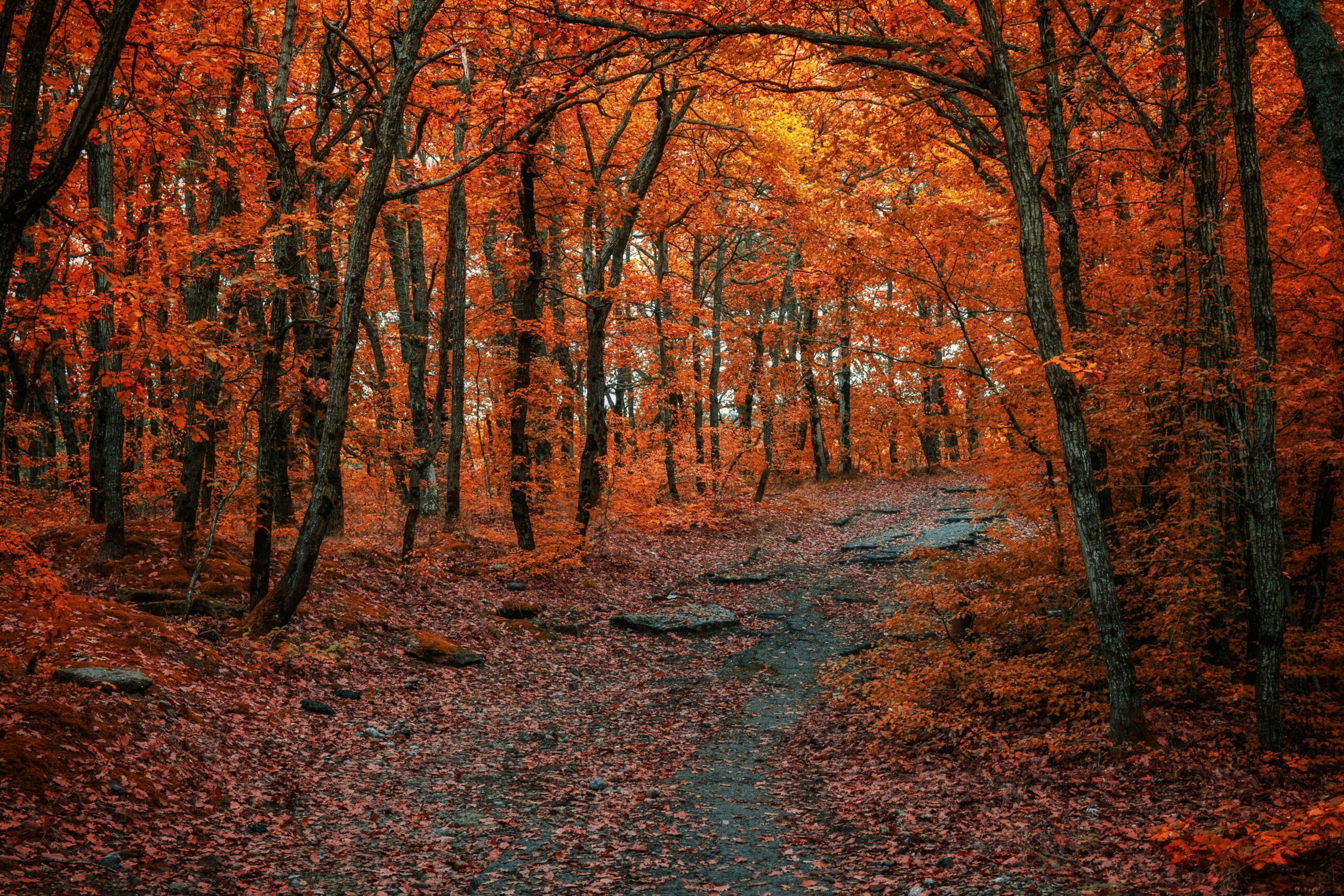
At least here in the northeast, a cornucopia of memes and reels appeared online on the first of the month to celebrate all things autumn: “sweater weather,” colorful fall leaves, pumpkin spice coffee, pumpkin patches, and all the rest of it. And being from Massachusetts originally—a state known for its fall foliage, Dunkin Donuts, and the first pilgrims and first Thanksgiving—I’m right on their wavelength.
But why does the fall elicit such excitement? The question becomes especially curious in light of the traditional associations of autumn in poetry and mythology. From Gerard Manley Hopkins’s “Spring and Fall” to Robert Frost’s “Nothing Gold Can Stay,” the fall—with its dying leaves and portending of harder months ahead—is a permanent symbol of impermanence, and of decay, death, and grief. What follows the beautiful color of autumn is “stick season”—that lifeless period of empty tree limbs shorn of their color. And what follows this, inevitably, is the bitter cold of winter, with all the challenges, both physical and mental, that it poses. For the ancient Greeks, too, autumn was essentially a somber time: It marked the return of the goddess Persephone, who had been abducted by her uncle Hades, to the underworld. The meteorological changes expressed the sadness of Persephone’s mother, Demeter. From a purely immanent perspective—the rhythm of the seasons, the cultivation of the land, the length of days—hope belongs to the bloom of spring and the full growth of summer, not to the withering of fall. The crisp air of autumn is, to put it bluntly, the beginning of the end.
And yet the fall enchants us. Why? Is it the association of the season with fresh starts—the beginning of a new school year or a new football season? Is it the suggestion of coziness—of hoodies and fireplaces, fairs and apple orchards? Is it the coming succession of holidays—Halloween, Thanksgiving, and Christmas—and all the fun and warmth that they call to mind?
In the spirit of autumn impermanence, we glean, somehow, a real sense of hope.
There’s some truth to all of these social and psychological explanations, but I would argue that the real reason runs through them and beneath them. And we find it in another line of Eliot’s, penned later in his career in his Four Quartets: “In my end is my beginning.” We don’t have fresh, cozy, warm feelings about fall in spite of its associations with decay and death, but because of them. In the spirit of autumn impermanence, we glean, somehow, a real sense of hope.
What allows for this paradox of autumnal expectation? Again, it can’t be the natural order of things, even with the festivities of harvest time. Rather, the spirit of end-as-beginning is only made possible by the foundational truth of Christianity: the Incarnation. There’s a cultural through line, firmly established by centuries of Christian influence, running from September 1 to December 25, the feast of the birth of the Word made flesh. And Christ was not only born “in the bleak midwinter,” but also in the humblest of circumstances—to a poor family on the run, in a cave surrounded by animals. The Christmas hymn “O Magnum Mysterium” beautifully captures this astounding marriage of the highest and the lowest: “O great mystery, and wonderful sacrament, that animals should see the newborn Lord, lying in a manger!” At the very end, the very bottom, of human life—a trajectory that finds its fulfillment in the cross and Resurrection—we find the living God, who was “emptied himself” to fill us (Phil. 2:7), and to make death the avenue of eternal life (John 12:24). As Chesterton put it, nothing had happened in the hills of Bethlehem “except that the whole universe had been turned inside out.”
This great inversion not only fills the month of December with warmth and joy—and even the agnostic or atheist, Chesterton said, is transformed by it, “whether he likes it or not”—it also reverberates across the “ber” months, filling them with its glow. Autumn is joyful because winter is joyful; winter is joyful because it’s the time of Christ’s birth; and Christ’s birth marks the claiming of the whole weak, decaying, suffering world for Christ.
To the degree that we turn, culturally, away from this revelation, we can expect the fall to be drained of all its color. But to the degree that we keep it in the center of the picture, we can expect all those wonderful memes and reels to show up every first of September.