
The College Beat: Article XIV
. . .
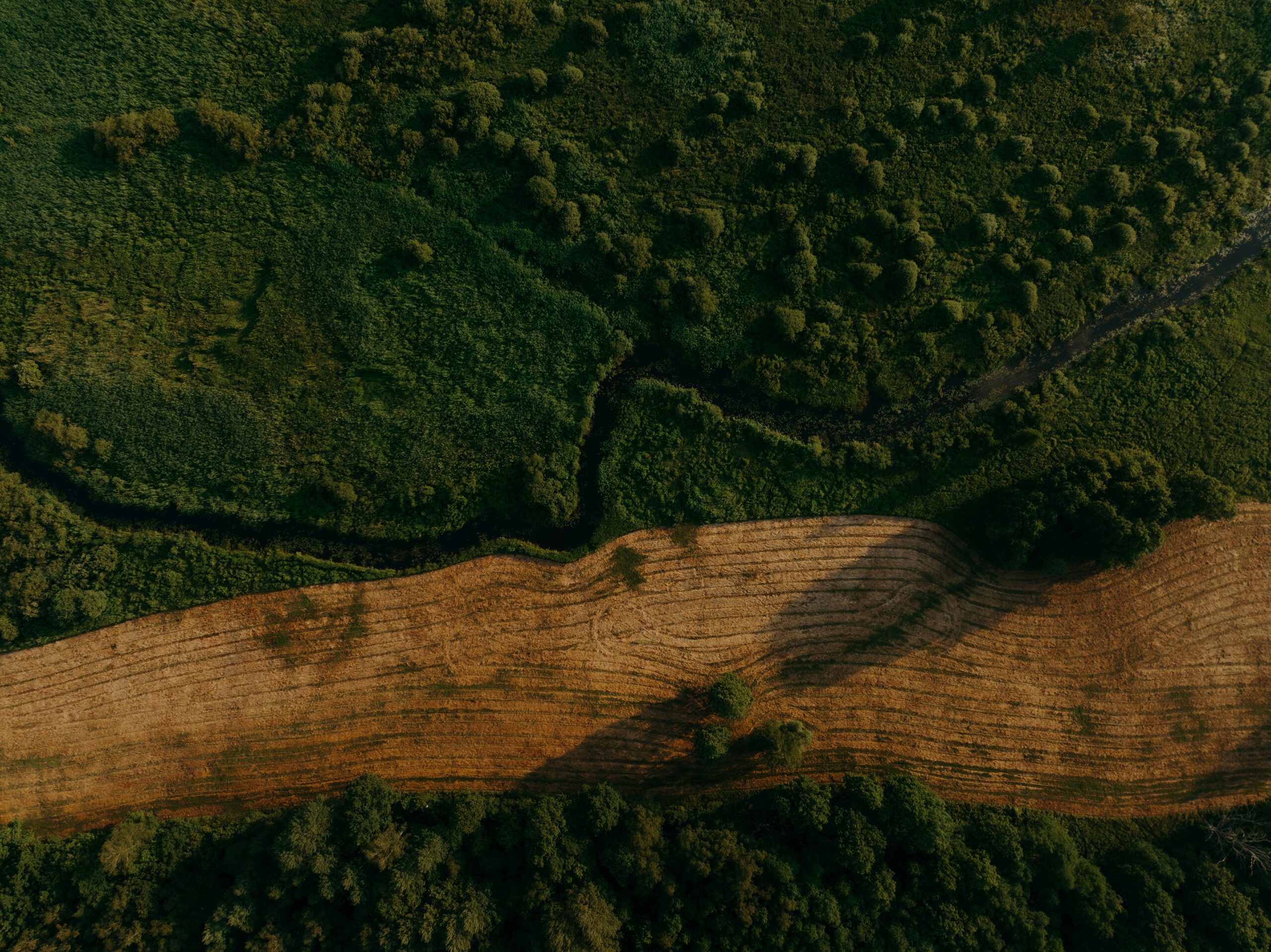
Every spring, throughout the American heartland, tractors make their way over acres and acres of empty farmland. As they overturn the hardened soil, it releases its stored organic carbon as carbon dioxide, much of which is never returned to the soil. This carbon is a vital prerequisite for soil health, so as more and more of it is lost, so is the soil’s ability to support life.
As this has been happening, our country has also been going through another crisis of fertility, specifically, of the demographic kind. What if these parallel crises are not a coincidence? Could the fertility of the family somehow be connected to that of the soil?
The Kentucky writer and farmer Wendell Berry argues just that. Strange as this claim may seem, it is no frivolous wordplay. Though Berry is not Catholic, he emerges from a tradition of social thought that goes back to some of the greatest Catholic minds of the modern era. This tradition offers an answer to the most intractable problems of the modern world—from marriage to climate change—and can be summed up in a single word: home.
In 1891, Pope Leo XIII promulgated Rerum Novarum, an encyclical that would become the foundational document of Catholic social teaching. Right away, Leo condemns socialism as denying the natural right to private property. In his argument, he emphasizes property’s role in upholding the family:
It is a most sacred law of nature that a father should provide food and all necessaries for those whom he has begotten; and, similarly, it is natural that he should wish that his children, who carry on, so to speak, and continue his personality, should be by him provided with all that is needful to enable them to keep themselves decently from want and misery amid the uncertainties of this mortal life. Now, in no other way can a father effect this except by the ownership of productive property, which he can transmit to his children by inheritance.
Leo claims that, for the family to carry out its natural role, it requires not simply property but “productive property.” This statement critiques not only socialism but also modern capitalism. It implies that a family which lacks the ability to provide for itself through its own capital, whether that be a family business, a piece of land, or the tools and skills of craftsmanship, and must thereby rely solely on wage labor to support itself, will be hindered from fulfilling its natural responsibilities toward its children.
The concept of home exemplifies the Catholic “both/and.” Every sense of “home” is essential and cannot be separated from the other senses without the whole breaking down.
The English writers Hilaire Belloc and G. K. Chesterton realized the radical nature of Leo’s claim. All around them they saw how the division of labor and pursuit of technological progress was concentrating productive property into fewer and fewer hands. This, in turn, forced the rest of society to, in Chesterton’s words, “[work] themselves to death for they knew not whom and [take] the means of life from they knew not where.” In response, Belloc and Chesterton called for a radical return to the older ways of economic life in which those who support themselves through their own property on a small scale formed the basis of economic and social life. They called this system “distributism.”
For Chesterton, the heart of the problem with the modern economy was not merely economic but philosophical and moral. It lay in the abandonment of “certain old communications, in the form of ancient traditions about the land, the hearth, and the altar”—in other words, about home.
The word “home” can refer to many things. A house is a home. One’s family could be said to make up a home. The piece of land upon which one has lived is one’s home. One’s hometown is home, as is one’s native country. The earth is, in the words of Pope Francis, our “common home.” One can place each sense of “home” under a particular movement that defends it. To defend the physical property and land that makes up a productive household falls under distributism. To call for commitment to communities such as family, town, and nation and seek to strengthen the relationships that hold them together is generally known as “communitarianism.” To advocate for returning to the land is “agrarianism.”
Chesterton, however, groups together all these “old communications,” and rightly so. The concept of home exemplifies the Catholic “both/and.” Every sense of “home” is essential and cannot be separated from the other senses without the whole breaking down. Without the ownership of productive property, the proper roles of family and local community are taken over by government and big business. Without the support of extended family and a strong local community, the nuclear family tends to fall apart. Without a connection to the land, family members and friends tend to move away, undermining both family and community.
“Perhaps, after all, it is thus that our culture may return to the stability and sanity of the earth, which is now its only hope.”
The British philosopher Roger Scruton coined the term “oikophilia” to refer to that central principle of the distributist/communitarian/agrarian tradition: the love of home. Both Berry and Scruton, moreover, realized that this “tradition of home” has taken on a whole new level of importance today, for it is the answer to the planet’s environmental crisis.
The aspects of this crisis are too numerous to elaborate upon here. In 2024, most observations show the earth having reached the much-discussed 1.5° C. threshold above pre-industrial temperatures, and though the running average is not there yet, it will be soon. Carbon dioxide concentrations are already higher than they have ever been.
At the same time, today’s environmental movement is deeply flawed. Sadly, much of its failure in winning over the public has been self-inflicted. Not only are environmental activists often caught up in ideological movements, but more fundamentally, their message often seems based on ideology or apocalyptic fear and not on love of the natural world. This leads people to dismiss their movement as crazy, or worse: anti-human.
This outcome is a predictable result of the movement’s modern and secular nature combined with the digital, indoor life of today’s youth. First, as Chesterton highlights throughout his writings, the modern world no longer recognizes the inherent goodness and lovability of this world. Instead, as Pope Francis emphasizes in his encyclical Laudato Si, modern man reduces the natural world to mere “raw material to be hammered into useful shape,” even extending this technocratic paradigm to human life itself. Second, the movement’s hostility towards traditional Christianity further cuts it off from the one source of hope. Third, because of the contemporary separation from nature and the diminished love that comes with it, the environmental movement turns to ideology, catastrophism, and other such sources of motivation. Moreover, an environmental movement detached from real, natural places becomes purely globalist, undermining oikophilia—the one thing, Scruton argues, that could allow the movement to succeed. Finally, the environmental movement now attempts to reject the technocratic paradigm by turning to the other extreme of pantheism or similar theologies. In so doing, however, it only further undermines the natural world’s value and mankind’s hope rooted in the God who transcends the world yet loves the world.
The Catholic “tradition of home” offers everything the modern environmental movement needs most. The Church’s philosophical tradition reminds us that nature was created with an inherent goodness and order that we must respect. Agrarianism—which calls us to root ourselves in the land, steward it, and, if necessary, regenerate it—fosters our love for nature. It also provides an opportunity to directly fight climate change. As mentioned earlier, conventional modern agriculture releases large amounts of carbon dioxide from the soil, leading to decreased soil fertility and hastened climate change. However, through alternative farming practices, such as those associated with organic and regenerative agriculture, farmers can alter this process, allowing them to remove carbon dioxide from the atmosphere and store it in the soil, mitigating climate change while restoring the fertility of their land.

Reviving tight-knit local communities would reduce transportation needs and, thereby, the use of fossil fuels, while also making it easier for families to be together and remain near their friends and relatives. Parents, particularly those who stay at home, would gain the support and companionship they need, reducing the burden associated with raising children. Such communities would go a long way towards restoring the nuclear family and alleviating the demographic crisis. Thus can Wendell Berry say, “Marriage and the care of the earth are each other’s disciplines. Each makes possible the enactment of fidelity to the other.”
Challenging as such changes would be to bring about, the idea that one solution could fix so many disparate problems may seem too good to be true. Berry, however, is arguing that the problems are not disparate but united in essence. He goes on, “As the household . . . has become increasingly ‘mobile’ and temporary, these vital connections have been weakened and finally broken.” We are not only social animals but also rooted animals. If a dying plant regrows its roots, not only is its water stress solved, but it is also able to take up nutrients and grow upright. So it is with man. If he regrows his roots, he not only recovers his relationship with nature but also his relationships with other people. He may even recover his relationship with God, the root of his life and final home.
About a century ago, a group called the Catholic Land Movement was founded in Britain, inspired by the ideals of distributism and agrarianism. Unfortunately, it declined following the Second World War, a time when more progressive interpretations of Catholic social teaching were predominant. But times have changed. We have relied on centralized government solutions to patch up the problems with the modern, cosmopolitan economy for a century, and yet today, familial, social, and environmental breakdown far exceed the challenges Chesterton and Pope Leo XIII addressed a century ago. Catholics today, especially the young, are realizing that only in the Chestertonian tradition of home can the fullness of Catholic social teaching be realized. In fact, about five years ago, the Catholic Land Movement was revived in the United States! To quote Chesterton, “Perhaps, after all, it is thus that our culture may return to the stability and sanity of the earth, which is now its only hope.”