
You will hear of wars and rumors of wars; see that you are not alarmed; for this must take place, but the end is not yet.
—Matt 24:6
To live is to live in flux.
Perhaps that is one reason I became a historian. Much of the work involves spending time among worlds that have disappeared. We read letters written by people who trusted their institutions, inhabited political orders they assumed would last, and understood reality through ideas that later generations would abandon. Every age imagines itself permanent. Many end up as footnotes in one of my unfinished research projects.
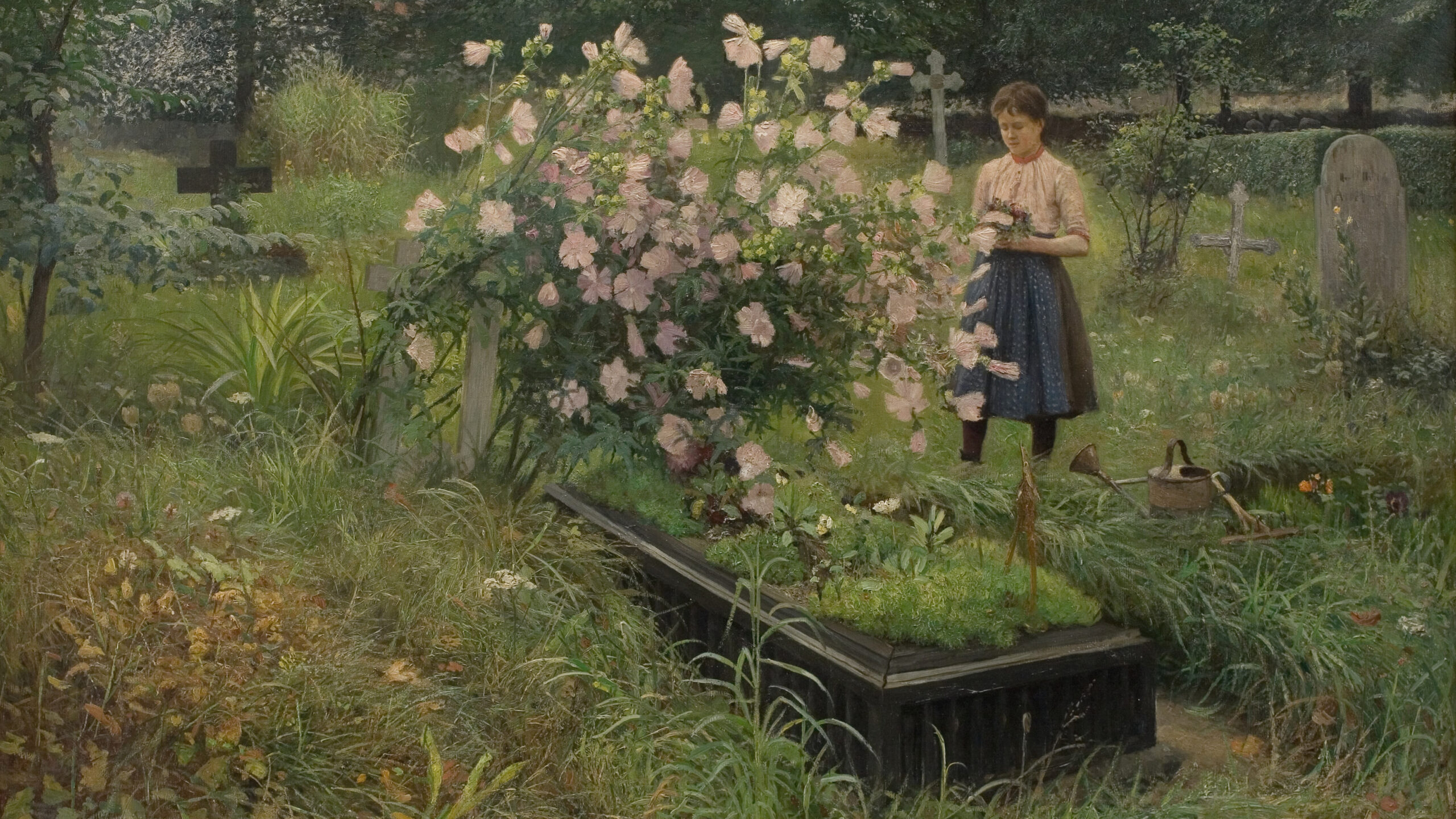
It is tempting to think that our own age is unusually unstable. Historians, though, encounter that feeling in almost every period they study. Each generation discovers, often with some surprise, that the world will not stand still. Few songs capture that feeling quite like “Lost Horizons” by the criminally underrated 1990s band Gin Blossoms. It is not so much a protest against change as the sound of someone trying to make a familiar world feel new again. The song’s image of “the gardens and the graves” stays with me: places where life begins and ends, with all of human history unfolding between them.
Heraclitus said that everything flows. History gives us little reason to disagree. Empires fall, revolutions become traditions, and civilizations once thought eternal survive instead in archives, ruins, and the occasional doctoral dissertation. Still, we want something to last, something that will outlive the latest upheaval. Christianity offers an answer that is easy to misunderstand. It does not promise to lift us out of history. It claims that eternity has entered history. The Catholic Modernist Crisis of the early twentieth century makes clear just how difficult that claim can be to grasp.
Much of my work concerns the Modernist Crisis, a painful and complicated episode in Catholic history that came to a head under Pius X. In 1907, Lamentabili Sane Exitu condemned propositions associated with theological modernism; later that year, Pascendi Dominici Gregis called modernism “the synthesis of all heresies.” Alfred Loisy was excommunicated in 1908. George Tyrrell, expelled from the Jesuits and deprived of the sacraments, died the following year and was denied Catholic burial. In 1910, the Oath Against Modernism was imposed on clergy and theologians across much of the Catholic world. These are the familiar milestones. The longer I spend with the sources, however, the more I find myself drawn to the people caught up in the controversy. Their letters do not reveal simply rebels or unbelievers; they show people who wanted to believe and who loved the Church but faced questions they could neither ignore nor easily resolve. Loisy and Tyrrell eventually found themselves outside the Church’s communion. Others, including the English Catholic writer Wilfrid Ward, remained within it while trying to reconcile their faith with what historical study had taught them.
Every age imagines itself permanent. Many end up as footnotes in one of my unfinished research projects.
Their difficulties were part of a wider change in how Europeans understood the past. During the nineteenth century, historical criticism, archaeology, philology, and evolutionary theory all made it more difficult to treat institutions, ideas, nations, or even theology as though they had no history. For some Catholics, this new awareness opened up possibilities. For others, it was unsettling, like standing on a floor that had begun to shift beneath them. The old maps were still there, but they no longer seemed to fit the landscape.
I find their experience familiar. The circumstances are different, of course, but we also live with inherited certainties under pressure and with technological and cultural changes that are difficult to make sense of as they happen. Flannery O’Connor writes, “There is no suffering greater than what is caused by the doubts of those who want to believe.” Faith, she suggests, is not a comforting electric blanket but a cross. Some of the hardest crises of belief arise not from hostility to God, but from the wish to remain faithful when the world—or one’s understanding of it—has changed.
Faith is often treated as a refuge from uncertainty, as if religion should offer security and protect us from ambiguity. Scripture tells a less reassuring story. Abraham leaves his homeland without knowing where he is going. Jacob wrestles through the night. Job sits among the ruins and demands answers. The apostles repeatedly misunderstand Jesus, and even after the resurrection, some of them doubt. Faith, in these stories, does not mean that struggle has ended. It means we must try to remain faithful in the midst of the struggle.
There are good reasons why that can be difficult. The twentieth century dealt a heavy blow to easy confidence in progress. The civilization that produced extraordinary scientific advances also produced Verdun, Auschwitz, and the Gulag. The twenty-first century has offered little reason to relax. Our technological powers have grown, but loneliness, fragmentation, and distrust remain. We move quickly and still struggle to know where we are going. Christianity does not deny this instability. Jesus speaks of wars, rumors of wars, persecution, and tribulation; the faith makes no promise that earthly kingdoms or civilizations will last. Its refusal to despair rests on the Incarnation: God has entered the world as it is, not as we wish it were.
Some of the hardest crises of belief arise not from hostility to God, but from the wish to remain faithful when the world—or one’s understanding of it—has changed.
Christianity tells not of humanity escaping time to find eternity but of eternity entering time. The Creator enters creation; the eternal Word takes flesh and dwells among us. St. Athanasius is important here: For him, the Incarnation was not simply an intervention in human affairs; it was the healing of humanity from within. His famous claim that God became man so that man might become god can sound like a call to leave the material world behind, but that is not the point. The world is to be transformed, not discarded. Matter matters: God does not save us by pulling us out of creation but by entering it.
This was one of the questions that made the Modernist Crisis so painful. Catholics on different sides of the dispute could come to see history and eternity as competing claims, as though loyalty to one meant surrendering the other. Historical consciousness seemed to threaten permanence; development seemed to threaten continuity; change seemed to threaten truth. John Henry Newman, who died in 1890, had already offered another way to think about the problem. Living things develop: acorns become oak trees, languages change, cultures mature, and institutions take new forms. The question is not whether development happens but whether something recognizably the same can endure through it. For Newman, Christianity did not need to stand outside history to preserve its identity. It could move through history without ceasing to be itself. Wilfrid Ward, Newman’s biographer, returned to this problem repeatedly during the Modernist Crisis.
The Christian task, then, is not to flee history but to look for God’s presence within it. Some sixty years after Pascendi, the Second Vatican Council’s Gaudium et spes called the Church to read the signs of the times while remaining rooted in Christ. The Council recognized both the possibilities and the dangers of the modern world. It refused easy optimism, but it also refused despair, affirming that “only in the mystery of the incarnate Word does the mystery of man take on light.” That is a demanding answer. Neither progress, nostalgia, nor political victory can bear the weight of Christian hope. The answer is Christ.
The sacraments make this claim tangible. History brings change, failure, reform, renewal, conflict, and loss. Yet every Sunday, bread and wine are brought to an altar. They are ordinary things, shaped by the same material world that is always changing. The Church nevertheless proclaims that, here, the eternal becomes present. The Eucharist is not an escape from history but a presence within it, an extension of the Incarnation’s logic. The Word who entered human life continues to meet his people in the midst of it.
None of this makes life less turbulent. The horizon keeps moving, and history remains unsettled. Joy gives way to grief; laughter is interrupted by bad news; ambitious political projects become questions on future exams. There are late nights spent watching old episodes of Sharpe and hoping, against experience, that Sean Bean might survive this time. And there comes the moment when the slang used by twenty-year-olds sounds less like English than intelligence gathered from a rival civilization.
There are also funerals that come too soon, friendships that fade without anyone quite deciding to let them go, medical results opened with trembling hands, and headlines announcing another war. Loss accumulates over a lifetime. Sometimes the hardest part is realizing that people we love belong increasingly to our memories rather than to our future.
Christianity does not offer a way out of this unfinished world. It makes the stranger claim that God chooses to dwell here, amid confusion and comedy, suffering and waiting. Kingdoms still fall, bodies still fail, and history refuses to stand still. Christ remains present. That does not make every loss easy to understand, but it means that even a lost horizon need not be the end of the road.
Perhaps the horizon still retreats, but it is no longer empty.