
Everyone knows the tragedy of Pompeii. Mt. Vesuvius erupted in 79 AD, covering the ancient Roman city in volcanic ash and pumice. The name Pompeii accordingly conjures pictures of disaster, despair, and ultimately death in the public imagination. But the calamity is only part of the story—and certainly not the end of it. In 2025, Pope Leo XIV canonized a saint who transformed Pompeii through the Rosary, turning the once-ruined city into a life-giving source of God’s grace.
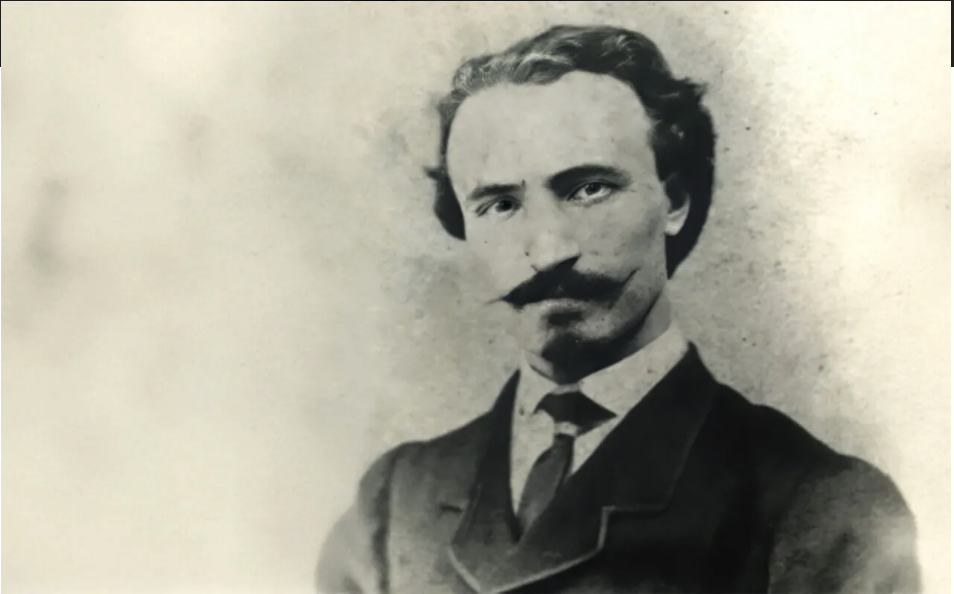
In 1872, an Italian lawyer named Bartolo Longo visited Pompeii on a business trip. About a decade earlier, the excavation of the historic site had come under the direction of the archaeologist Giuseppe Fiorelli. However, Longo wasn’t interested in the excavations. He became more concerned with the living inhabitants of Pompeii, having found the local population dwelling in a rural area plagued by poverty—both physical and spiritual.
The superstitious beliefs and occult practices in Pompeii appalled Longo. He himself had been involved in a Satanic group before his conversion, so he was very familiar with the danger of these practices. According to accounts of his life, Longo had previously been initiated as a Satanic priest while studying at the University of Naples. Likely due to the prayers of his devout Catholic family back home, he eventually connected with a Dominican priest through a professor. Within a matter of a few weeks, Longo confessed his sins and left Satanism behind him.
How could God save a man who had once pledged his life to the devil?
Longo could therefore relate to the spiritual destitution he found in Pompeii on some level. He was probably even more shocked by the lack of educational and religious institutions in the area. Virtually no schools existed, which meant the local children did not get a basic education. Most of the farmers were illiterate. The small and dilapidated parish church had no sacristy or rectory; the pastor lived on a farm three miles away. As a result, people were not receiving any catechetical instruction.
The field of Pompeii was evidently ready to be sown with the seeds of the Gospel. God chose Longo to be the sower. The Italian lawyer heard his calling through a profound spiritual experience that happened early on during his time in Pompeii. In a moment of utter despair over his past, Longo began questioning whether his commitment to Satanism was irrevocable and permanent. How could God save a man who had once pledged his life to the devil? Longo said he even felt tempted to commit suicide. Suddenly, he heard the voice of his confessor speaking the words of the Blessed Mother in his ear: “Whoever spreads the Rosary is saved.” This simple phrase cleared up the doubts tormenting him and fueled his commitment to propagating the Rosary.
After Longo’s conversion in Naples, a priest had told him that if he remained a layman, then God would call him to a specific apostolate. This was the apostolate: bringing the Christian faith to Pompeii through the Rosary. God had been preparing him for the task, as Longo had already become a Third Order Dominican. In 1874, Longo returned to Pompeii and began distributing Rosaries. He was accompanied and aided by the Countess Mariana di Fusco, the client on behalf of whom he had initially gone to Pompeii. They later entered into a Josephite marriage to avoid scandal while advancing their charitable work.
For the rest of his life, the Rosary remained Longo’s primary means of evangelization. He proclaimed the Gospel to an uncatechized population through this Marian devotion. The Mysteries enabled people to easily grasp the key events of Christ’s life, making the Rosary the perfect tool for evangelization. In fact, Pope St. John Paul II later referred to the Rosary as the “the compendium of the Gospel.” Longo repeatedly stressed the importance of meditating on the Mysteries, particularly through his publication Fifteen Saturdays in 1877. He helped the Fifteen Saturdays devotion spread worldwide, and it received support from Pope Leo XIII, the “Pope of the Rosary.”
In a matter of just a few decades, Pompeii was transformed into a place of life. The Sanctuary of Pompeii was consecrated in 1891, eventually becoming an international pilgrimage site that still welcomes over two million visitors annually. During his 2026 pastoral visit to Pompeii, Pope Leo XIV recalled Longo’s legacy, noting that he was not only an apostle of the Rosary but also of charity. Prayer laid the foundation for his work, ensuring that his efforts at reviving the region were fruitful. Longo took a holistic approach to reviving Pompeii, overseeing economic and social developments that occurred in tandem with the area’s spiritual rebirth. He started schools and orphanages, showing particular care for the children of convicted criminals.
In Fifteen Saturdays, Longo referred to the incredible story of Pompeii as the “greatest miracle in modern times.” He always saw himself as a humble instrument reliant on the intercession of the Blessed Mother. “The work of Pompeii is the work of God! The Virgin Mary is directing it to His glory, and the means of promulgation, of which she avails herself, are miracles!” Longo saw the merciful love of God as the moving force behind the transformation of Pompeii. He believed that Mary chose the city to be a sign of God’s mercy for the entire world.
The story of Pompeii serves as inspiration in a world that has largely embraced a culture of death. A kind of resurrection occurred in Pompeii through Mary’s intercession, infusing life into a place historically tied to paganism and death. During his homily at the sanctuary on May 8 this year, Pope Leo XIV reiterated a statement that Pope John Paul II made there over two decades ago: “Today, as in the times of ancient Pompeii, it is vital to proclaim Christ to a society that is drifting away from Christian values and even forgetting about them.” In order to bring about a culture of life, the faithful must undertake evangelization in a spirit of prayer, just as Longo depended upon the Rosary to nourish his own interior life and share the Gospel with others.