
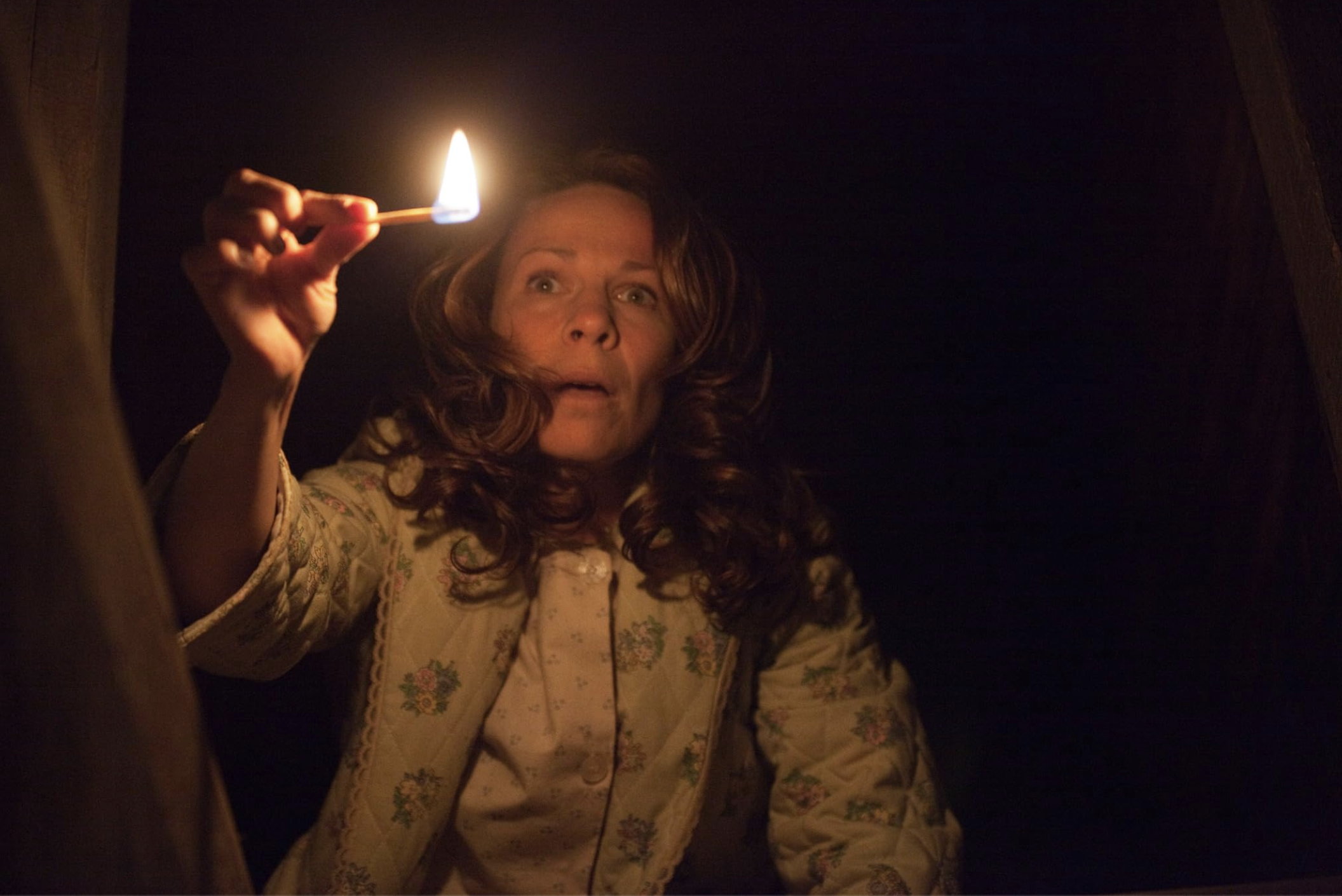
I don’t usually stand over a sink of dirty dishes contemplating horror movies (though maybe some do), but that’s exactly what happened recently after a particularly chaotic week of illness and botched morning routines.
Specifically, I was thinking about a scene from the first Conjuring film (2013), which my husband and I recently rewatched with his teen sister, who had never seen it before. I am not typically a fan of the horror movie genre, but back in my intern days as a young journalist, I was tasked with reviewing the first and second Conjuring films. Something I like about the first film in particular is how it portrays the power of love in conquering evil.
For those unfamiliar with the plot, Carolyn, a mother of five, becomes possessed by a demonic spirit that had been haunting the Rhode Island farmhouse she and her family recently purchased. Her lack of faith makes her an easy target. By the end of the film, the spirit—a witch named Bathsheba who killed herself on the property after sacrificing her child to Satan (again, not the kind of subject matter I usually find appealing)—has taken full possession of Carolyn, and she is chasing her youngest daughter through the house, attempting to kill her with a pair of shears. It is during this critical moment that medium Lorraine Warren encourages her to fight from the inside. Warren reminds her of a photo hanging in the house that Carolyn had previously shown her: a family beach day she described as one of her most precious memories.
“Carolyn! You have to fight her! Remember what you told me—remember your day at the beach!”
The maternal love evoked by this core memory gives Carolyn the strength to resist the evil entity. With this internal pushback, the exorcism is brought to its completion, and Bathsheba is condemned back to hell. While the Catholicity of the film is dubious (you’d hardly expect James Wan, director of the Saw and Insidious franchises, to be an expert on the Roman rite of exorcism), there is wisdom in this powerful scene: When we find ourselves in a state of misery, despair, or exhaustion, all it takes is a glimmer of light to break through and shift our perspective heavenward to gaze up at Love himself and remember who we are as image-bearers made to love.
The problem of evil is not a new one, and as recent headlines remind us, it certainly isn’t merely the stuff of horror flicks.
Back to my sink full of dishes. I desire to be a good, holy mother, and I regularly read and pray about what such a life demands. But I so often find myself feeling discouraged and disappointed by my failings. Any parent knows that a single day can bear witness to a range of emotions and events, ups and downs. Throw in illness, sleep deprivation, and perhaps some children with neurodivergence or special needs, and it can feel like a downright assault on the senses. We can begin to forget who we are and how we ended up here. Saints? Us? How?
The real-life American horror story of the Lindsay Clancy murder trial and the months-long social media firestorm it sparked have revealed the hearts of many American women. From the unabashed empathy of many TikTok moms to the shock and disgust at what Anne Hendershott aptly described as a “moral contagion,” the murders of three innocent children have had a polarizing effect akin to the Charlie Kirk assassination just over a year ago. Both of these events point to a modern identity crisis in which people are genuinely divided over basic moral truths. We have become a nation of sick people perpetually on the brink of losing our souls, primed for intellectual and spiritual possession.
The problem of evil is not a new one, and as recent headlines remind us, it certainly isn’t merely the stuff of horror flicks. Perhaps the most unsettling truth, however, is that the internal struggle for peace and order is in fact a normal aspect of the human condition. Novelist and historian Aleksandr Solzhenitsyn famously described the line of good and evil that “passes not through states, nor between classes, nor between political parties either—but right through every human heart—and through all human hearts.”
“This line shifts,” he continues. “Inside us, it oscillates with the years. And even within hearts overwhelmed by evil, one small bridgehead of good is retained.”
The struggle for holiness is not, then, a problem in itself, so long as we persevere. Scripture assures us that even those farthest from God can indeed at any moment become saints. In Luke 15 alone, we find the parable of the lost sheep, the lost coin, and the prodigal son, all of which point to God’s unending mercy. With this blessed assurance, we are instructed on how to proceed:
Therefore, since we are surrounded by so great a cloud of witnesses, let us also lay aside every weight and the sin that clings so closely, and let us run with perseverance the race that is set before us, looking to Jesus the pioneer and perfecter of our faith, who for the sake of the joy that was set before him endured the cross, disregarding its shame, and has taken his seat at the right hand of the throne of God. Consider him who endured such hostility against himself from sinners, so that you may not grow weary or lose heart (Heb 12:1-3).
Study the lives of the saints and you will see countless ways in which ordinary humans have found glimmers of light and grace while burdened and battered by the storms of life. Think of the inextinguishable hope of St. Mother Teresa caring for the sick and wounded “untouchables” of Calcutta with a serene smile on her face. Another beautiful example is St. Gianna Molla, a mother and pediatrician who made the ultimate sacrifice, delaying treatment of an aggressive cancer so her unborn child could live. “The secret of happiness is to live moment by moment and to thank God for all that he, in his goodness, sends to us day after day,” she said.
Those are just two of my favorites. Find yours, befriend them, and ask them to intercede for you.
As we prepare for Hallowtide, let us reflect on what it means to be a saint in our modern world. When we see evil within ourselves, we shouldn’t despair or be surprised. None of us are doomed to become murderers, adulterers, or tyrants. Instead, we should do what Scripture prescribes: look to the saints, fix your eyes on Christ, and remain in him. Remember his promises. We are his. Let us not relinquish our destiny.