
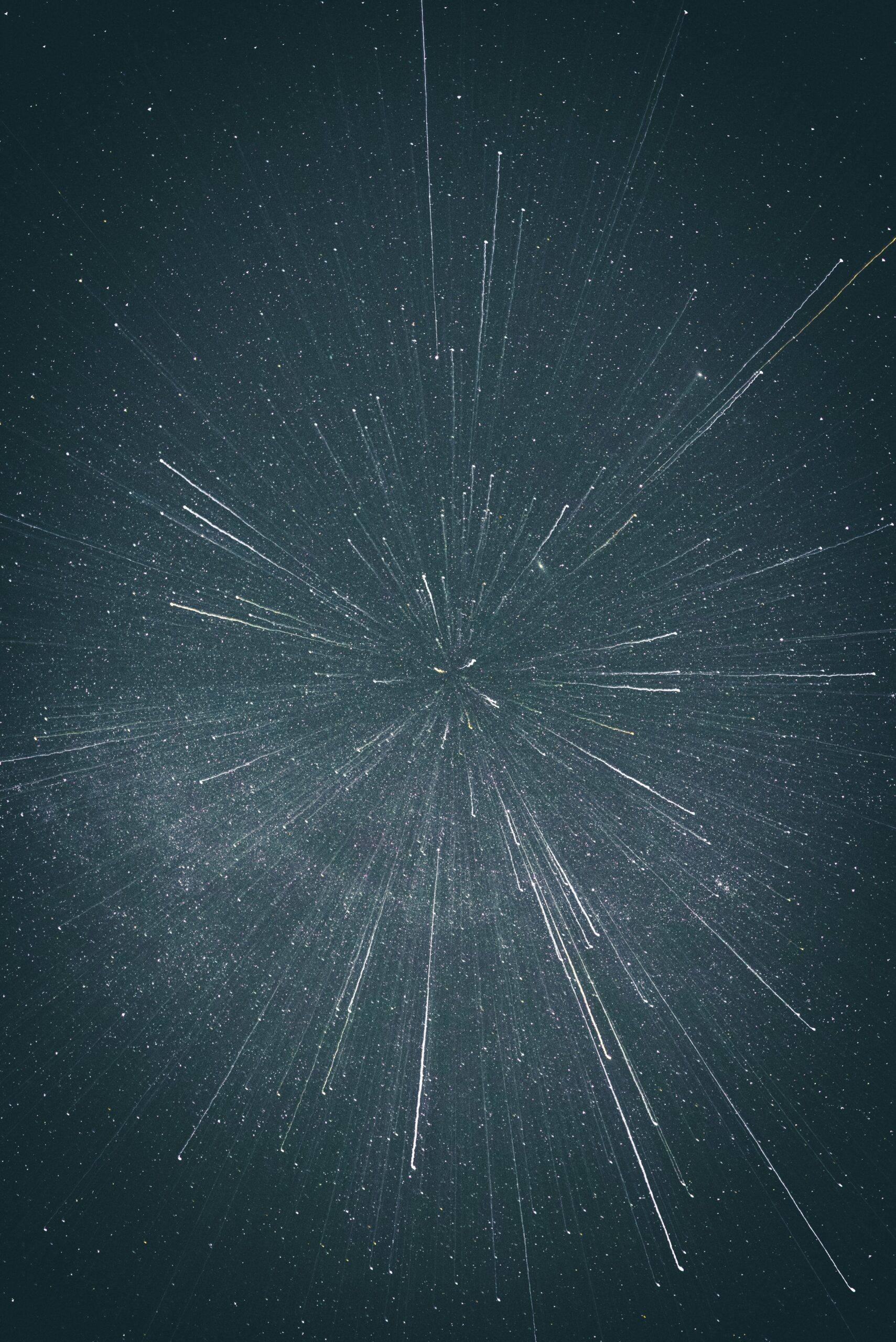
What is the meaning of a star?
What sense does it make to even ask such a question? And why should Catholic schools cultivate the ability to answer it?
According to their mission statements, most Catholic schools agree that the task of education is more than producing college- and career-readiness. The true goal has to do with forming whole persons created in the image of God, helping them realize their full potential, purpose, and vocation as human beings. To achieve this end, Catholic schools must emphasize the cultivation of a crucial human capacity: the sacramental imagination.
The sacramental imagination is a way of seeing beyond the surface appearance of things like stars and into their deeper dimensions. It is the human capacity to comprehend an invisible reality manifested through everyday physical things. While perhaps better understood as a sensitivity than a skill, the sacramental imagination can nevertheless be nurtured within a certain kind of culture. Catholic schools should aim for that kind of culture to cultivate that sensitivity.
The Organ of Meaning
C. S. Lewis wrote, “Reason is the natural organ of truth; but imagination is the organ of meaning.”
To navigate the difference and to illumine the nature of the imagination, consider a scene in The Voyage of the Dawn Treader. On a mysterious Narnian island, Eustace meets a silver-haired man who introduces himself as Ramandu, a retired star. “In our world,” says Eustace, “a star is a huge ball of flaming gas.” Ramandu replies, “Even in your world, my son, that is not what a star is, but only what it is made of.”
Eustace, along with most other students educated in our world, knows that there are aspects of a star assessable by reason. Through taking in physical data, the intellect can observe, measure, and analyze a star’s constituent elements. But Eustace’s school did not train him to inquire about other dimensions of stars, such as their meaning. Eustace would likely find such an inquiry nonsensical.
To identify physical objects as sacramental is to see that they not only point to but actually convey and make present the divine life.
Meaning, as an object of the imagination, is tricky to define. It has to do with how we conceive of something relating to other known realities, especially to the purposes that give it significance. “Imagine” that we interpret the world through a framework of interconnected concepts, convictions, and past experiences. This web of understanding includes knowledge not only of the periodic table of elements but also of advancements through the history of astronomy; not only of the biblical account of lights “to rule over the day and over the night,” but also of literary notions of the fate of “star-cross’d lovers” being written in the heavens, a laughing galaxy as the Little Prince’s home, and the beatific vision of the love that moves the sun and the other stars. We discern the meaning of stars when we find a place for them to fit within this vast conceptual framework—i.e., when we grasp how they connect with, refer to, and disclose other realities and possibilities.
And when the reality that an object discloses is the divine, the imagination discerns that object to be sacramental. (I here use “sacramental” as an adjective to describe the nature of reality, as distinct from the noun used to describe Church-instituted signs.)
Imagining the Sacramental
Sacraments are more than mere symbols. The diagram of a constellation in Eustace’s textbook might symbolize a group of stars, but the ink and the paper remain external to the actual celestial bodies. In contrast, a sacrament mediates the very thing it refers to—the referent is intrinsically and effectively present in the sign. To identify physical objects as sacramental is to see that they not only point to but actually convey and make present the divine life. And the capacity to see how objects do this is the sacramental imagination.
Why the sacramental imagination is so important for Catholic schools is because every subject studied in the curriculum can function, in some sense, as a sacrament (lowercase “s”). “Ever since the creation of the world his eternal power and divine nature, invisible though they are, have been understood and seen through the things he has made” (Rom 1:20). We just need eyes trained to see and ears tuned to hear.
The Protestant Hans Boersma and the Catholic Hans Urs von Balthasar have both argued that all the world is a sacramental reality. They echo the Church’s traditional understanding that all created things, by virtue of existing, participate in God, who is Being itself. That is, all created reality is sacramental because there is something of prime reality (God) intrinsically present within it.
The crucial notion of participation finds biblical support in the claim that we “become participants of the divine nature” (2 Pet 1:4). But this participatory relationship does not mean that all things are God in some pantheistic sense. Participation preserves the distinction between Creator and creature and safeguards God’s transcendence. But because all things derive their being from God through participation, all things bear his divine fingerprints.
It follows that, insofar as created realities have intelligible meaning, they do so because they participate in intelligibility itself—what ancient Greeks termed the logos. According to the Gospel of John, this logos became flesh and dwelt among us in Jesus Christ. Not only did the logos assume visible, tangible human flesh, but Jesus used ordinary material realities like water, bread, wine, oil, and the touch of his own hands to convey divine grace to humans. The incarnation provides Catholic educators the ground for believing that their finite subject matter can mediate the infinite. And what discerns the ways in which it does so is the sacramental imagination.
Creation Is Charged
All reality bears sacramental meaning not only because God gave it being but also because he did so for a purpose. Referring to Christ, Paul told the Colossians that “all things have been created through him and for him” (1:16), which is to say that all things, including stars, were created for a purpose. To discern their meaning, we need to discern that purpose.
That purpose is, in a phrase, worshipful communion. Participating in God entails taking part in the Son’s eternal communion with the Father in the Spirit, a communion consisting of loving adoration and praise. As the Catechism notes, the triune God extends this communion to his people (see CCC 221), inviting them to respond, appropriately enough, with worship.
The book of Genesis depicts creation as a kind of temple: The God of love dwells with and within what he has made, and all of creation is intended to respond by glorifying him. (Consider the fact that in Genesis 2:15, the two words describing man’s duty in the garden—the Hebrew ʿābad and šāmar, which means to serve and guard—are the same two words describing the priests’ and Levites’ duties in the tabernacle [Numbers 3:7—8].) In short, to grasp the purpose of creation, we need to understand that God created the material universe as a means of communion with himself and among people, thereby imbuing all things with a responsive doxological orientation toward the divine Father.
The exploration and discoveries made possible by the sacramental imagination should constitute the lifeblood of teaching and learning in Catholic schools.
The psalmist therefore urges the “mountains and all hills, fruit trees and all cedars! Wild animals and all cattle, creeping things and flying birds” to “praise the name of the LORD” (Ps 148:9—10, 13). He even includes the stars: “Praise him, sun and moon; praise him, all you shining stars!” (Ps 148:3). Thus, as Ramandu understood, physical realities are more than the sum of their constituent elements. At a deeper dimension, they are, in the words of Gerard Manley Hopkins, creatures “charged with the grandeur of God.” They each in their own special way give glory to their triune maker. In George Herbert’s poem “Providence,” beasts sing, birds ditty to their notes, and trees tune on their native lutes “to thy renown.” Andrei Rublev sounds a similar note in his icon of the Trinity, where even the oak tree and rocks bend toward the Father, imaging the bowed heads of the Son and Holy Spirit.
God’s Charge to Humans
While even stars manifest God’s glory, understanding how they do so is a God-given capacity uniquely belonging to human persons. It is to man that God has bestowed the ability to discern spiritual meaning in physical realities—i.e., the sacramental imagination. We must engage this capacity to understand how God intended physical realities like stars as gifts for communion. For example, what does he want us to learn from them regarding his own nature and that of the cosmos? What role can they play in helping humans to participate in and embody the triune communion on earth? How can they aid sailors in navigation, provide comfort to those living far apart, and reveal the beauty and order of the universe?
We must also call upon the sacramental imagination to fulfill our role as megaphones of God’s glory. In this way, man serves somewhat as a priest of creation: He receives with gratitude what God has made and intentionally articulates, celebrates, and offers its glory back to God.
Of all the creatures both in sea and land
Only to Man thou hast made known thy ways,
And put the pen alone into his hand,
And made him Secretary of thy praise. (Herbert, “Providence”)
Here we approach the underlying task of a Catholic school: to help fulfill each student’s vocation, by virtue of being human, of relating rightly to God and all things and giving voice to creation’s praise. To succeed in this calling, though, students must be sensitized to the deeper spiritual meaning within everything they study.
Joyful Anticipation of Discovery
Schools that take the sacramental imagination seriously will be marked by the joyful anticipation of discovery. Discovery of what? Not only the fundamental nature of language, science, mathematics, literature, and history, but also the ways these fields manifest God’s grandeur and mediate his self-communication. “Christ plays in ten thousand places!”
Catholic educators should be like the crippled man upon encountering Peter and John at the temple’s entrance: “He fixed his attention on them, expecting to receive something” (Acts 3:5). This means that teachers approach their subject not with an attitude of having mastered it fully but with an openness and desire to learn more—to have their understanding healed and strengthened. It also means that teachers should attend carefully to the physical, visible dimension of the subjects they teach. But, going further, they must also expect, anticipate, and be sensitive to finding meaning below the surface appearance of their discipline.
Through such attending and expecting, teachers and students do not merely gather data, analyze component parts, and explain how things work. They also wonder about why things exist in the first place, in what ways they exhibit pattern and order, how they relate to other aspects of creation, what role they play in God’s grand design, and what they ultimately mean. Catholic education is not about studying different subjects than are studied at other schools, but it can, thanks to the sacramental imagination, enable students to see further into those subjects and understand them at a more profound level.
Conclusion
To fulfill their calling as image bearers, Catholic students need the ability to discern how everything they study, in its own proper way, can facilitate and disclose divine doxological communion. The exploration and discoveries made possible by the sacramental imagination should constitute the lifeblood of teaching and learning in Catholic schools. Here is something more exciting, inspiring, and consequential than a high school transcript to motivate academic excellence—and to reanimate the sense of teaching as a vocation!
If Eustace’s school had cultivated the sacramental imagination, he would not only have studied what stars are made of, but he would also have been challenged to discern their deeper meaning. Upon gazing upon a twinkling star, his imagination would have been tuned to sing, “How I wonder what you are!”