
Freedom of speech, guaranteed by the First Amendment of the US Constitution, is a fundamental right properly celebrated in this, the 250th anniversary of the country’s founding. The line often attributed to the French philosopher Voltaire, “I disagree with what you’re saying, but I’ll defend to the death your right to say it,” rolls off American tongues for a reason. From public protests to podcast proliferation, “we, the people” love to speak our minds.
Yet when we examine the cultural climate in the United States this anniversary year, it’s also appropriate to reflect on the harm we can unleash when our words are spoken without regard for the other. Bullying, belittling, and braggadocio online have become increasingly normative, and the corrosive effect of this language can be seen at every level of society.
The rise of social media platforms that enable anyone with a phone or computer to broadcast even more negativity has certainly compounded the problem exponentially, but concerns about a national atmosphere of rancor and rage aren’t as new as we’re sometimes tempted to think. Diana Schaub, author of His Greatest Speeches, How Lincoln Moved the Nation, states that the country’s sixteenth president recognized “disregard for law, demagoguery, and hyper-partisan passions” as troubling trends early in his own political career.
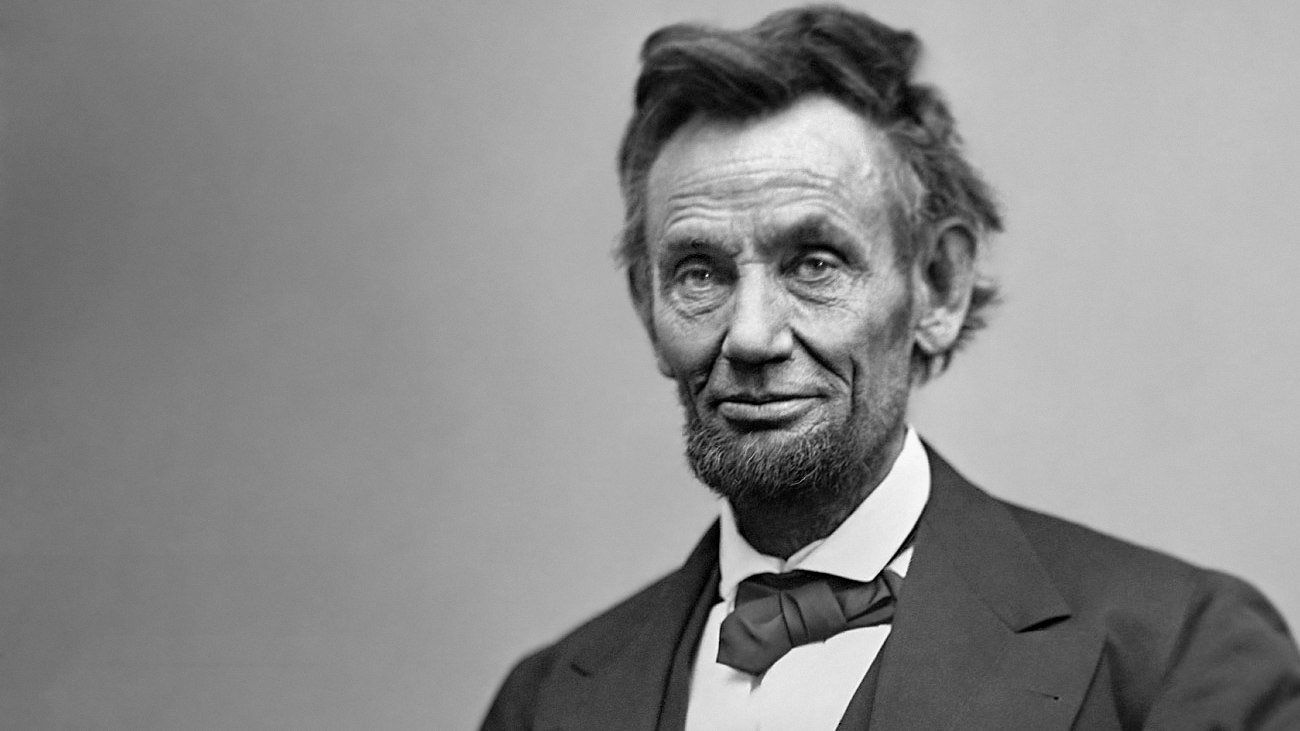
But even Lincoln, one of the most beloved presidents and finest orators in United States history, had to learn to restrain himself from succumbing to harmful speech.
It’s well known that Lincoln was a captivating storyteller. In an essay on Lincoln’s humor, historian Benjamin P. Thomas notes that in addition to being a master of language, Lincoln possessed a crowd-pleasing talent for mimicry that made his delivery especially engaging, and he wasn’t above using it for persuasive effect.
Truly free speech is not permission to say whatever we want; rather, it is the freedom to use our words in ways that respect the dignity of others, even when we are challenging their positions or behavior.
Citing Lincoln’s biographer William Herndon, Thomas relates that during a campaign in 1840, Lincoln’s opponent Jesse B. Thomas delivered a speech at the courthouse in Springfield, Illinois, which sarcastically alluded to Lincoln as a member of “the Long Nine,” a group of general assemblymen who voted similarly and were all over six feet tall.
Stung by the barbs, Lincoln launched a scathing retort and the crowd responded with escalating cheers when he began mimicking his opponent: “He imitated Thomas in gesture and voice, at times caricaturing his walk and the very motions of his body. Thomas, like everybody else, had some peculiarities of expression and gesture, and these Lincoln succeeded in rendering more prominent than ever.”
Though a lawyer and a judge, Jesse B. Thomas was a sensitive man. He endured the jeers for a while but as the mockery mounted, he was finally reduced to tears. The political theater that day made for great copy, and newspapers widely ran the story of Lincoln’s victory, which became known as “the skinning of Thomas.”
The future president, however, deeply regretted his overbearing performance. He later sought out Thomas and profusely apologized for his behavior. Lincoln refrained from public mimicry from then on.
That change of heart shows a contrition sadly lacking in the national conversation today. “Amid a contentious election, unrest on campuses and in cities, and a world full of conflict . . . lashing out is all too easy,” Arthur Brooks admits in his book The Happiness Files. But Brooks goes on to gently remind his readers that the love the early Christians showed to each other, and even to their enemies, eventually became the official religion of the Roman empire. “If those early Christians had been violent and hate-filled,” he suggests, “the faith would have probably come and gone like any number of cults over the centuries.”
The concept of “freedom for excellence,” articulated by moral theologian Servais Pinkaers as “the power to engage in excellent actions [that] are both true and good,” can help us adopt the approach of those early Christians. Truly free speech is not permission to say whatever we want; rather, it is the freedom to use our words in ways that respect the dignity of others, even when we are challenging their positions or behavior.

Our wounded nature makes this a hard-won freedom indeed. In us, as Flannery O’Connor memorably put it, “the good is under construction.” When we speak without the grace of humility, our words reveal what is hidden in our hearts, which regrettably are often prisons of judgment, resentment, and self-pity. Our speech lays bare the places where we are still enslaved to the approval of our peers, the contagion of the crowd, and an ugly desire to diminish those we envy or oppose.
But our speech can become free for excellence as we embrace a slow and sometimes painful process of healing, learning to release interior resentment and to consider the impact our words have on others.
This requires self-examination and humility, virtues Abraham Lincoln displayed on the campaign trail in Springfield. Their fruit is seen in his first Inaugural Address, when as the newly elected president of the United States of America, Lincoln asked countrymen on the verge of war to allow themselves to be touched by “the better angels of our nature.”
“We must not be enemies,” Lincoln urged. “Though passion may have strained it must not break our bonds of affection.”
Whether in politics or the difficulties of everyday relationships, this is wisdom.
Perhaps, while we celebrate freedom of speech in this anniversary year, we might also take a moment to consider the harm that may be unleashed by what freely rolls off our tongues, that we may become better bearers of grace in a world that so desperately needs it.