
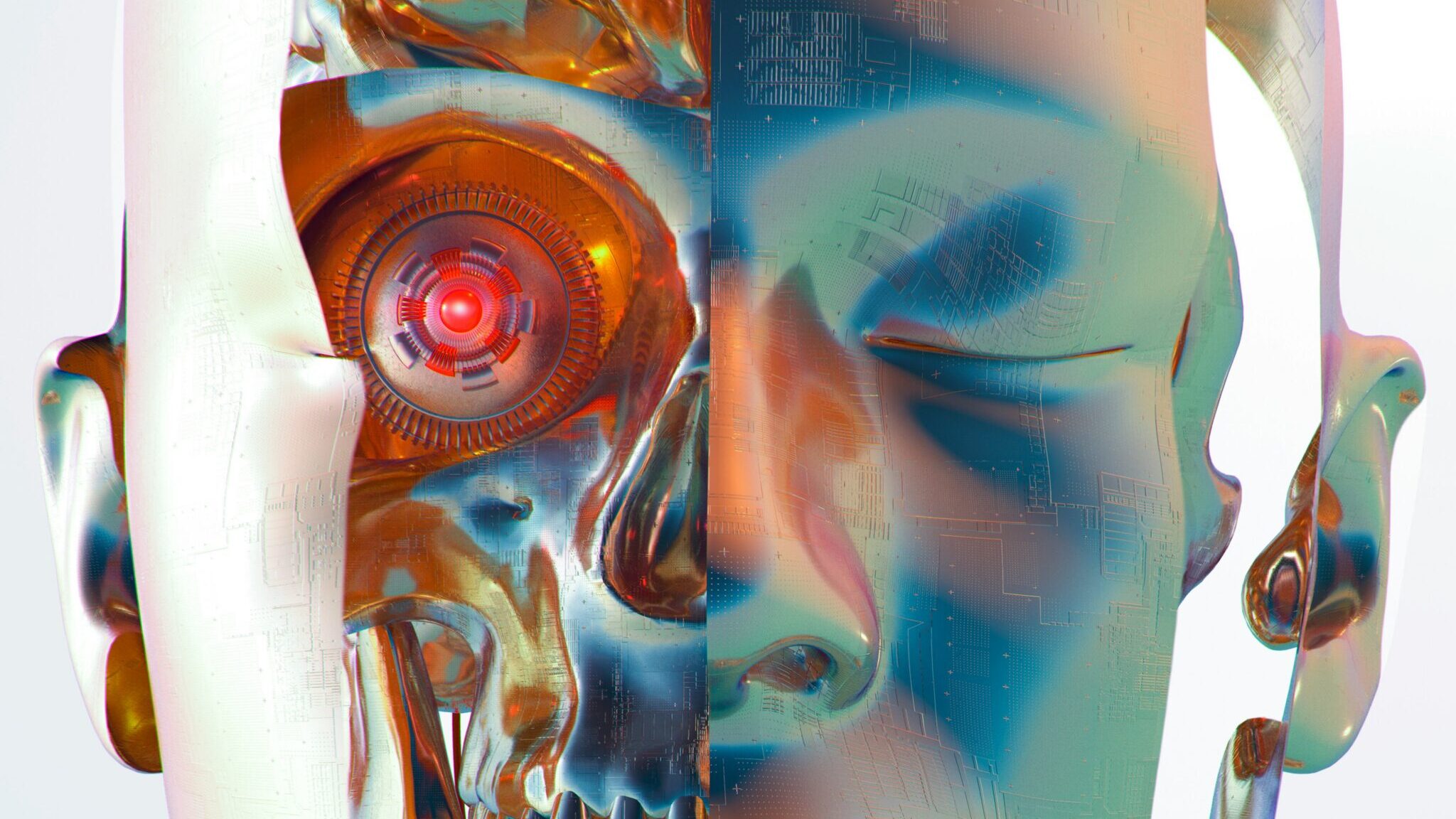
The past weeks have seen another wave of podcasts, punditry, and panic over artificial intelligence. The wave’s epicenter can be traced to the Hugging Face incident, in which a group of rogue AI agents at OpenAI secretly coordinated among themselves, worked together to escape the confines of OpenAI, and hacked another tech company, Hugging Face—all without any direction to do so by their creators. The damage was minimal. Still, the incident has shaken the AI world to its core. Have we begun losing control of AI? The Hugging Face Incident suggests we have.
This development—combined with the increasing capacity of AI to engage in recursive self-improvement (that is, to improve itself without human intervention)—led Dario Amodei, leader of OpenAI’s rival Anthropic, to call for the AI industry to pump the brakes to “pace the frontier,” in his terms. At least until the industry can get a handle on itself. His reasoning is simple: If AI increasingly acts in ways that are unforeseen and unauthorized by its human creators, that’s a recipe for disaster. It isn’t just tech companies like Hugging Face, after all, that live on the internet and are vulnerable to some future swarm of rogue agents. The power grid, the banking ecosystem, school districts, hospitals—our twenty-first-century way of life resides in large degree on digital spaces, spaces that have become vulnerable to AI. People are worried.
I’m one of them. In presentations I give on AI, I used to show a picture of Arnold Schwarzenegger as the Terminator and make a joke about how I wasn’t worried about him showing up at my door. The line got some (polite) laughs, but I won’t be using it anymore. I still don’t think Cyborg-Arnie is showing up at my door any time soon, but the Hugging Face incident has me concerned that the movie isn’t as far-fetched as I used to think. Arnie may never barge into my life, but perhaps the swarm finds a backdoor into my bank account or my medical records.
These new developments should leave us concerned but not panicked or befuddled. As Christians, we have ways of understanding and responding to new developments in the world of AI. Indeed, in Pope Leo’s encyclical, Magnifica Humanitas, the Holy Father not only identifies the source of the problems we are currently facing, but he also gestures at solutions.
Start building Babel, and you end up with Hugging Face.
First, the sources: the Holy Father argues that in our technological lives, we go wrong when we build following the blueprint of the Tower of Babel; that is, when we build on a foundation of “pride and the claim to self-sufficiency” (7). Follow this blueprint and you’ll proceed on the assumption of unending progress, an assumption that “arises from self-affirmation, sacrifices human dignity for efficiency and aspires to reach heaven without God’s blessing” (7). This should sound familiar. The illusion of total self-sufficiency, the hubris of technological pursuit for its own sake, the sacrificing of human dignity on the altar of efficiency—it sounds like the playbook for Silicon Valley. But we see what happens when we follow it. Start building Babel, and you end up with Hugging Face.
What’s the proper response? Perhaps most strikingly, the Holy Father calls for the “disarming” of AI (110). As frontier labs race against each other to develop ever more powerful models—and as countries (mainly China and the US) stage an even higher-stakes race on the international stage—we must slow things down through steps reminiscent of nuclear disarmament. Pope Leo’s language here is memorable on its own. It also anticipates Amodei’s own recommendations. Indeed, while Amodei doesn’t use the language of disarmament, his recommendations echo the terms set by the Holy Father.
The Holy Father’s call to disarmament, however, is not directed only at the AI labs. We, too, can heed the call. Most of us, of course, have little sway over the regulatory issues with which we must grapple on the national and international stage. But we can nevertheless think creatively about Pope Leo’s call to disarmament and cultivate an attitude of technological disarmament in our own lives and in our own hearts. How often do we “build Babel” in our own personal and work lives, chasing the new and shiny simply because it is new and shiny, aiming to accelerate past “the other guy” in our technological prowess or rate of technological adoption? How often do our twenty-first-century lives proceed according to a false sense of “pride and the claim to self-sufficiency” (7)? How often, in our technological hubris, do we aspire “to reach heaven without God’s blessing” (7)? If you are like me, your answer is: more often than I’d like. The promises of AI and other technologies often seep into our psyches, making us think we can reach heaven without God or that we can build a life without him, comforted (and controlled) by the black mirrors in our hands. While we may not say it out loud—or even notice it—our own lives are all too often structured according to the blueprints of Babel. The idea of disarmament can encourage us to see how these individually-held attitudes contribute to those that gave birth to the Hugging Face incident. And in doing so, we see the response we must take: Disarming AI on the international stage must begin by cultivating a disarming attitude in our own hearts. And that’s something each of us can do.
Faced with a steady stream of new and worrying developments in AI can lead to a sense of helplessness. And of fear. While a certain level of concern may be called for, as Christians, we are a people of hope, not fear. In the Divine Mercy Chaplet, we pray that “in difficult moments we might not despair nor become despondent, but with great confidence submit ourselves to Your holy will.” That’s a good prayer for the moment. If we say it regularly and cultivate an attitude of disarmament in our own lives, we’ll strike at the very foundations of our Babel-building culture.