
“Do you want to finish the episode?” I called out to my husband as the sun sank under the horizon; our honeymoon on the beach had just passed by as well. He responded from the other room in a muffled voice something about “finishing the Office.” But we were watching Friday Night Lights, I thought. Why would he be finishing The Office without me? In the flurry of dating during law school and being engaged while living time zones apart, many aspects of each other’s lives came into fuller view once we were married and living under the same angle of the moon. He didn’t realize I loved to hog both the covers and the crispy ends of a baguette. I hadn’t understood fully that the Nebraska football schedule and the Divine Office, the Liturgy of the Hours, were two fulcrum points for his calendar: one weekly and the other many times a day. If you’re not a priest or religious and curious about why and how lay people would pray the Liturgy of the Hours, welcome to my questions for the early years of our marriage.
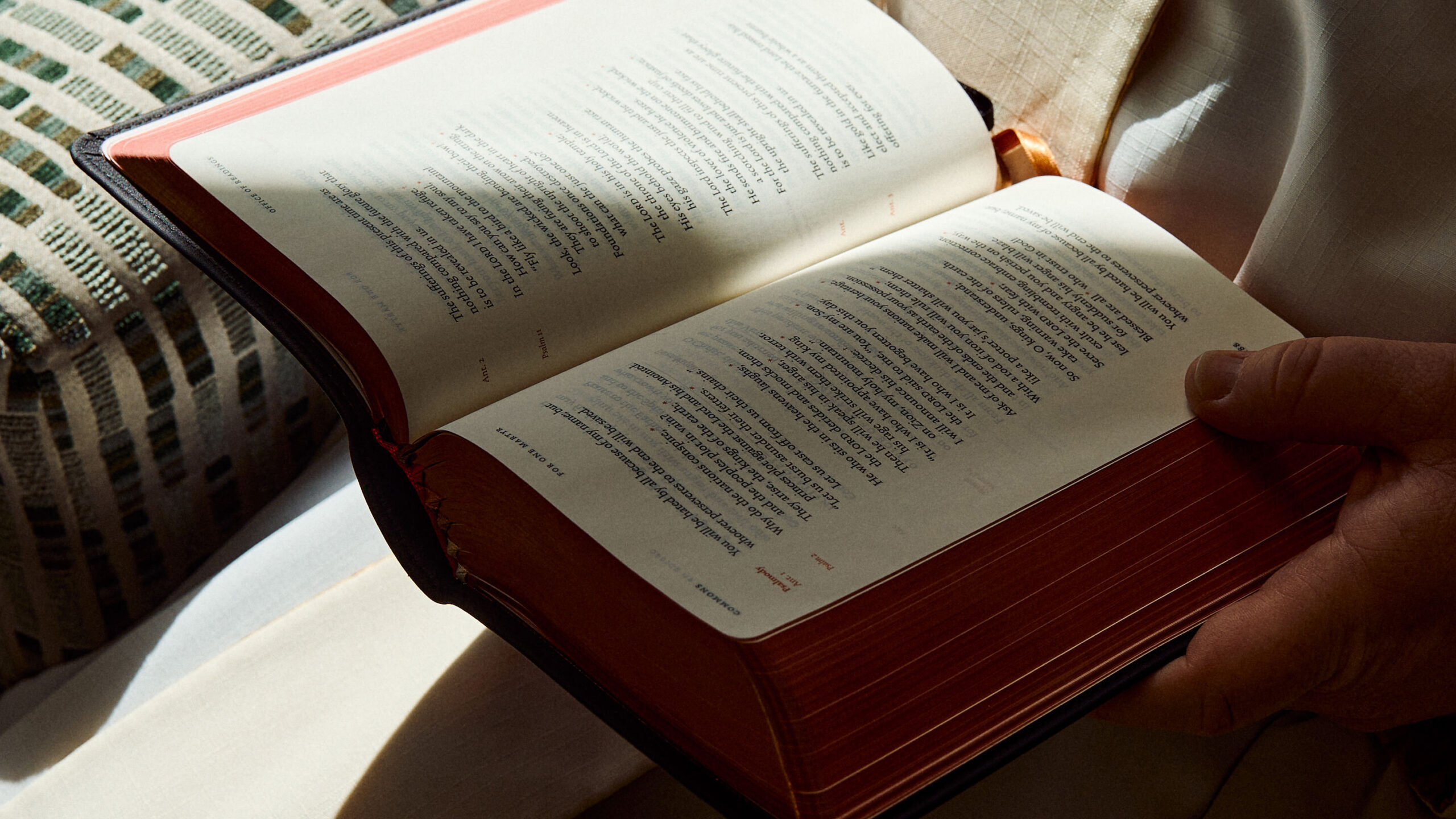
What is the Liturgy of the Hours? This methodology of prayer is ancient and punctuates specific times of day to follow set prayers: a combination of the psalms, Gospel passages, antiphons, and intercessory prayers. The breviary (books) are on a four-week cycle, so you only need a set of four books. Does it get more complicated? Is the pope Catholic? But the complexities and contours of the prayer rhythm available to us lay men and women form a challenge that’s worth accepting. This is coming from someone who still needs help setting her ribbons for the flip, flip, flips.
The Second Vatican Council encourages people like me to pray this prayer practice—not just religious but people in the “lay state” (not lay as in the potato chip or the supine position but those not ordained or consecrated): “And the laity, too, are encouraged to recite the divine office, either with the priests, or among themselves, or even individually” (Sacrosanctum Concilium 100). At a general audience, Pope St. John Paul II said, “It is important to devote greater pastoral care to promoting the Liturgy of the Hours as a prayer of the whole people of God. . . . It is an encouraging fact that many lay people in parishes and ecclesial associations have learned to appreciate it.”
The complexities and contours of the prayer rhythm available to us lay men and women form a challenge that’s worth accepting.
If we can muster up the strength to learn how to pray it, with the encouragement of knowing it was prayed by countless saints throughout the ages and surely can help us to live lives of heroic virtue, our sense of union with the whole Church—suffering, triumphant, and militant—can be cultivated. In my own family, it has taken decades for the seeds of this universal prayer of the Church to be planted, watered, and now slowly bloom.
Learning to Pray the Liturgy of the Hours as a Family
My husband studied in the seminary for a number of years before we met, and he found that praying the Liturgy of the Hours resonated even after he discerned out of formation. Meanwhile, I prayed a fairly regular Rosary when we were first married, but the idea of following invisible rules for a multiple-times-a-day prayer that I couldn’t get my hands or brain around was too much for me to join him in. In my spiritual immaturity, the desire to pray it even three times a day felt like a drag on other things we could be doing, like finishing an episode of a show or processing our days. I decided it wasn’t for me.
But then, over the years, he prayed the Liturgy of the Hours with a breviary on his lap at violin lessons, waiting in school pickup lines, as kids built and destroyed towers around him. Notable was that he didn’t remove himself to a quiet place to pray but included it in the fabric of our family life, and, slowly but surely, the kids wanted to pray with him, read parts of it aloud, or learn the ribbon flips. During the pandemic, I downloaded an app for it and figured I could at least follow through the labyrinth of it on my phone because surely digitally it would have to be straightforward. (This has not proven to be the case, but we can chalk that up to user error.) Maybe it was for me in small doses.
This slow and steady example of their dad desiring to allow God’s inspired word to sing a new song over him meant one kid prays morning prayer on his own early before school, another prays with friends at lunch in the school chapel, another snags the coveted place right under her dad’s wing to go through Night Prayer together, a fourth is sure that having his own breviary is the ultimate sign of being an adult, and the fifth assuredly isn’t tuned in but instead views our family prayer time as the best opportunity to tickle feet and test if head hairs are still attached.
It’s imperfect, this prayer practice as a family. It’s not every day all together. It’s still tricky for me to flip to the prayers and pages necessary (really counting on the new Word on Fire second edition with its extra ribbons for this), but I marvel at the fact that God has given the divinely inspired psalms and Gospels and that I have spent decades of my life relegating them to Sunday Mass. What if we feasted on his word every day?
The Second Vatican Council teaches us that the Liturgy of the Hours
is devised so that the whole course of the day and night is made holy by the praises of God. Therefore, when this wonderful song of praise is rightly performed . . . then it is truly the voice of the bride addressed to her bridegroom; It is the very prayer which Christ Himself, together with His body, addresses to the Father” (Sacrosanctum Concilium 84).
Could it be that my family (and your own) is beckoned to come and join in this tender and strong voice of Christ to address our Father? Compunction over complexity or the fear that it’s a time-suck aside, the 30,000-foot view on this particular prayer practice is that it’s astounding and has the potential to change our neural pathways, body regulation, and our very views on God’s reality. We are what we eat, but we are more immediately what we think, say, and repeat. If his words are readily available to us, and we choose to dine on them, they will therefore be what comes to mind in every instance of hurt, suffering, chaos, and anxiety. The psalms contain the entirety of human existence. Our steady diet of scroll, scroll, scroll could be replaced with flip, flip, flip.
What About Public Prayer?
Public prayer as evangelization feels a bit foreign to most American Catholics. We’re chagrined to make the sign of the cross at a restaurant in case it draws unwanted attention to us or makes others uncomfortable. We can be tempted to visualize bringing Christ to the culture as something someone wearing boards with Bible verses on them might do on a literal street corner. Or even more universally, we are grateful that priests and religious can wear their collars and habits out and about so that we can wear a small crucifix or scapular close to our chests, counting on them to exude Christ and take any ensuing ridicule for the team.
The wandering of our modern minds can be harnessed by the regularity and instructive nature of a prescriptive prayer like the Liturgy of the Hours.
My husband can recount being at the local swimming pool and having his breviary out when another dad approached him gingerly to ask if it was a Bible. “Of sorts,” was his response. The man went on to share that as a child he had been embarrassed when his own father would read the Bible in public—and that it was nice to see that my kids didn’t seem phased by my husband praying his way through the end of swim team practice. Or another time, the Muslim man on the city bus noticed my husband praying the breviary on the way home from work and inquired about it, learning for the first time that non-priest Christians prayed at certain times during the day. Or once, an African immigrant Christian woman cleaning the bins at the airport as my husband awaited his plane taking off was so moved by seeing someone pray with Scripture in her new country. A public prayer has many unknowable ripple effects.
The wandering of our modern minds can be harnessed by the regularity and instructive nature of a prescriptive prayer like the Liturgy of the Hours. Not only can its words—God’s words—become our own interior scripting upon habituated repetition, but holding an actual book in our hands and doing something hard can keep us rooted in the gift of the present moment. The older I get, the more I see that I need ongoing discipline in prayer. My holy hour can be a cor ad cor loquitur session, but it is easy for me to zone out during my Rosary and find myself at bedtime, not having listened to God’s voice waiting to speak to me off the page. Holding and praying with a breviary links me to God’s word today in a different way than even attending daily Mass does. As a lay woman, I’m included in this invitation to pray alongside the universal Church, as is my family. I’m grateful to be able to pray the Liturgy of the Hours when I’m traveling, waiting for a kid’s therapy appointment, taking a breather at work, or curled up before bedtime. This devotion nestled in the heart of the Church is for me and for you.
Now, as you read this, the Liturgy of the Hours may feel like the deep end of an infinity pool, burgeoning on the ocean’s darkest chambers. But unlike other areas of our lives where we have to work up to the strength and endurance a marathon might take or full concerto might require to perform, prayer as a surge of the heart—a turning of the heart and mind to God, as St. Thérèse of Lisieux reminds us—may simply mean taking a few moments to read what God wants to say to us, personally, here and now in this breathed moment. Just read along, and let the Holy Spirit guide you. Follow what dazzling lights have been laid out on the path before us, hoping your child doesn’t try to extinguish them (like my youngest), and start listening with your very bones.
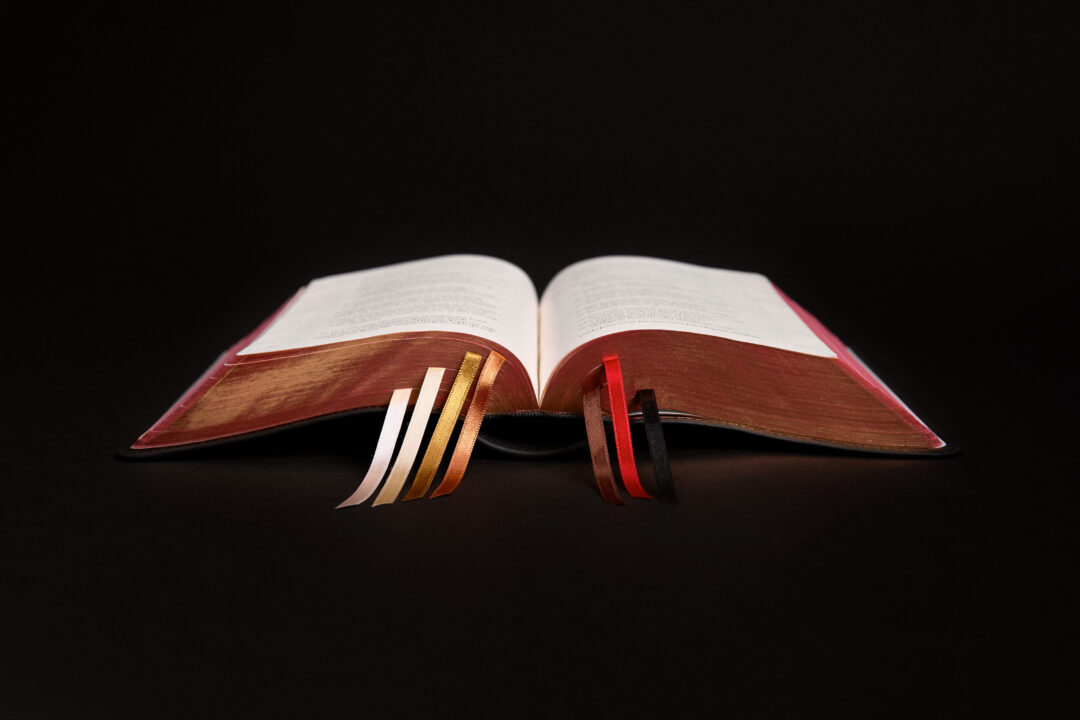
Word on Fire’s Liturgy of the Hours Is Here!