
Fifteen years into the process of earning a Green Card, I’ve had to examine what exactly I’m chasing and why. My answer has evolved, but it keeps returning to something I call creative confidence. That is the sometimes conscious and sometimes unconscious knowing that if you have an idea, if you work toward it, the infrastructure for pursuing it exists. That the doors, even the heavy ones, can at least in principle be opened. This is what the American Dream always was: not a promise of outcomes, but the assurance that hard work and a healthy dose of audacity make almost any goal possible.
Earlier this year, I spent four months in Colombia and, as usual, the trip reminded me of everything I love about my home country: the food, the warmth, the joy, and the resilience of a country that has endured almost a century of internal war. Somehow, we continue to come out stronger and never lose sight of The Colombian Dream. Never heard of it? It consists of retiring on a small finca (farm) where your whole family fits, and drinking your morning coffee without a rush while staring at some of the most breathtaking natural views on earth. I love Colombia, and I believe in its dream. But every time I visit, I come away with a refreshed sense of what makes America and the American Dream so precious.
The American Dream isn’t about achieving something as specific as la finca. It has always been about possibilities, which for the most part have been endless. The world is filled with hardships, but in very few places does overcoming them pay off the way it does here. Abundance and scarcity, I’ve come to understand, are not only about possessions. They are a mindset. The feeling that the world is arranged, even if just partially, in your favor. Most of the world lives without that sense.
The Scarcity that Lives in the Mind
When I was in Colombia this year, I kept encountering a feeling I couldn’t quite name. It wasn’t that Colombians lacked hope or ambition—they certainly didn’t. But the ambition carried an undertone of scarcity. It’s inevitable, given the structural absence of opportunity that has shaped the country over generations. Between the conflicts and the lack of a safety net for those who are facing tough times, the collective relationship with ambition was justly altered. Prudence became the rule of the land, because if you fail or face misfortune, there is no system in place to catch you.
For millions of immigrants, the American Dream was economic, but it was more than that. It was an invitation to participate.
That is not a moral or character failure. It is a rational response to real conditions. But it is also a scarcity that goes deeper than economics; it is a scarcity of imagination and creativity, which is among the most painful and tragic things a society can produce in its people.
That is the reality of most of the world for most of history. And America created a contrast to that reality. Its founding radical claim was anthropological: you are a being with worth and whose longings matter, and this country is arranged for you to pursue them. That claim is the inheritance of every person born in America and of every person who has chosen to join it.
Previous generations have gifted us something extraordinary and, in the prosperity of our inheritance, some have begun to take it for granted. We acknowledge the open doors but complain about having to push them.
The Dream Crosses an Ocean
By the middle of the nineteenth century, the dream had traveled. A rumor spread through the villages of Ireland, Italy, Poland, Ukraine, and almost everywhere else: There was a place in the world where a man could show up with nothing and build something.
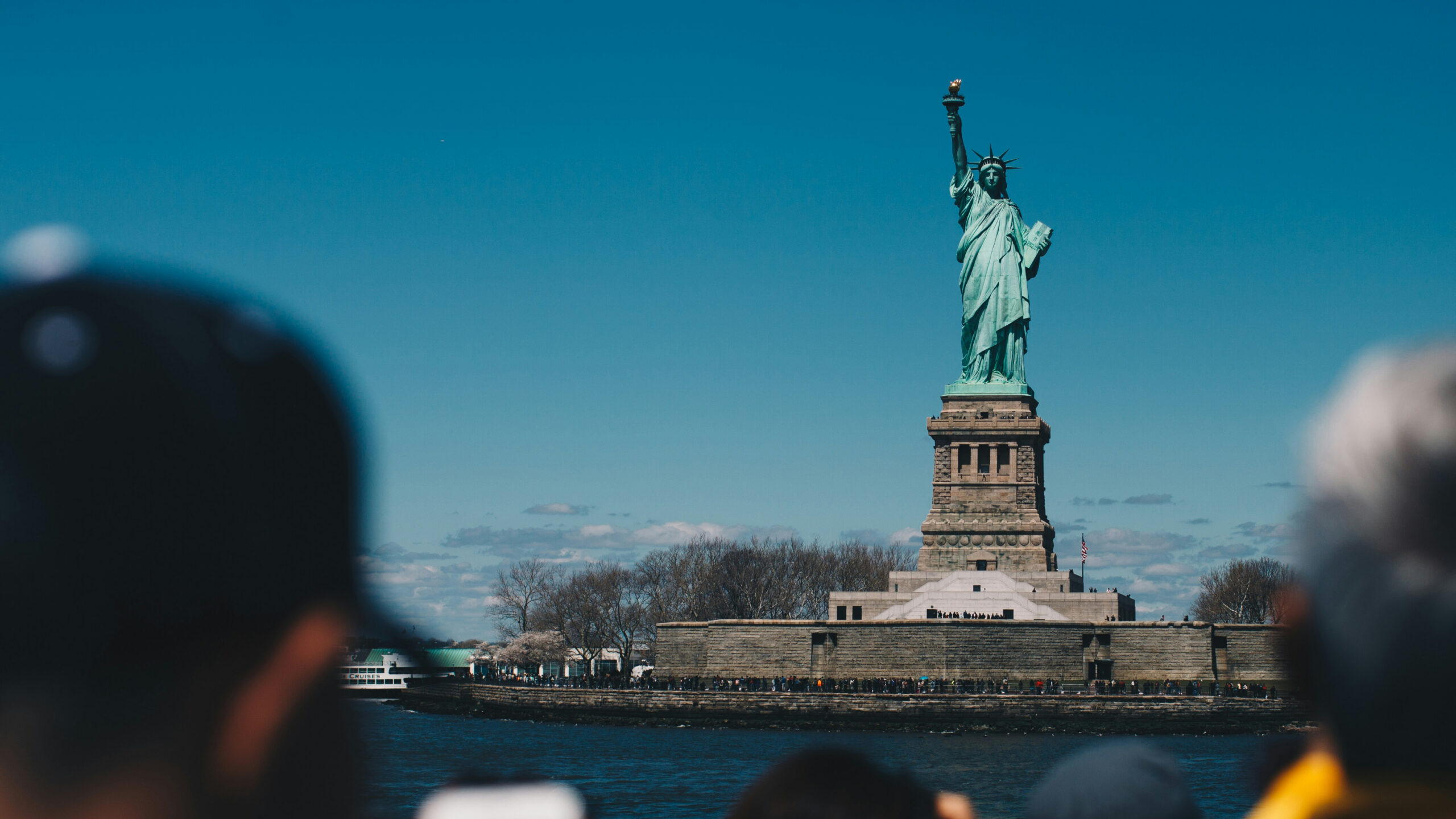
Emma Lazarus captured this in 1883, writing the poem engraved on the Statue of Liberty’s pedestal: “Give me your tired, your poor, your huddled masses yearning to breathe free.” The dream, even then, was about desire and motion, not possessions and comfort.

For millions of immigrants, the American Dream was economic, but it was more than that. It was an invitation to participate. Some had breakthroughs; many did not. But the pursuit was worthwhile because they knew the difference between a world that was fixed and one in which the limits could be pushed.
The Dream Gets a Yard and a Two-Car Garage
The version of the American Dream most of us carry in our heads includes the house, the lawn, the stable job, the white picket fence, but that was never the founding dream. It is a post-war dream, built from the staggering prosperity and optimism that followed the Second World War.
It is worth remembering what that generation had just done. They had survived the Great Depression and then fought a global war. When they came home, the GI Bill offered them college educations and home loans. A middle class of unprecedented size and stability emerged. For a generation that had known genuine scarcity, a house with heat and a television was not just a luxury, it was a kind of miracle.
James Truslow Adams coined the phrase “American Dream” in 1931, during the darkest hour of the Depression, defining it as “that dream of a land in which life should be better and richer and fuller for every man.” The post-war generation lived that definition in a way no generation had before. But something was also brewing. The dream that had once been about freedom and possibility was becoming identified with consumerism. It became all about a specific neighborhood and a specific lifestyle.
The contemporary dream, in many of its dominant cultural forms, has become something different: comfort without risk, recognition without labor, security without sacrifice.
And in the very moment of its greatest material realization, its deepest contradiction became impossible to ignore. The Civil Rights Movement forced the country to reckon with the fact that the dream had never been equally available. This truth had always been there, but could no longer be ignored.
What Is It Now?
The struggle today is not only structural. Housing costs have outpaced wages and student debt weighs on young Americans in unprecedented ways. Young people feel that the game has been rigged against them. These are real problems that deserve serious attention.
But part of the problem is also us. Our dreams have changed, and some have stopped dreaming altogether. The founding dream was about freedom, the immigrant dream was about access, the post-war dream was about stability. The contemporary dream, in many of its dominant cultural forms, has become something different: comfort without risk, recognition without labor, security without sacrifice. A dream that has forgotten how to dream. It has confused the goal with the conditions for pursuing the goal.
We live in a country and time in which more people have access to more tools for building something than at any point in human history. The internet has democratized information, capital formation, and audience-building in ways unimaginable just thirty years ago. Entrepreneurship is accessible at a scale that would astonish the immigrants who arrived at Ellis Island with nothing. The doors have not closed. In many ways, they have multiplied.
What has changed is our relationship to the effort and risk-taking required to open them, and our willingness to believe the effort is worth it.

Every generation has at some point declared the American Dream dead. The declaration itself is a kind of American tradition. But I believe the dream has never died; instead, it has been reshaped many times without losing its premise. And sadly, while still accessible, it has always had some form of gatekeeping. At one point it was race; I would say currently, it’s the tightness of immigration law. When my grandparents moved to New York City in the fifties and enjoyed the post-war American Dream, they were offered American citizenship with the only condition that they had to give up their Colombian citizenship. As much as they loved America, they were still proud Colombian patriots, so they said “no, thank you” and returned to Colombia. Nowadays American immigration is still possible and the dream is still available to immigrants, but the legal process is much more difficult than ever before.
I often think of what my life would be if I had never moved to America, and I am sure it would still be a good life, just a different path. My outcome wouldn’t have been negative. But I am certain I wouldn’t have been able to work in a nonprofit field I am passionate about. In Colombia I would have most likely chosen a safer path. And I don’t take for granted the fact that while chasing a passion, I’ve been able to make a decent salary, save money, and invest in my twenties more than many Colombians do in a lifetime. That is the fruit of my work, my ambition, and the risks I took, but I can’t take for granted that I achieved these things largely because I was given the opportunity to be part of the American Dream.
I don’t think the dream is dead. Some aspects of it have changed as the world has changed. And it is worth noting that when the dream first emerged, the contrast with the rest of the world was stark, but in many ways the world has caught up, and there are more opportunities and more dreams available in more places. That is a good thing. What matters most is the question at the crux of the American Dream: Are we still willing to pursue it? Do we have the same grit, hunger, and desire that early Americans, nineteenth century Americans, and post-war Americans had? That is a personal question for each of us.
Jefferson never promised happiness or material success. He promised the opportunity to pursue it, and that is still the rule of the American land. And it is still, in the world’s eyes, absolutely remarkable.