
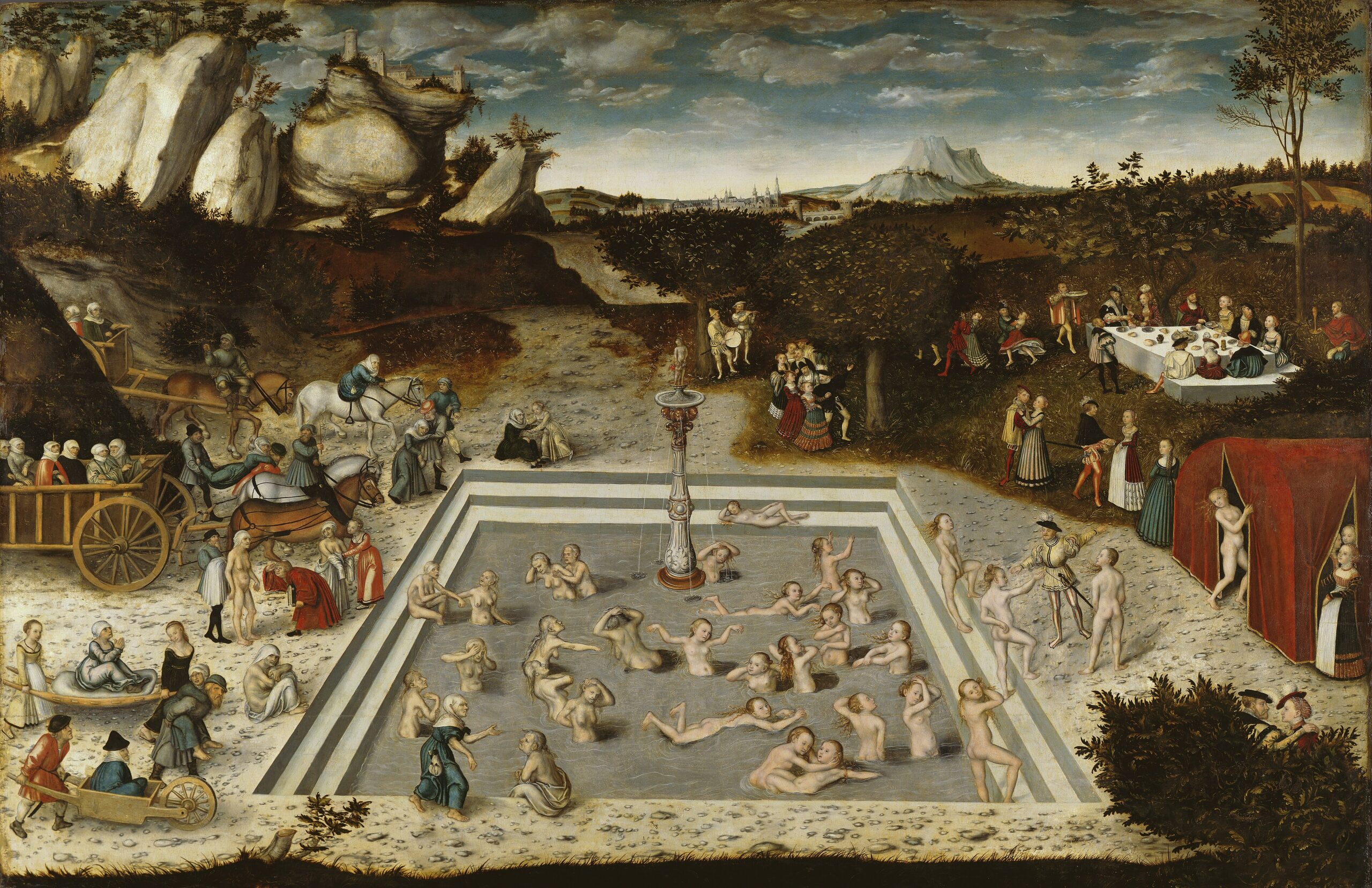
Modern man seems to have rediscovered a rather ancient aspiration: to live forever. Of course, this goal has never really disappeared from man’s collective consciousness. But today’s man is more convinced than ever that he can make this dream a reality.
Modernists such as Jeff Bezos, Sam Altman, and Peter Thiel are making major investments in emerging life-extension projects, such as the Methuselah Foundation, named for the biblical character who lived for more than 900 years.
The best-known proponent of “longevity” optimism, Bryan Johnson, has spent tens of millions of dollars to achieve his goal: to be the first generation that never dies.
Science has delivered incredible extensions of human life, doubling lifespan over the last century and a half, these Methuselists argue. With advances in artificial intelligence and the ability to measure and monitor nearly every biological function, living forever finally seems possible.
Yet, even if Johnson succeeds, he will fail to get what he desires. He will find that living forever is really quite unsatisfying.
The ancients rejected the goal of living forever because forever is far too long and too expansive, with too many options. The ancient Greeks imagined the goddess Eos, who asked Zeua to grant her lover Tithonus eternal life but forgot to ask for his eternal youth, condemning him to perpetual old age—a fate that may befall Johnson and his fellow tech oligarchs. Jorge Luis Borges’s classic story “The Immortal” tells of men who gained immortality only to grow weary of life and then try to undo their immortality.
You can live a thousand forevers and only get the slightest taste of eternity.
But I oppose living forever for an entirely different reason. For me, forever is too limited, too cramped, too definite, too finite. Put differently, forever is far too short.
An immortal Bryan Johnson would read tens of thousands of books, view hundreds of thousands of sunsets, and walk millions of miles, more than any human ever before. But the problem is not that this is too much but too little. What I want—and what I believe everyone wants deep down—is not an infinite string of tomorrows but eternity.
Recall a moment of your life when time stopped and you enjoyed a brief taste—or, more properly, a foretaste—of eternity, like getting lost in a book, a sunset, or a kiss.
But the book concludes. The sunset fades. The kiss leaves as quickly as it came. And you are left wanting more. And so we read another book, watch another sunset, receive another kiss. We try to recapture that precise moment when time no longer moves. We try—and fail—to capture eternity.
But eternity is not possible with living forever. Forever allows you to repeat, but not relive, what happened the day before. You can live a thousand forevers and only get the slightest taste of eternity.
You can live forever and still desire more.
I want a story where each page is more exciting than the last, a sunset that never sets, a kiss that never concludes. I want to take that taste of eternity and stretch it into a perpetual feast—and never be hungry again.

The forever envisioned by Bryan Johnson is a rather humdrum continuation of our present lives, which makes the eternity promised by Christ so radical and attractive.
The heaven promised by Christ is the beatific vision: seeing God face to face as he is and “knowing” him. In seeing him, we will see all truth, all beauty, and all goodness of all times all at once. The fathers of the Church spoke of heaven not as a static place—like sitting on a cloud playing a harp—but as perichoresis, an eternal dance of love within God.
Contrary to some popular modern depictions, heaven is not a mere repetition of nice days but an experience of God “ever ancient, ever new.” Because God is outside of time, heaven is an eternal first glimpse, an unending gasp at the first sight of the eternal beloved. This alone, which is so far beyond our experience that “eye hath not seen” and “ear hath not heard” the like, can satisfy the heart forever.
One of the ideas that converted C. S. Lewis to Christianity was Sehnsucht, the longing that human beings have for something not found in this world. If we are mere animals, then it makes no sense for us to feel this way, Lewis argued, unless there is something beyond this world that will actually satisfy us. As St. Augustine wrote 1,500 years before, “Our hearts are restless until they rest in Thee, O Lord.” Mere life extension will not satisfy but merely condemn us to a lengthier dissatisfaction.
If his investments pay off, then Bryan Johnson can live until the sun burns out. He can have all the forevers he wants. Even still, he wouldn’t have that much. His heart would still be restless—just for a longer period of time.
As for me, I’ll take eternity.